Should You Sell on Amazon?
17 July 2025

Roberta Johnston
SEO Lead
I'm an SEO specialist with over 8 years of experience helping brands grow through strategic, data-driven search optimisation. I've worked with large e-commerce websites and niche brands alike, developing a deep understanding of ranking algorithms, generative AI, and LLMs like ChatGPT, Perplexity AI, and Gemini. My expertise spans technical SEO, ensuring sites - whether a few dozen pages or 100,000+ - are crawled and indexed effectively.
Tags
Selling on Amazon can feel like the ecommerce equivalent of Willy Wonka's golden ticket: massive reach, instant credibility, and logistics handled for you.
But... it’s not a one-size-fits-all solution. Hidden fees, margin squeeze, and lack of brand control can turn your Amazon dream into a real nightmare.
So instead of should you, the better question is: “Should you also?”
If you’re already running an online store, investing in SEO, and paying into Meta or Google Ads, Amazon might fit nicely in your growth mix - or it might pull focus from the channels that work.
Let's take a look at what selling on Amazon entails and whether it'll slot in with your existing marketing mix.
The Benefits of Selling on Amazon
Let's start with the good stuff.
1. Reach Active Shoppers Fast
Amazon isn’t just big - it’s a powerhouse of purchase intent. Unlike social media or traditional search where people might be just looking, Amazon users are there to buy.
In 2024, Amazon saw over 2.2 billion monthly visits globally, and around 60% of all platform sales come from third-party sellers. Australia alone welcomed 1.1 million new Amazon customers in 2024, with 63% of Australians expected to shop there in 2025.
That is a LOT of people.
NZ-based sellers can access the AU marketplace via Amazon Global Selling, making it a low-barrier way to trial a new market without heavy upfront investment.
For newer brands or niche products, this can mean faster exposure to customers who are already looking for what you offer.
2. Built-In Traffic & Search Visibility
Think of Amazon as the Google of product search. Around 56% of product searches start on Amazon, not Google - especially in the US and AU. That means your product can be discovered by people who don’t even know your brand name yet.
It also means less upfront cost in SEO and paid traffic - Amazon takes care of the platform, and you ride the coattails. Yes, optimisation still matters (product titles, images, keywords), but the infrastructure is already there.
Plus, Amazon’s algorithm (A9) favours high-performing listings, so good reviews and strong sales velocity can snowball into more visibility.
3. Instant Trust & Credibility
New-to-brand customers might hesitate to buy from a site they’ve never heard of. But Amazon? Trusted by default. Shoppers know they’ll get their item quickly, can track it, and return it if needed.
This is especially powerful if your ecommerce site has low brand awareness, is relatively new, or you’re entering a market (like AU) where you're not established yet.
4. Fulfilment by Amazon (FBA) Simplifies Logistics
Logistics are one of the biggest barriers for ecommerce growth - especially cross-border. But FBA takes that pain off your plate. Send inventory to Amazon, and they’ll pick, pack, ship - and even deal with returns.
Even better: products fulfilled by Amazon get the Prime badge, which boosts conversion rates and sales. You also gain access to programs like Amazon Australia’s Subscribe & Save, which can boost recurring orders for essentials.
Sales are also much quicker:89% of sellers use FBA for its simplicity and visibility boost. Just keep in mind FBA comes with storage, packing, and shipping fees - all of which can impact margins (more on that later).
5. Expanded Market Reach
Since Amazon has been in Australia since 2017, and allows Kiwi sellers to participate, you can tap an international customer base without launching multiple websites.
And, usually, launching in a new region typically means currency conversions, logistics partners, compliance, and local marketing. Amazon sidesteps that.
You can list in Amazon AU and sell to Australian customers while shipping from NZ - or go one step further and warehouse stock locally via FBA AU.
It’s also a stepping stone to Amazon US, UK or other marketplaces, should you want to expand further. You get the infrastructure, without needing to build from scratch.
6. Test Products and Price Points
Got a new product or range you’re unsure about? Amazon is a fast way to test product-market fit.
You’ll get real shopper behaviour insights (conversion, impressions, reviews), helping you refine listings or pricing before scaling on your main store.
This data is often richer than what you’d get from, say, a standard Meta ad campaign - because you’re watching purchase intent, not just engagement.
The Drawbacks of Selling on Amazon
There are real, tangible benefits to selling on Amazon... but there are also major considerations.
1. It’s Not Cheap
Let’s get this out of the way: Amazon takes a cut, and sometimes it’s a big one.
Expect:
• Referral fees: Usually 8–15% depending on your product category
• FBA fees: If you’re using Fulfilment by Amazon, you’ll also pay for storage, handling, and shipping
• Subscription costs: A Professional seller account in Australia costs AUD $49.95/month (as of mid-2025)
Those fees can quickly eat into your margins - especially if your product is already price-sensitive. If you’re used to running lean via Shopify or WooCommerce, Amazon can feel like a hefty overhead.
Run the numbers. Use Amazon’s FBA calculator for AU to model your margins before listing.
2. You Don’t “Own” the Customer
This is a big one for brand-led ecommerce businesses: Amazon owns the relationship, not you.
No emails. No SMS subscribers. No retargeting audiences. Once that customer buys, they’re Amazon’s - unless they go out of their way to find your direct site.
You can include branding in your packaging, sure, but you're still renting space on Amazon’s platform. That makes it harder to build loyalty or LTV (lifetime value) over time.
This is why brands with strong retention strategies often use Amazon as an acquisition channel, not a long-term customer hub.
3. You Have Less Control
Your store, your rules… unless you’re on Amazon.
Amazon dictates:
• Product listing structure
• Shipping and returns policies
• Review handling
• Pricing enforcement (sometimes, they’ll suppress your listing if it’s cheaper elsewhere)
And if you breach any of Amazon’s rules - or worse, get false-flagged for something - you risk being delisted, sometimes without warning.
For brands used to crafting a rich, custom online experience, this can feel creatively suffocating.
4. It Can Undermine Your Brand Positioning
If you’re positioned as premium, Amazon can muddy your messaging.
The marketplace is crowded with lookalikes, knock-offs, and price-driven listings. Your thoughtfully crafted product may end up sitting next to an undercutting generic version with 4.8 stars.
Even if your product is objectively better, shoppers on Amazon often make decisions based on:
• Price
• Star ratings
• Shipping speed
That can make it difficult to stand out unless your reviews and imagery are dialled in—and even then, you’re competing on someone else’s terms.
5. It’s Not Set-and-Forget
Some sellers think Amazon is a passive income stream. Reality check: it takes work.
You still need to:
• Optimise your listings
• Manage stock levels
• Monitor reviews and respond to customer queries
• Handle returns and compliance (especially if you're not using FBA)
In short, it’s another sales channel, not a shortcut. You’ll either need time or budget to manage it properly.
6. You Risk Becoming Dependent
It can happen. Brands do well on Amazon, scale fast, and then build their whole revenue model around it. That’s risky.
Why? Because Amazon can:
• Change its algorithm
• Ban your account
• Prioritise its own private label products over yours
If Amazon pulls the rug, your business shouldn’t collapse. This is why we always recommend an omnichannel strategy: diversify your traffic, diversify your sales, and don’t let one platform own your future.
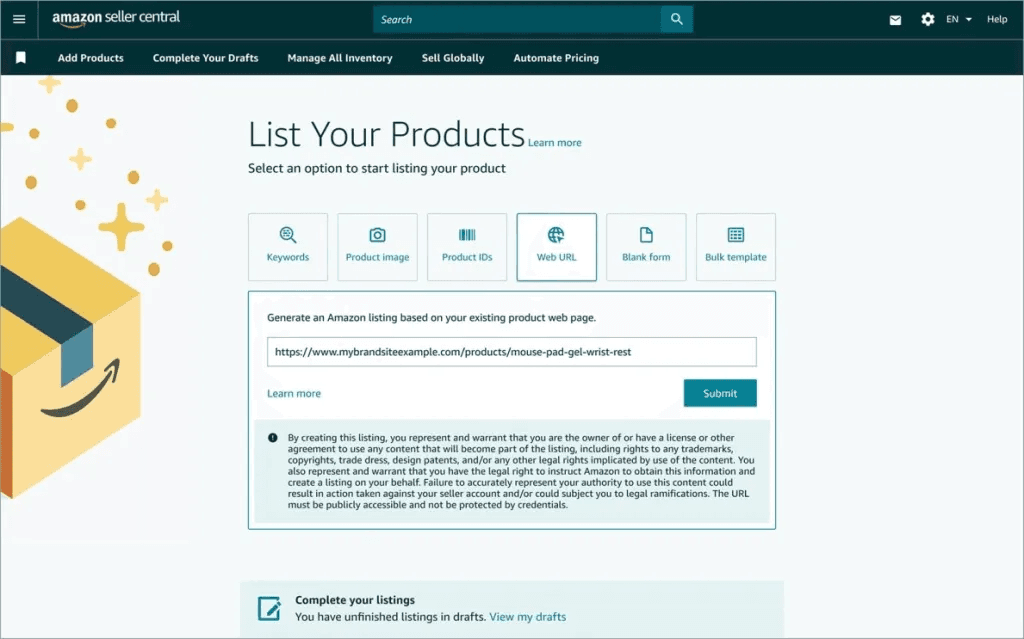
So… Should You Sell on Amazon Marketplace?
There’s no universal answer here - just the right fit for your business model, goals, and resources.
But here’s a breakdown to help you decide.
✅ Amazon Might Be Right for You If:
• You have mature operations and the margin to absorb fees
• Your products are in demand, especially in popular categories like homeware, fitness, or personal care
• You want to test new markets without setting up a new ecommerce locale
• You’re focused on volume and exposure, even if that means thinner margins
• You’ve got the time or team to actively manage listings, reviews, and stock
🚫 You Might Want to Hold Off If:
• Your brand is premium, niche, or story-led and relies on direct customer relationships
• You don’t have the margin to give up 15–30% per sale
• You’re not in a position to support another channel logistically
• You’re still building your direct site and need to focus on brand equity and owned audiences
Our Take? Think “In Addition To”, Not “Instead Of”
Amazon shouldn’t replace your ecommerce site or existing marketing channel mix. It should supplement it.
Use it for:
• Customer acquisition
• International testing
• Competitive insights
• Diversifying your sales footprint
But keep building your owned assets -email, direct traffic, and SEO - so your brand stands on its own. That’s how you grow sustainably in the long term.
Want to Know if Amazon’s a Good Fit for You?
We work with ecommerce brands across New Zealand and Australia to build channel strategies that match their growth stage, margins, and operational realities.
If you're wondering whether Amazon should be on your roadmap - or how to make it work without cannibalising your brand - we’re happy to help.