5 Reasons Your SEO Campaign isn’t Working
28 May 2025

Roberta Johnston
SEO Lead
I'm an SEO specialist with over 8 years of experience helping brands grow through strategic, data-driven search optimisation. I've worked with large e-commerce websites and niche brands alike, developing a deep understanding of ranking algorithms, generative AI, and LLMs like ChatGPT, Perplexity AI, and Gemini. My expertise spans technical SEO, ensuring sites - whether a few dozen pages or 100,000+ - are crawled and indexed effectively.
Tags
SEO still works, but your approach probably needs some TLC
You’re pouring time (and probably money) into SEO. Maybe your rankings have nudged up a bit. Maybe your agency’s telling you traffic is “technically up.” But conversions? Flat. Revenue? Meh. You’re left wondering why it’s not adding up.
The thing is, SEO has changed. If your strategy hasn’t, that’s where things start falling apart.
It’s not just about keywords anymore. Or throwing content onto a blog and hoping Google notices. And it’s definitely not about checking a few boxes on an audit spreadsheet and calling it done.
Today’s SEO is part brand building, part content strategy, part technical foundation - all working together across search, Shopping, and AI-driven discovery. If even one of those pieces is misaligned, your entire campaign can stall.
So, what’s going wrong?
Here are five of the biggest reasons ecommerce SEO campaigns underperform and what you can do (or let us do!) to actually turn things around.
Jump to the section that sounds most like your situation:
1. You’re Treating SEO Like an Add-On, Not a Strategy
2. You’re Fixing Content Before Fixing Your Site
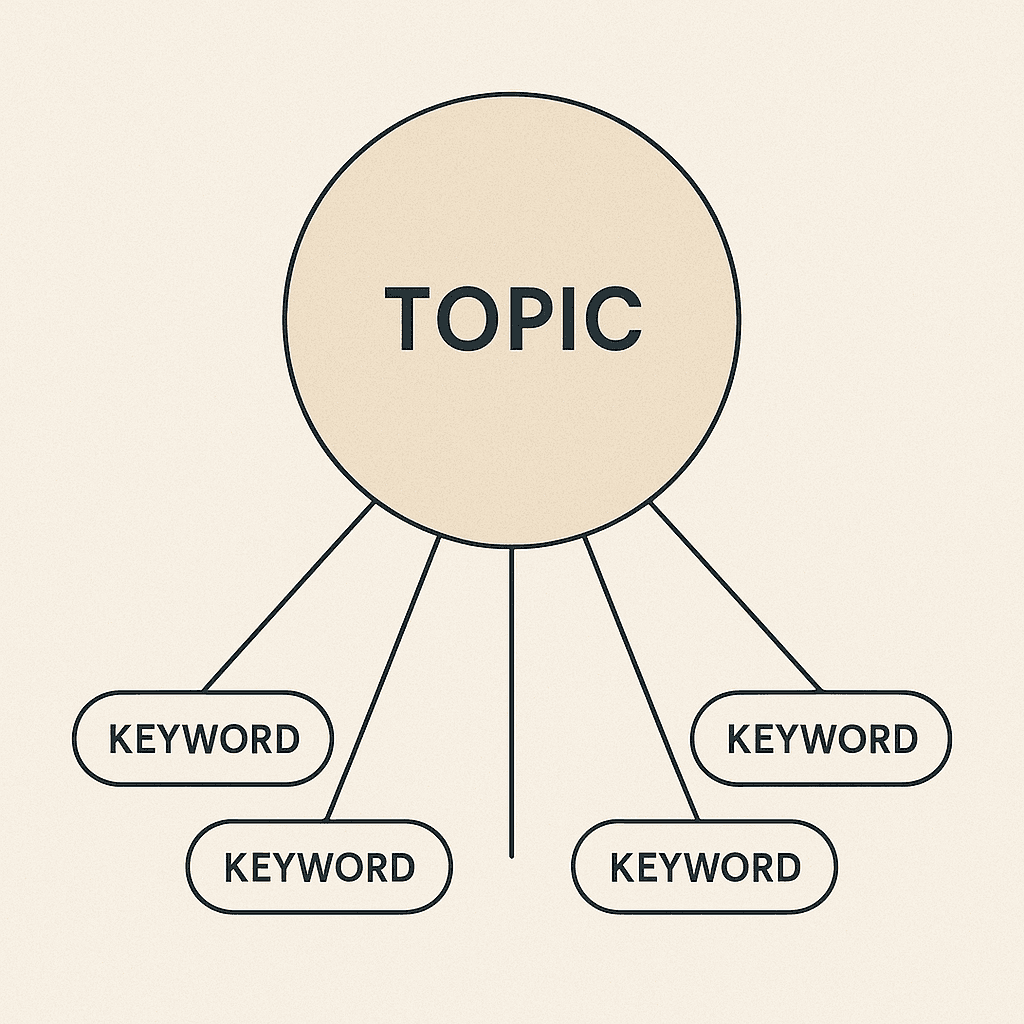
3. You’re Still Thinking in Keywords, Not Topics
4. Your Content Isn’t Built for How Search Works Now
5. You’re Flying Blind: No Strategy, No Measurement, No Impact
1. You’re Treating SEO Like a Standalone Channel
If you’re approaching SEO like you do your Meta ads or paid Search - brief in, tick the box, wait for leads - we need to talk.
SEO doesn’t exist in a silo. It powers discovery, supports conversions, drives visibility, and underpins the success of every other digital channel you run. When treated like an isolated tactic instead of an always-on, business-wide initiative, it never delivers its full potential.
Especially now.
AI-powered search experiences - like Google’s AI Overviews and Gemini, ChatGPT’s browsing capabilities, and TikTok search behaviour - mean that customers are discovering, researching, comparing and deciding long before they ever click a Shopping ad or land on your homepage.
Your content, structure, authority and on-site experience all play a part in getting you seen and trusted at every one of those steps.
The brands winning at SEO today aren’t just “ranking for keywords.” They’re:
• Creating content that informs, persuades, and ranks - all at once
• Structuring their site so it’s crawlable, usable and conversion-focused
• Making SEO part of product launches, content planning, UX decisions and beyond
It’s not a feature. It’s infrastructure.
And if you’re not building it into the foundation of your growth strategy - or working with a partner who does (hint hint, nudge nudge) - it’s no wonder things aren’t performing.
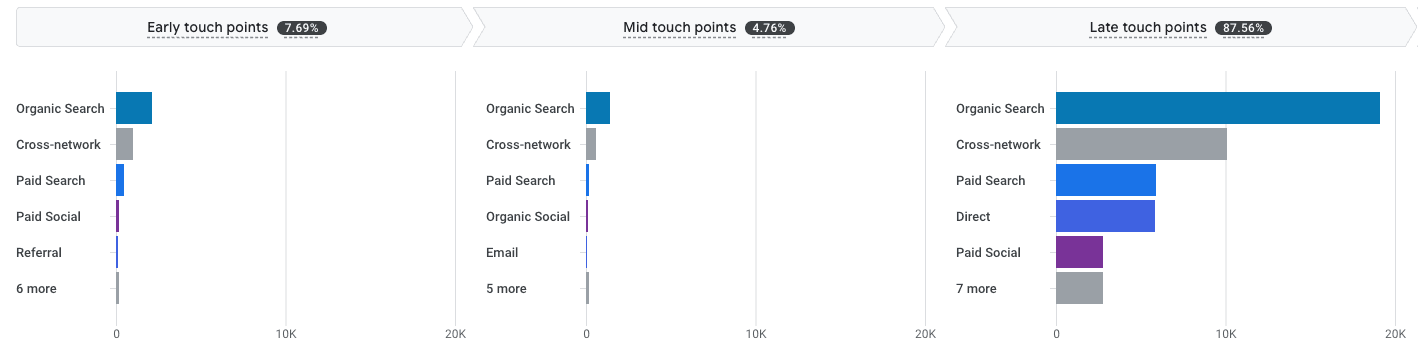
GA4 Attribution Paths report showing Organic Search as a central touchpoint
2. You’re Fixing Content Before Fixing Your Site
We get it - content feels like progress. You can write a blog, optimise a title tag, rework a collection page. It’s visible. Tangible. But none of it matters if your site’s architecture is broken.
Technical SEO is foundational - especially for ecommerce, where a single crawl inefficiency or duplicate template can quietly kill visibility at scale.
We’ve seen it time and time again:
• Bloated sitemaps packed with filters and variants that shouldn’t be indexed
• Broken canonical tags or inconsistent internal linking bleeding equity across the site
• Slow-loading pages driving up bounce and tanking performance on mobile
• Missing schema markup, preventing your products from showing rich results in Shopping or image-led search
And worst of all?
Search engines don’t flag these issues for you. They just quietly crawl your site less often, index fewer of your key pages, and show your competitors instead.
Content is critical. But if Google can’t find, crawl, and trust your site structure, your brilliant content is buried under the weight of technical debt.
Before you brief another rewrite or spin up another blog post, ask: are we fixing the foundations first?

3. You’re Still Thinking in Keywords, Not Topics
Keyword research still matters. But in 2025, optimising for one keyword per page is about as effective as printing flyers for traffic.
Search has evolved. Google doesn’t just match strings of words - it interprets intent, context, and authority authority across entire topics.
With query fan-out, a single search can trigger hundreds of sub-queries behind the scenes. That means Google’s not just looking for an exact keyword match - it’s mapping out related questions, comparisons, attributes, and angles that help form a full picture of what the searcher wants.
So if your SEO is still trying to optimise for “moisturising shampoo” on a single page… it’s missing 90% of what the search is actually about.
Instead:
• You need depth and breadth - not just one relevant page, but a cluster of content that speaks to use cases, ingredients, benefits, routines, reviews, FAQs and more
• You need to build topical authority, not just “rank for a term”
• And you need content that helps LLMs (large language models, like Gemini and ChatGPT) and Google’s AI Overviews understand what your site knows, not just what it sells
Topic-level optimisation is the new game. And if your competitors are creating detailed, structured content around the pain points, use cases and comparisons your buyers are searching for - while you’re chasing old-school keyword density - guess who’s going to win that impression?
Google’s AI Overviews, Gemini, ChatGPT and Perplexity don’t pull from pages that happen to mention a word once. They pull from sources that demonstrate expertise and coverage across an entire concept.
If you’re not building that footprint, you’re not in the running.
4. Your Content Isn’t Built for How Search Works Now
Let’s be blunt: content for content’s sake doesn’t cut it anymore. The days of generic 1,000-word blog posts stuffed with keywords are long gone.
Today’s search - and especially AI-powered experiences like Google’s AI Overviews, Deep Search, and LLMs like ChatGPT - prioritises useful, structured, and trustworthy content.
That means your content needs to:
• Use clear, structured formatting (like H2s, bullet points, FAQs)
• Include real insights and specific examples, not just surface-level filler
• Be written with context, authority, and your customer in mind
• Offer something worth quoting - because AI results love citations
And we’re not just talking about blog posts.
Your product and category pages need to pull their weight too - with rich content that answers common questions, highlights benefits, and supports the purchase decision. Then you supplement those with strategic, topic-led content that builds your brand’s expertise and visibility across the wider ecosystem.
Want to win in AI search? Give it content worth quoting.
If you’re not creating content worth citing, you won’t show up in AI Overviews - or anywhere else that matters.

5. You’re Flying Blind: No Strategy, No Measurement, No Impact
If your SEO isn’t tied to business goals - and you’re not measuring what actually matters - you’re wasting time.
We see it all the time: SEO campaigns that look “busy” but don’t deliver. Weekly blogs, scattered optimisations, maybe even a keyword tracking report... but no real movement in revenue, leads, or market share.
Why? Because there’s no strategy behind the activity.
🚫 No prioritisation of what’s worth fixing or publishing
🚫 No mapping content to your customer journey
🚫 No tracking of performance across the full funnel
🚫 No clarity on what’s actually influencing conversions
And if you’re still only reporting on traffic or keyword rankings? That’s not performance - that’s noise.
Instead, measure:
• Category-level growth (where your revenue lives)
• Contribution to conversions (not just last-click)
• Visibility in AI Overviews, visual search, Shopping feeds
• Organic influence across the buyer journey
Because when SEO is built strategically and measured meaningfully, it stops being a “nice to have” and becomes a genuine growth driver.

SEO That Performs Looks Different Now
If your SEO campaign isn’t delivering, it’s not because SEO is dead. It’s because search has evolved - and your approach hasn’t.
To get results in today’s landscape:
• Treat SEO like the long-term revenue driver it is.
• Fix the technical foundations before you worry about tags and titles.
• Create content that earns attention (and citations), not just clicks.
• Optimise around topics, not just keywords - and think like the machines do.
• Measure performance in terms of outcomes, not vanity metrics.
Because modern SEO isn’t about ticking boxes. It’s about building visibility, trust, and relevance - across all the ways your customers search.
Need a smarter SEO strategy? Let’s talk.