5 Things C-Suite Should Know About SEO
4 September 2025

Roberta Johnston
SEO Lead
I'm an SEO specialist with over 8 years of experience helping brands grow through strategic, data-driven search optimisation. I've worked with large e-commerce websites and niche brands alike, developing a deep understanding of ranking algorithms, generative AI, and LLMs like ChatGPT, Perplexity AI, and Gemini. My expertise spans technical SEO, ensuring sites - whether a few dozen pages or 100,000+ - are crawled and indexed effectively.
Tags
C-Suite Execs, This One’s for You
When you hear “SEO,” it probably feels a little vague. Maybe even frustrating. You’re used to seeing clean performance metrics - ROAS, CAC, revenue per channel. But when it comes to SEO? You get reports about keyword rankings and traffic shifts with no clear link to revenue.
That’s a problem.
Because SEO isn’t just a technical task - it’s a strategic growth lever. One that deserves the same board-level attention as paid media, platform upgrades, or CX investment.
And yet, too often, it’s treated like a line item on the marketing to-do list.
We’re here to flip that perspective - and show you why SEO should be embedded in the way your ecommerce business operates, grows, and competes.
(Sure, we're a little bias - but we promise this read is worth your time!)

Why C-Suite Can't Ignore SEO
For too long, SEO has sat somewhere between an afterthought and a mystery box in the minds of many C-level execs. It's often misunderstood, deprioritised, or delegated to “someone in marketing” while paid media, CRO, and platform upgrades get all the love.
SEO can be a "problem child."
But the truth is, in 2025, SEO is your visibility strategy.
It’s how you drive growth without paying per click. It’s how your products, services, and brand show up when real people search with real intent.
And it’s how you remain competitive in a digital world increasingly shaped by AI, automation, and changing user journeys.
1. It’s Not Just About Ranking on Google Anymore
Once upon a time, “doing SEO” meant stuffing some keywords into your homepage and watching it climb the rankings.
Those days are long gone.
Today, SEO is a multi-disciplinary, cross-functional effort. It touches every part of your website - and your business. Yes, you still want to rank well in search engines. But more importantly, you want the right people to find the right pages at the right time, and have a high-converting experience when they get there.
That means SEO now includes:
- Technical optimisation: Site speed, mobile usability, structured data, crawlability.
- Content strategy: Creating helpful, relevant content that aligns with user intent - not just product copy, but blogs, FAQs, guides, landing pages.
- UX and performance: If your site is slow, clunky, or hard to navigate, search engines (and users) won’t stick around.
- Brand signals and reputation: Google doesn’t just rank websites - it ranks entities. Your brand needs authority and credibility across the web.
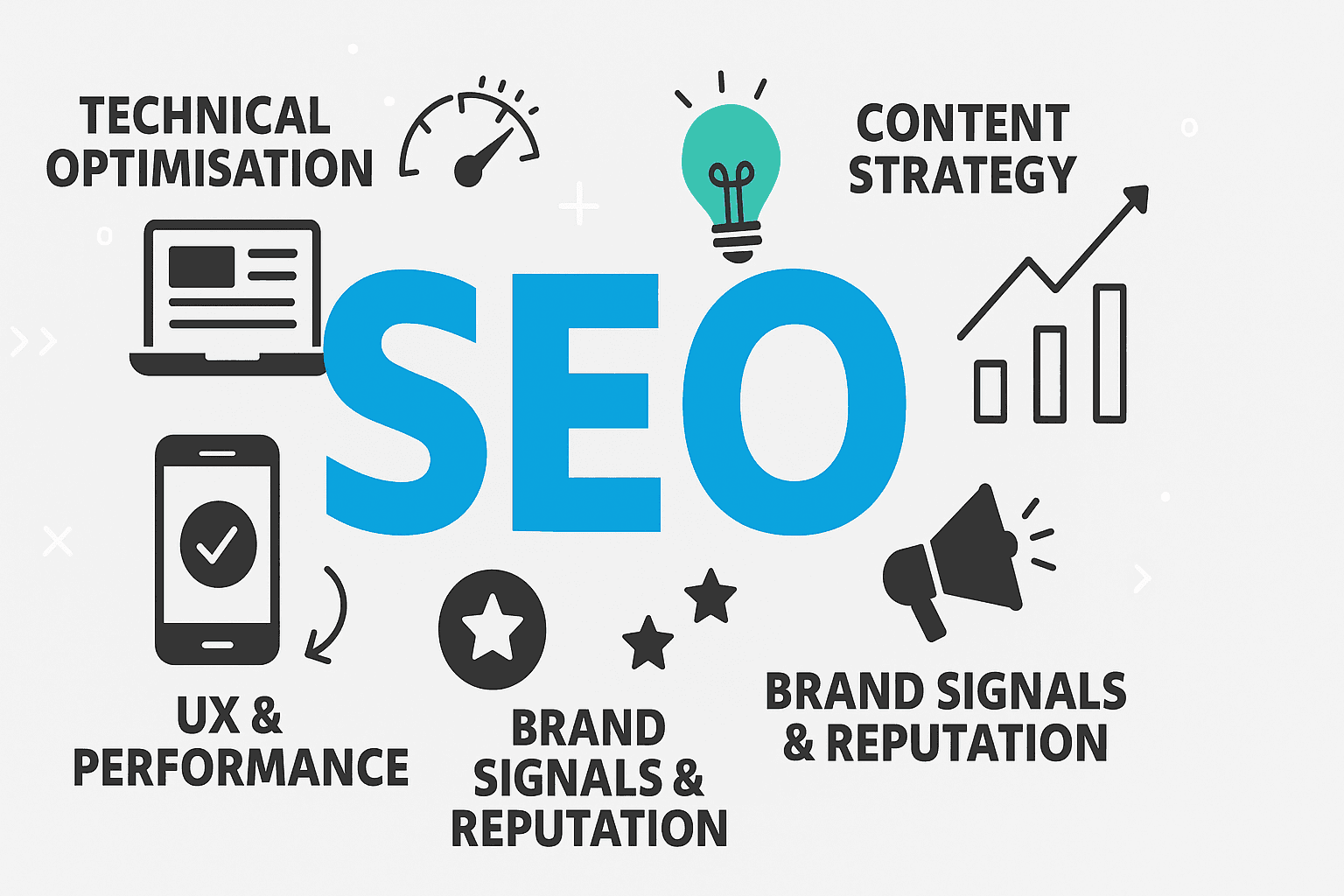
Put simply: SEO uplifts the entire ecosystem of your digital presence.
When done well, it improves discoverability, sharpens your message, enhances user experience, and positions your brand as the best answer - not just the most optimised one.
That’s why SEO should sit at the same strategic level as paid media. It deserves attention in boardroom conversations - not just in marketing meetings.
Because if you're only thinking about SEO as "how do we rank higher for product X?", you're missing the bigger opportunity: making your brand easier to find, trust, and buy from - organically, at scale, and over time.
2. SEO Is Not Optional - Even If Your Platform Has “Built-In” Basics
It’s a common assumption: “Our ecommerce platform says it’s SEO-optimised, so we should be fine, right?”
Not quite.
Yes, most modern CMSs and ecommerce platforms (like Shopify, BigCommerce, and yes - even ours) come with out-of-the-box SEO features. You’ll get things like editable meta titles, basic schema markup, sitemaps, and reasonably clean URLs.
That’s the bare minimum.
But bare minimum doesn’t drive growth.
The brands seeing real results from SEO aren’t relying on default settings. They’re:
- Conducting technical audits to uncover hidden issues (slow-loading pages, crawl errors, duplicate content).
- Building out structured data to feed AI models, rich results, and product carousels.
- Mapping content to search intent and buyer journeys, not just guessing at keywords.
- Continuously monitoring site health and identifying issues that impact indexation, conversion, or trust.
Even beyond growth, SEO plays a critical diagnostic role. When it’s monitored and maintained properly, it surfaces valuable insights about your site’s health:
- Are important pages being ignored by Google?
- Are slow load times hurting mobile conversion?
- Are product descriptions too thin to rank - or to convert?
Think of SEO as part performance engine, part early warning system. Without it, you’re flying blind. Or worse, flying on autopilot and wondering why growth has stalled.
And if you’re thinking, “We don’t really rely on organic traffic,” - that’s exactly when you should be paying more attention. Because it’s the one channel that compounds over time, doesn’t require a constant ad budget, and continues to drive results long after a campaign ends.
Case Study
One of our standout success stories here in New Zealand demonstrates exactly why this matters:
Client Challenge:
- Holy Grail Haircare wanted to scale sustainably against well-established professional haircare retailers - all without inflating paid ad spend.
Our Solution:
- Technical SEO audit and optimisation, improved site structure, and rich structured data.
- Product and category pages refined to align closely with high‑intent search queries.
- SEO-driven content clusters and enhanced metadata to build topical authority.
The Results (Year‑on‑Year):
- +306% growth in top‑3 keyword rankings
- +47.6% more organic users
- +619% increase in clicks
- +25% boost in organic search purchases
- +33% uplift in organic shopping revenue
- +102% SEO return on investment (ROI)
This illustrates how full-spectrum SEO - not just platform defaults - can transform organic search into your biggest, most sustainable revenue driver.
3. SEO Supercharges Every Other Channel
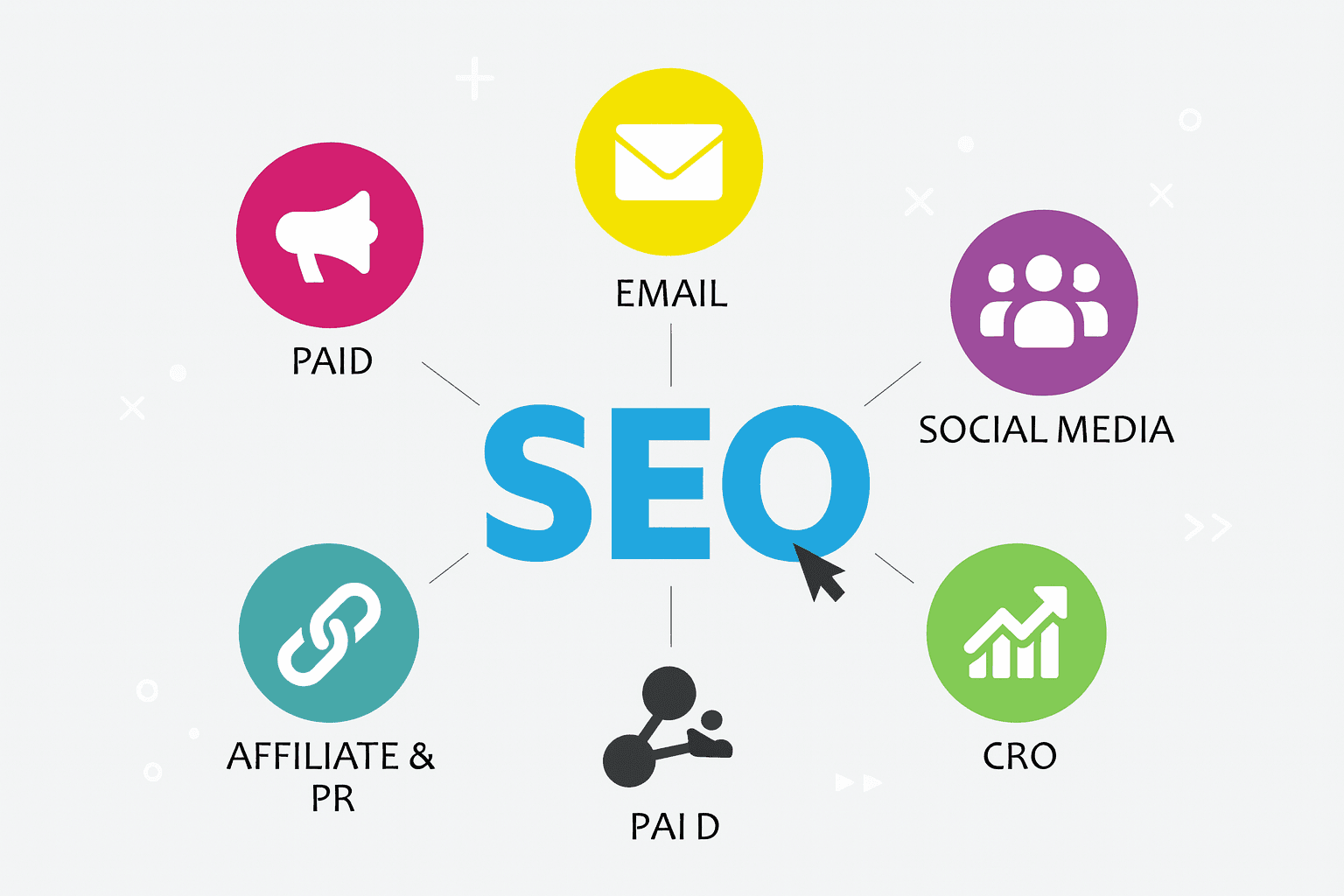
If you're investing in Google Ads, social media, influencer campaigns, affiliate marketing, PR, or email, SEO isn’t a competing line item.
It’s the engine room behind your entire marketing ecosystem.
Why? Because when done well, SEO unlocks compounding benefits across every touchpoint:
- Paid media gets cheaper and more efficient: High-quality landing pages (with fast load times, useful content, and optimised metadata) often perform better in Google Ads. That can reduce CPCs, improve quality scores, and lift ROAS.
- Social campaigns drive search demand: When someone sees your product on TikTok, Instagram, or a blog, what do they do next? They Google it. If your site doesn’t show up organically - or the page they land on is weak - you’ve just paid for someone else’s sale.
- Influencer and PR spikes boost your SEO authority: High-quality backlinks, mentions, and social proof feed into your domain’s trust profile. That helps your content rank higher - and faster - over time.
- Email marketing improves when the website it links to is fast, functional, and findable: A product range can only convert if it’s optimised to appear in search, load quickly, and guide users to what they want without friction.
In a high-performance digital strategy, SEO isn’t an isolated task - it’s an amplifier. It gives your other channels more to work with: better content, better pages, better data, better customer understanding.
And the best part? While your paid ads stop the moment you pause spend, your SEO foundation continues to perform - 24/7. That’s the compounding power of an integrated approach.
4. AI Isn’t the End of SEO - It Makes It More Important
There’s a lot of noise right now around AI-powered search. AI Mode, agentic search capabilities, the list goes on.
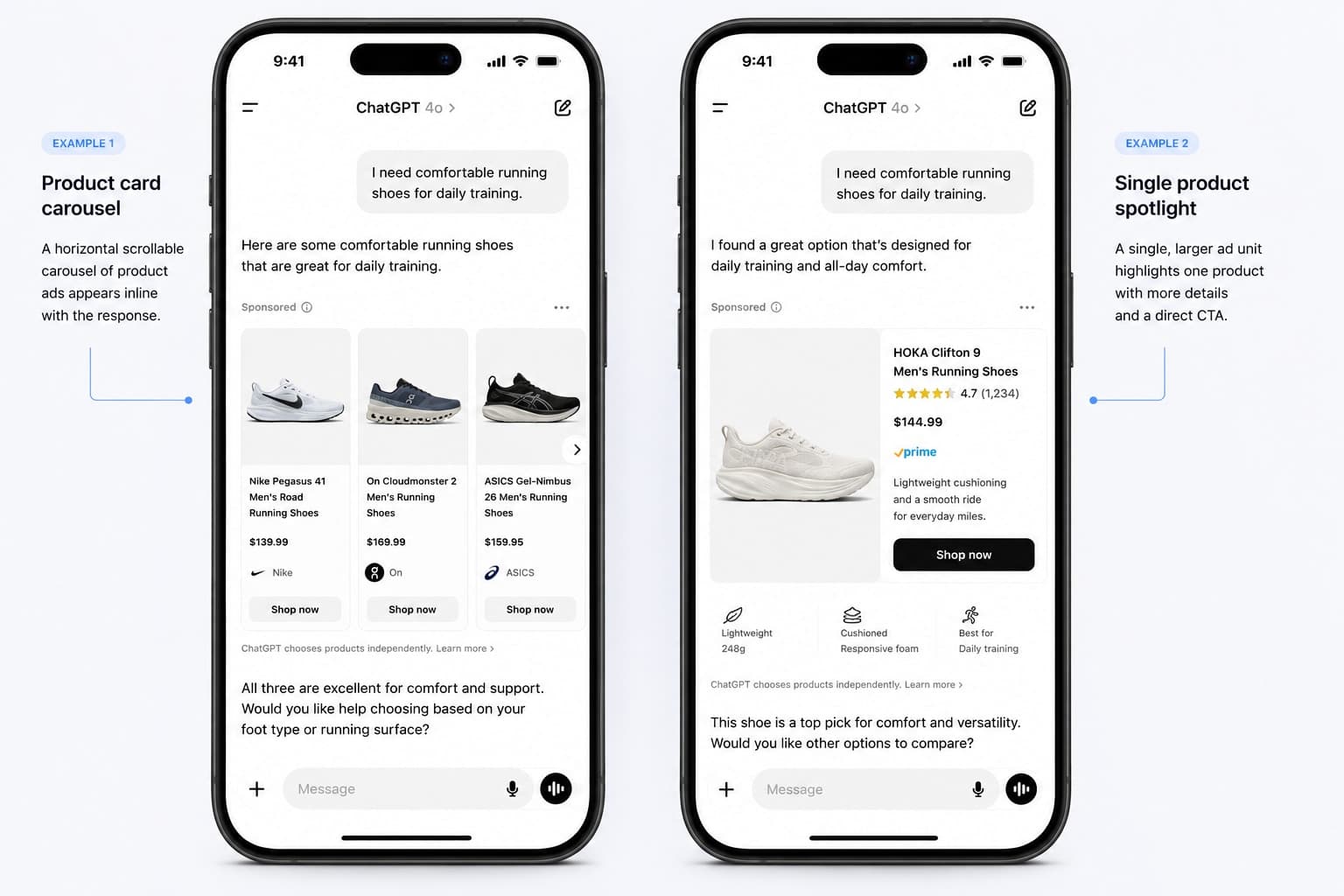
Brands are seeing their content quoted in AI Overviews on Google without clicks. Tools like Perplexity, ChatGPT, and Bing Copilot are rewriting how consumers find and digest information. And yes - some of this disrupts traditional SEO.
But here’s the part many C-suites are missing: AI hasn’t replaced SEO. It’s made it non-negotiable.
If your brand isn’t showing up in AI-generated answers - or worse, it’s being misrepresented - you don’t need a new comms strategy. You need SEO.
Here's why:
- AI Overviews, chatbots, and zero-click answers all pull from structured data, trusted sources, and top-ranking content. If your product pages, blogs, or help content aren't well-optimised and properly marked up, AI won't surface them.
- AI tools prefer authority. Brands with strong domain expertise, quality content, clean technical setups, and consistent digital signals win visibility - because the AI considers them more trustworthy.
- Negatives rise without intervention. If review platforms, Reddit threads, or outdated media coverage are the only things indexed about your brand, that’s what AI will amplify.
In other words: you can’t PR your way out of poor SEO visibility in an AI world.
What you can do is take control of how your site is structured, how your brand is represented in organic search, and what kind of content feeds these machine learning systems. That’s SEO.
The smartest brands in ecommerce right now are doubling down on SEO to shape how their brand is interpreted - not just by customers, but by AI crawlers, agents and search algorithms.

5. SEO Is Not Set-and-Forget
One of the most common (and costly) misconceptions in ecommerce is that SEO is a project you tick off.
“We optimised our site last year.”
“We’ve got meta tags on all our products.”
“We did an audit in Q2.”
That’s great - until your competitor launches a new collection, Google rolls out another update, or customer behaviour shifts overnight (hello, TikTok).
Search is not static. Neither is your product range, your tech stack, or your audience.
That’s why SEO needs to be an ongoing part of your operating rhythm, especially in ecommerce. It’s not just about keeping up with algorithm changes - it’s about showing up where your customers are and evolving with how they shop.
Here’s what that looks like in practice:
- Your product and collection pages are updated with intent-matching content, not just SKU info.
- New content is regularly added - from buyer guides to FAQs to seasonal collections - based on real search demand.
- You’re monitoring page performance, site speed, indexing, and schema health on a monthly basis.
- Your team understands that the first touchpoint might be a deep product page, not the homepage or brand story.
In fact, for many ecommerce journeys, the homepage isn’t even part of the journey at all. Unless customers seek out your brand specifically, chances are they won't land there.
That means every page - especially PDPs - needs to work hard:
- Clear, helpful product copy
- Fast mobile load times
- Structured data for rich results
- Trust signals like reviews and availability
- Internal linking that supports discovery and conversion
Why? Because if someone lands on a poorly optimised page from search, and it’s missing context or confidence? They’re gone. And they probably won’t come back.
Modern SEO isn’t a one-off sprint - it’s a system. And if you treat it like a living, evolving part of your business, it becomes a long-term growth engine that keeps delivering while your ads are off, your inbox is quiet, or your team is heads-down building the next thing
What the C-Suite Needs to Take Away
SEO isn’t a checkbox, a plugin, or a quarterly task.
It’s the foundation of long-term visibility and growth in a digital landscape that’s becoming more fragmented, AI-powered, and customer-led by the day.
Done properly, SEO doesn’t just help you rank - it helps you connect. With buyers. With algorithms. With opportunity.
And if you want your brand to lead the conversation - instead of reacting to it - it’s time to stop treating SEO as a support act.
We don’t just tick technical boxes - we drive retail growth through real-world SEO strategies. Whether you're scaling up, struggling with visibility, or just not seeing ROI from your digital efforts, we can help.
Let’s talk. Book a strategy call or get in touch to see what a real SEO partnership looks like.