ChatGPT Shopping & Instant Checkout: How It All Works
8 October 2025

Roberta Johnston
SEO Lead
I'm an SEO specialist with over 8 years of experience helping brands grow through strategic, data-driven search optimisation. I've worked with large e-commerce websites and niche brands alike, developing a deep understanding of ranking algorithms, generative AI, and LLMs like ChatGPT, Perplexity AI, and Gemini. My expertise spans technical SEO, ensuring sites - whether a few dozen pages or 100,000+ - are crawled and indexed effectively.
Tags
AI-powered shopping is now a thing.
ChatGPT Shopping isn’t brand new - but it’s starting to matter a lot more.
OpenAI first introduced shopping experiences inside ChatGPT back in April 2025, allowing users to browse products, explore recommendations, and compare merchants directly in chat. But as of September 2025, that experience has expanded with Instant Checkout - a feature that lets users buy directly within ChatGPT or the ChatGPT mobile app, without ever visiting the retailer’s website.
That's a pretty massive change, and we'll tell you why:
Where AI-powered search had already started keeping users off websites, Instant Checkout takes that a step further by keeping the entire transaction - from discovery to purchase - inside the ChatGPT ecosystem.
For ecommerce brands, that means fewer site visits, fewer opportunities to convert, and more pressure to make every feed, schema, and product description count.
Let's be clear though - this is a massive opportunity, too. For the brands that get this right, that is. Let's take a look at how shopping within ChatGPT, and their new instant checkout feature, works.
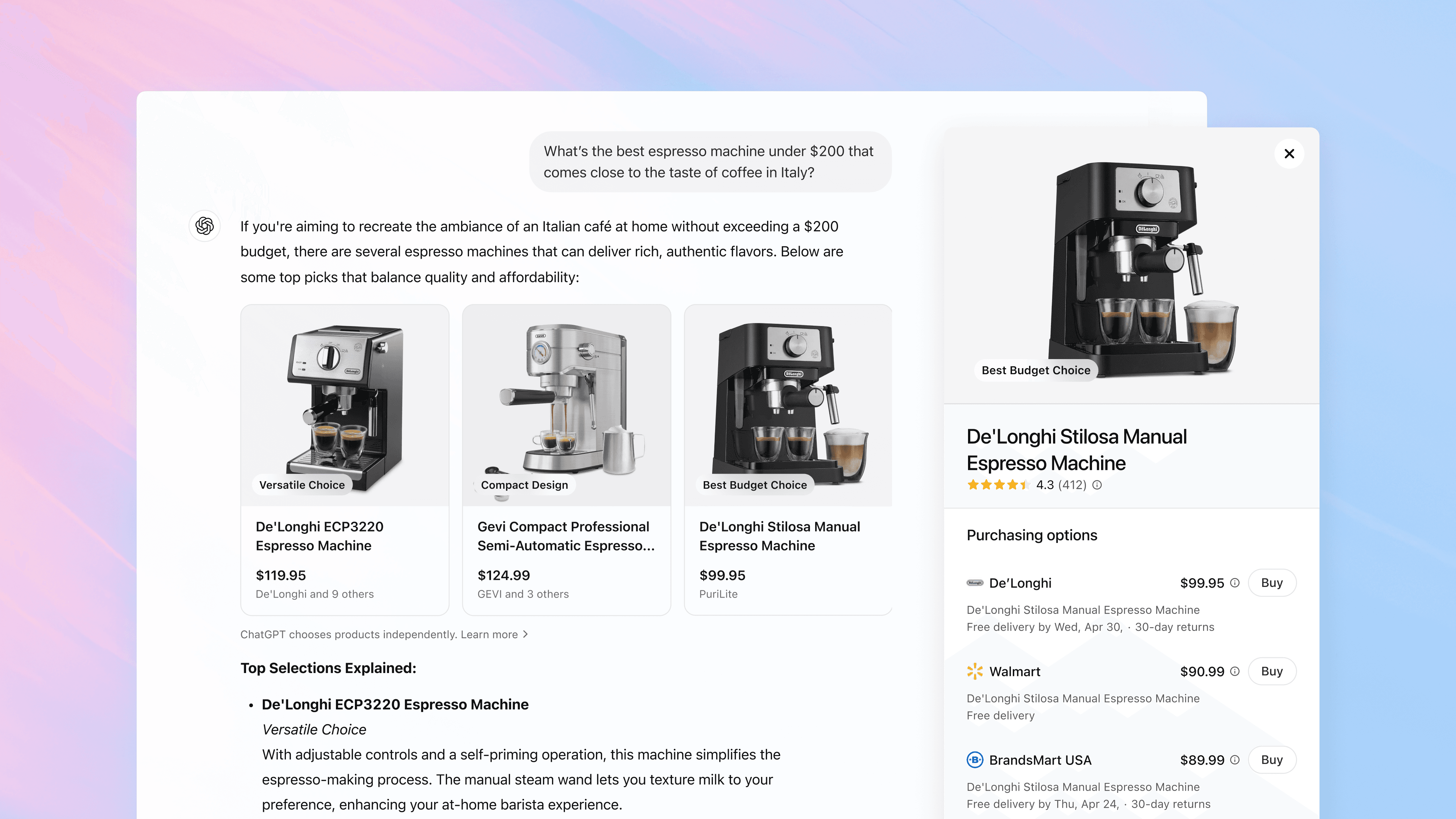
How Shopping Within ChatGPT Works
At its core, ChatGPT Shopping is OpenAI’s take on AI-powered product discovery.
The experience combines conversational search, product recommendations, and now - through Instant Checkout - the ability to complete purchases without leaving ChatGPT.
In many ways, it’s not a new concept. In-app shopping has existed for years on platforms like Instagram and TikTok. But when an AI model that already answers questions, compares products, and summarises reviews becomes a place to complete the purchase too, the implications for ecommerce visibility change dramatically.
Why is that so significant?
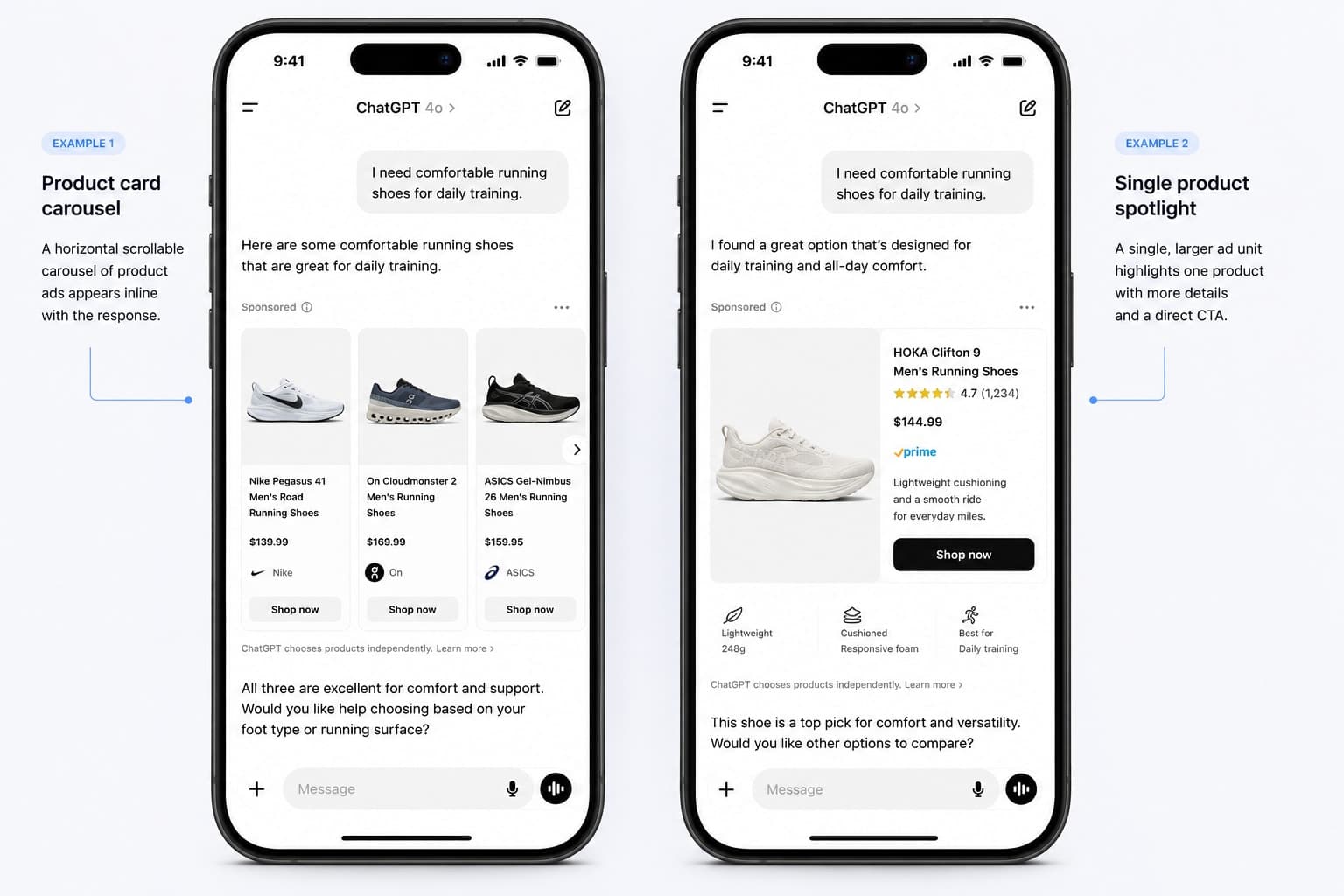
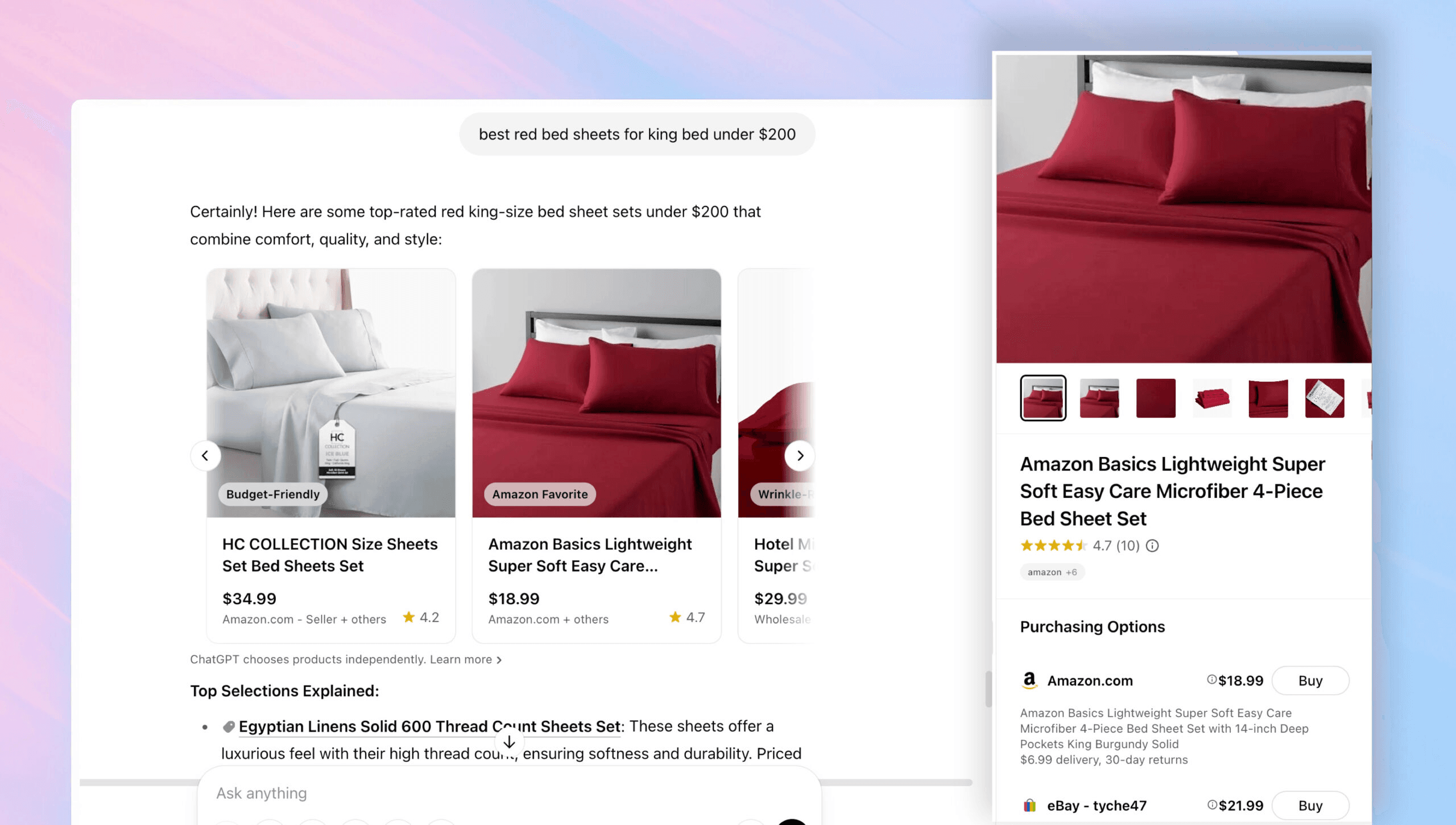
When a user searches for something like “help me find a housewarming gift under $100,” ChatGPT doesn’t just list links. It generates a curated set of product cards, complete with images, pricing, and merchant names.
These are known as product previews, and they’re the new storefront within ChatGPT.
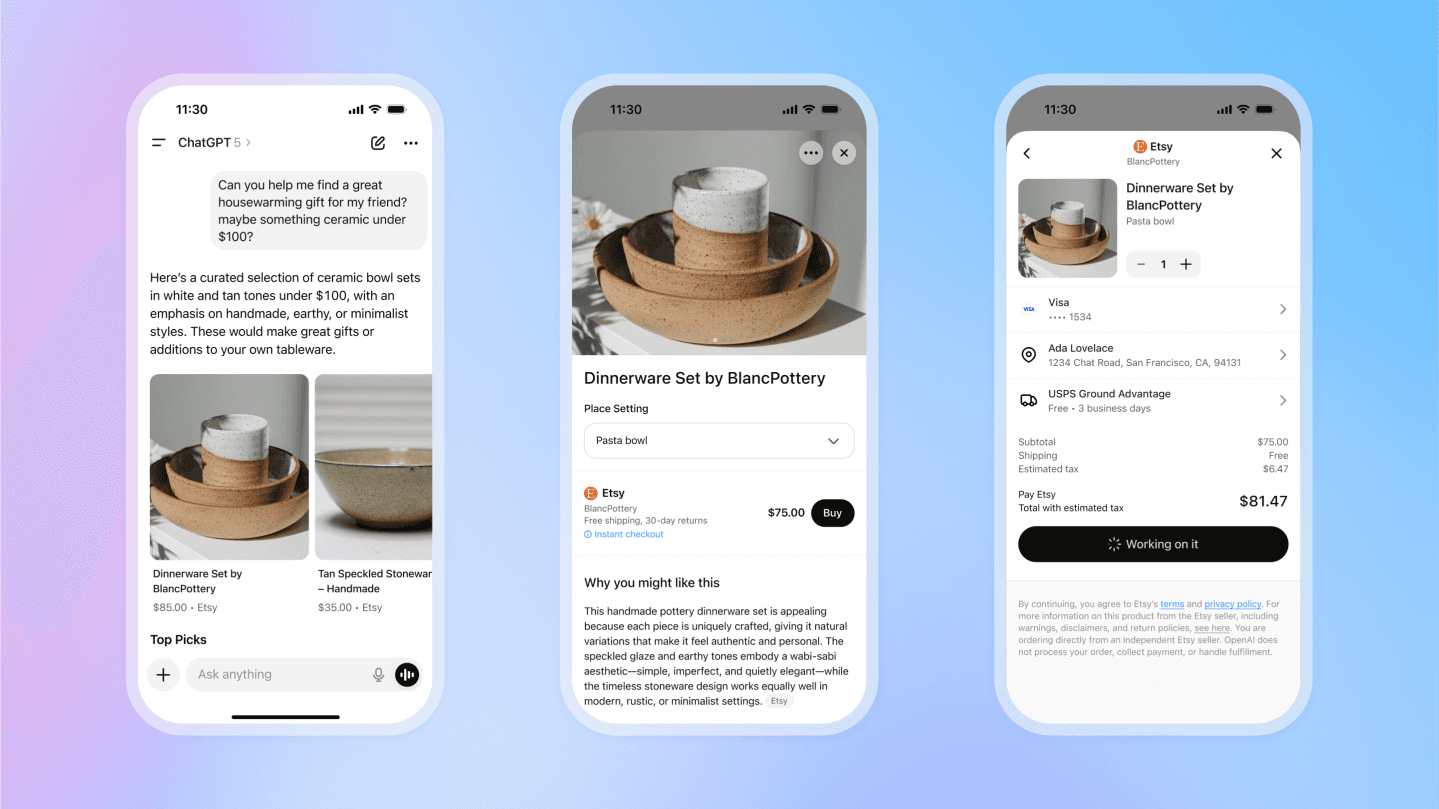
Each card gives users enough information to compare and decide, often without ever clicking through to the retailer’s site. With Instant Checkout, they can now buy directly inside the chat interface - streamlining the path from discovery to conversion.
Current limitations
Currently, this feature is only available to U.S. users and merchants, primarily through partnerships with Etsy and soon Shopify.
Payments are processed via Stripe, and the checkout experience happens entirely inside the ChatGPT environment. OpenAI has confirmed plans to expand merchant eligibility and payment support globally, but there’s no confirmed release date for Australia, New Zealand, or other APAC markets just yet.
For now, brands in this region can’t yet activate ChatGPT’s Instant Checkout - but that doesn’t mean they should ignore it. Even if it’s not yet live here, the underlying logic applies everywhere.
The same signals that power product visibility in ChatGPT Shopping: clean data feeds, structured product markup, and accurate schema - are the ones that already affect visibility in Google’s AI Mode and AI Overviews, Meta’s Advantage+ shopping, and Bing’s Copilot results.
Optimising for this ecosystem now means you’ll be ready when it arrives.
The Big Question: Why Does This Matter to You?
On the surface, ChatGPT Shopping feels familiar. Like we said, platforms like Instagram, TikTok, and Pinterest have been blending discovery and checkout for years. But ChatGPT’s approach is fundamentally different - because it doesn’t rely on ads, feeds, or algorithms in the traditional sense.
Instead, it’s conversation-driven.
When someone asks ChatGPT to recommend a moisturiser for sensitive skin or a laptop that’s good for travel, the model scans its trusted merchant data and presents options it believes best match the query’s intent.
That word - intent - is what you should pay attention to.
Unlike keyword-based search engines, ChatGPT isn’t looking for exact matches or optimised product titles. It’s looking for context, clarity, and relevance. It doesn’t care if your page title says “Best Running Shoes NZ” - it cares whether your structured data, product details, reviews, and brand credibility tell the model, “this is a reliable product for running.”
Brodie Clark
Visibility has a whole new meaning
What this means for ecommerce brands is simple but profound: Your visibility in ChatGPT Shopping isn’t tied to your Google rankings. You can appear - or disappear - regardless of your position in traditional search results.
Product previews (those small cards users see in chat) are generated from merchant data and verified feeds, not necessarily your website. So, if your feed is incomplete, outdated, or unstructured, you’re invisible - even if your site is beautifully optimised for search.
And with Instant Checkout, the implications run deeper: users may complete their purchase without ever seeing your homepage, your brand story, or your upsells. That’s a fundamental shift in user behaviour - one where discovery, evaluation, and conversion all happen in the same place.
For brands, this means:
- Fewer touchpoints on your own site
- More reliance on clean, structured product data
- Less control over brand presentation
- Greater need to build authority and trust signals off-site (citations, reviews, brand mentions)
Challenges, Unknowns, and Risks
Like most things in the AI space right now, ChatGPT Shopping is still evolving - fast. And while it represents a huge opportunity for ecommerce brands, it also comes with a fair share of question marks.
1. Limited Rollout & Regional Availability
As mentioned earlier, Instant Checkout is only available in the U.S., and primarily through select merchant partners such as Etsy, with Shopify integration on the way.
That means brands in Australia, New Zealand, and wider APAC regions can’t yet participate directly.
But that doesn’t mean the groundwork shouldn’t start now. History tells us that these features expand globally - often faster than expected. When they do, those who already have clean feeds, structured data, and AI-ready content in place will be the first to benefit.
2. Accuracy and Representation
AI-generated results are only as reliable as the data that fuels them. Incorrect or incomplete product information, mismatched schema, or poor-quality feeds can lead to inaccurate listings - and in some cases, products being misrepresented entirely.
With ChatGPT handling both discovery and checkout, your data becomes your brand.
There’s no landing page, no carefully designed layout, no brand video to tell your story - just the facts the model interprets from your data.
3. Merchant Eligibility & Control
OpenAI hasn’t shared much about how merchants are selected or ranked.
While data quality and schema compliance clearly play a role, there’s still little transparency around how product previews are generated or prioritised.
This makes it difficult for brands to “optimise” in the traditional SEO sense - and introduces a new reliance on platform trust and integration over algorithmic visibility.
4. Monetisation & Future Commercial Models
Right now, there are no paid placements in ChatGPT Shopping - but that’s likely to change.
Just as Google evolved from organic listings to an ad-heavy SERP (search engine results pages), OpenAI may eventually introduce promoted slots, commissions, or referral models.
If and when that happens, brands will need to balance organic visibility through data optimisation with paid inclusion opportunities, much like they do with Google Ads today.
ChatGPT Shopping opens a new chapter for ecommerce, but it’s not one brands can control in full just yet.
Navigating What's Next
The speed of change in AI isn’t slowing down - and ecommerce is right at the centre of it. ChatGPT Shopping is just the latest example of how quickly customer journeys are shifting, how discovery is evolving, and how visibility itself is being redefined.
The real question is: how prepared is your brand for that change?
Are you already thinking about how your products appear in AI-powered environments - from Google’s Overviews to ChatGPT’s product previews - or are you still relying solely on traditional search visibility?
Because the reality is, these systems aren’t replacing search. They’re reshaping it. And the brands that start aligning their strategies now - through better data, cleaner feeds, and stronger technical SEO foundations - will be the ones who thrive when AI-driven shopping becomes global.
We’re already working with international brands - including those that sell into the U.S. - to help them prepare for what comes next. From AI visibility audits to data-driven ecommerce strategies, we’re helping them stay one step ahead in this rapidly changing landscape.
And we can do the same for you. Talk to us about your AI visibility strategy
Let’s make sure your brand is ready for what’s next - not just reacting to it.