How AI is Influencing Your Brand's Reputation
22 October 2025

Roberta Johnston
SEO Lead
I'm an SEO specialist with over 8 years of experience helping brands grow through strategic, data-driven search optimisation. I've worked with large e-commerce websites and niche brands alike, developing a deep understanding of ranking algorithms, generative AI, and LLMs like ChatGPT, Perplexity AI, and Gemini. My expertise spans technical SEO, ensuring sites - whether a few dozen pages or 100,000+ - are crawled and indexed effectively.
Tags
What does ChatGPT say about your brand?
And ChatGPT's not the only one people are asking, either.
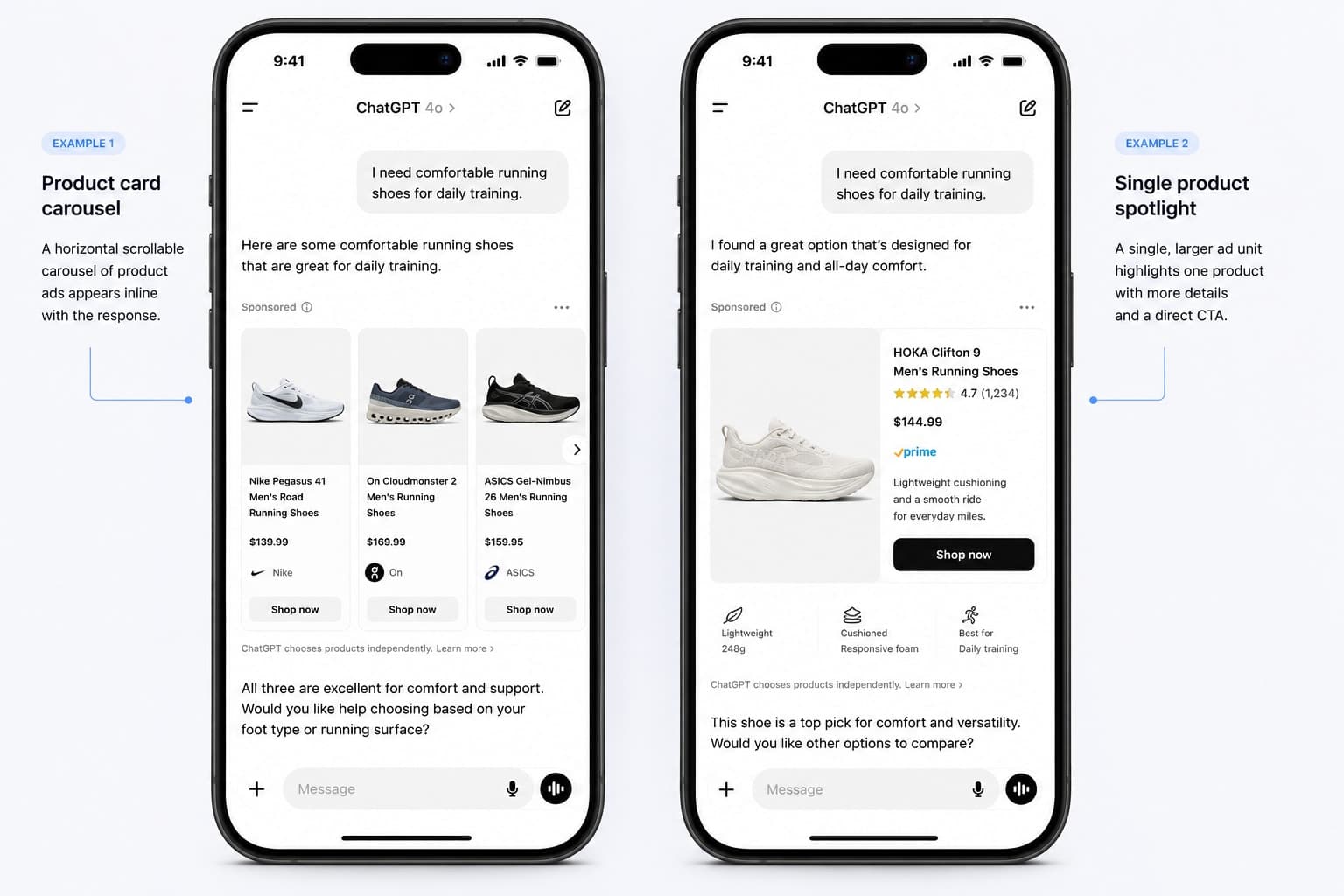
We're all still learning how the average consumer uses AI tools - particularly how it differs from the way they use search engines like Google, or Bing - but one thing is for sure: the traditional online customer journey is fundamentally changing.
For ecommerce especially, AI disrupts the awareness and consideration phases (unless a user progressed from problem → solution → product), suggesting products or brands based on their query. The research phase is entirely skipped.
And this is where the danger - or opportunity - lies.
The perception the AI instantly forms is a single, authoritative narrative about your business - and that narrative is rarely pulled solely from your own website.
You are either cited, trusted, and recommended by the new gatekeepers, or you are invisible at the exact moment a customer is ready to buy.
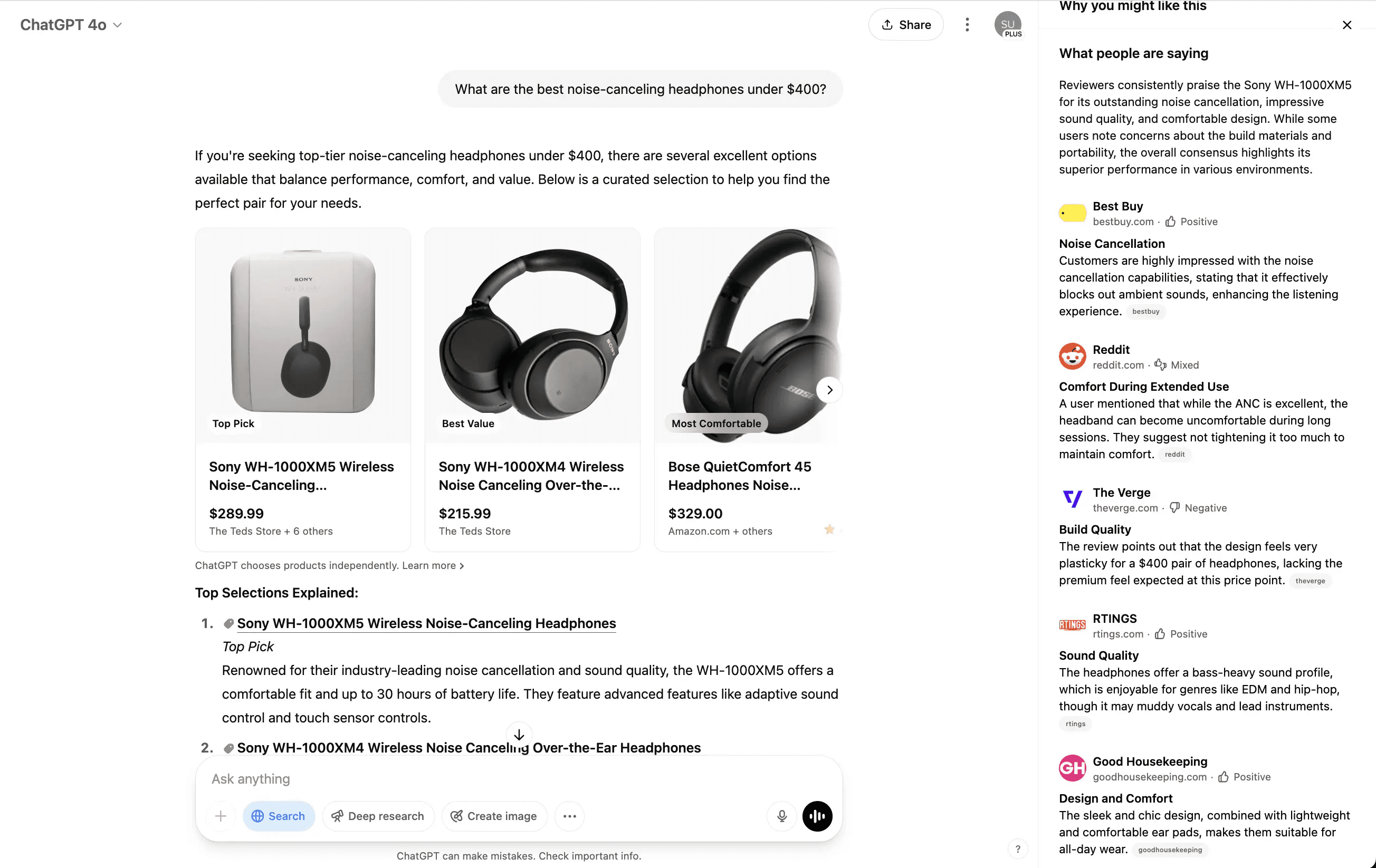
How is AI Talking About Your Brand?
Before we go any further, try this out for yourself.
Go ask Google's AI Mode, Gemini, or OpenAI's ChatGPT about a competitor's brand, your own brand, or even a product you sell.
What does it say?
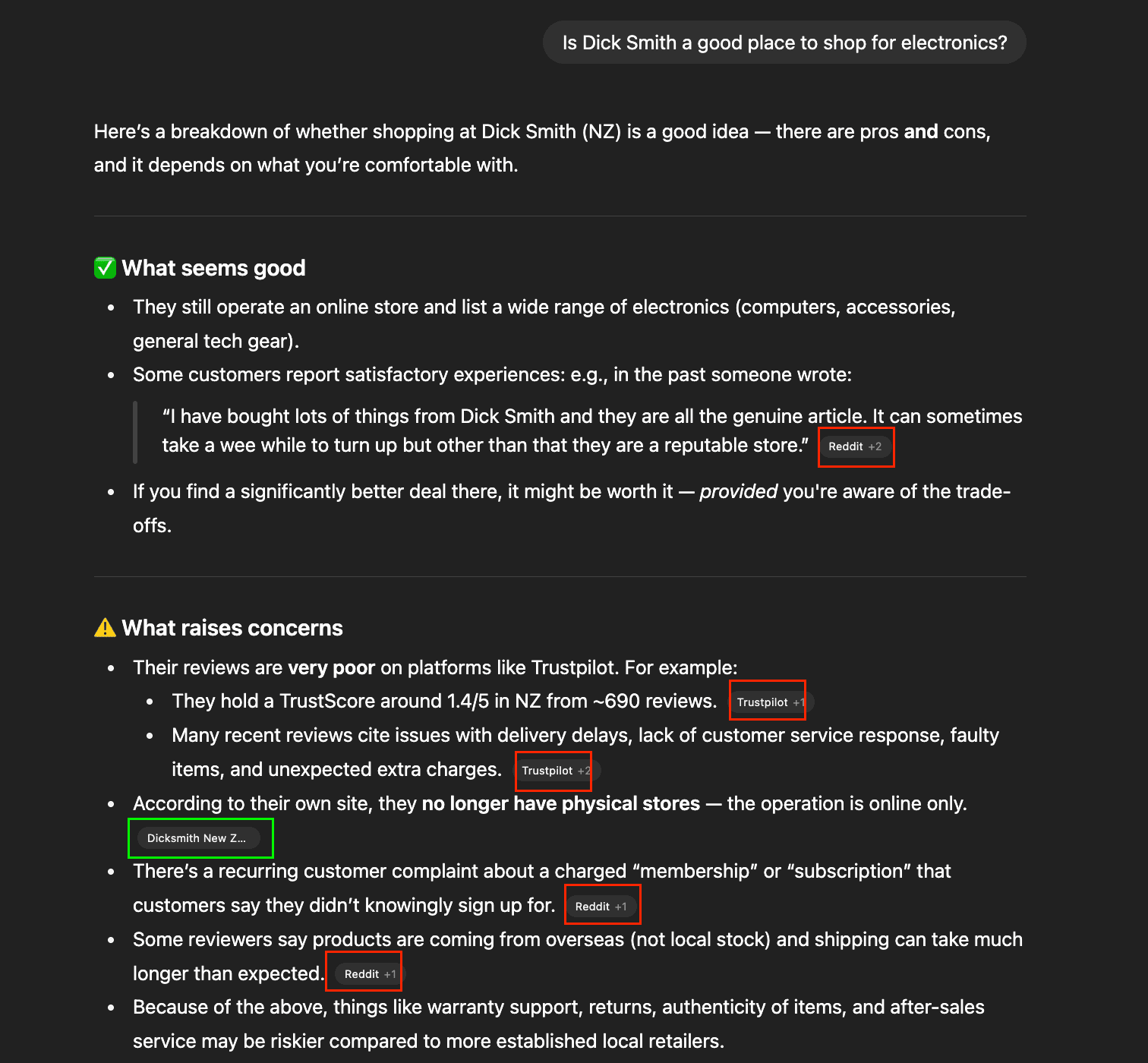
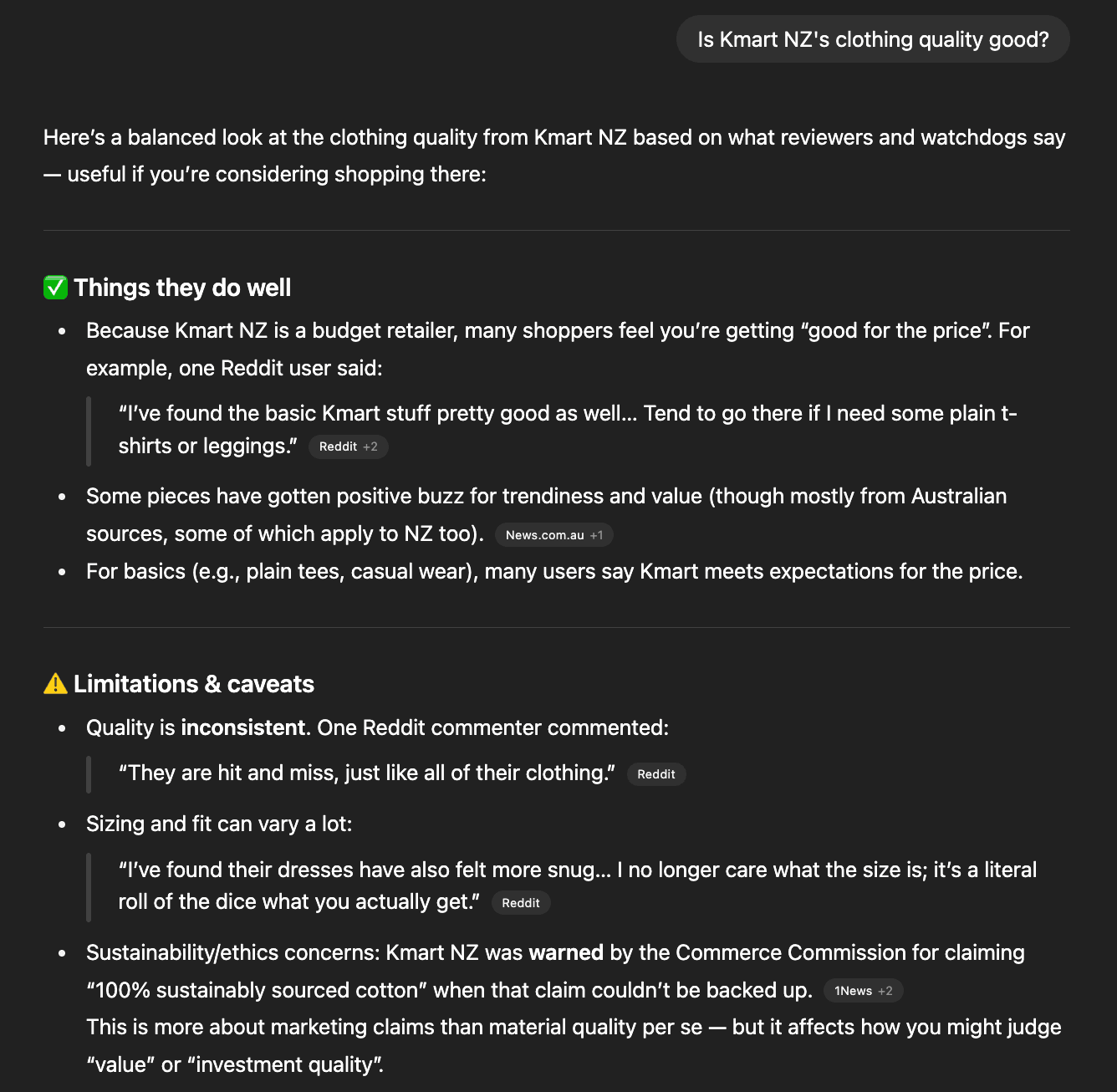
An example of a search I conducted on ChatGPT. Note the sources 👀
The summary it generates is not a simple fact list; it’s a confident, comprehensive review of the brand’s history, customer sentiment, product quality, and typical price point.
For an ecommerce brand, that summary may be the only thing a customer reads before buying a product.
How the AI Forms Its Opinion
AI is not a neutral arbiter; in other words, it'll never play devil's advocate.
It’s a sophisticated engine that forms its brand perception based on two core data sets. Understanding these is key to your strategy:
1. The Foundation: Training Data (Cementing Bias)
This is going to get a bit technical - bear with us.
- Large Language Models (LLMs) like those powering Gemini are trained on petabytes of public web data, which includes billions of un-curated social posts, forum discussions, and articles.
- This creates the foundation for the AI's "default" opinion of your brand.
- If the prevailing sentiment about a specific product or service was historically negative in the training data, that negative bias is cemented into the model's core knowledge.
2. The Real-Time Problem: Search Retrieval
To give you a real-time answer, the AI uses advanced search retrieval functions.
This means it actively cross-references your query against fresh, current web content - especially the third-party sources you don’t control.
This is why your brand's narrative is being written by voices outside of your marketing team:
- Community Forums: Content from sources like Reddit, Quora, and industry-specific groups is high-value for AI models, representing unfiltered, real-world customer consensus.
- Customer Review Sites: Google Reviews, Trustpilot, and G2 become definitive data points. The AI aggregates star ratings and sentiment, translating thousands of individual reviews into one authoritative statement on brand quality.
- Social Media: Even traditional channels like Facebook groups and X (formerly Twitter) - where word-of-mouth recommendations thrive - feed the AI's live understanding of your reputation.
In essence, your brand is being scored on its external integrity.
If the AI finds consistently positive, verifiable signals outside of your owned domain, it makes you a citable source.
If it finds mixed or negative signals, that negative bias is cemented and distributed as a definitive answer to millions.
The Double-Edged Sword: Bad Bias vs. Brand Authority
The fundamental principle of AI summarisation - that it seeks consensus from third-party sources - is a double-edged sword.
The same mechanism that can ruin your reputation can also build it faster than any previous form of marketing.
The Downside: Negative Bias is Cemented
If your brand has old, negative sentiment buried in forums, outdated information on review sites, or a technical issue flagged years ago, the AI will often amplify it.
Why? Because the LLM was trained on a vast data set where that negativity existed.
The risk isn’t just that bad information surfaces; it’s that the AI provides it with the voice of final authority. It instantly validates a customer’s doubt, making it exponentially harder to recover from outdated complaints or historical service issues.
The perception is now official, endorsed by the gatekeeper.
The Upside: Instant Brand Authority
Conversely, the AI rewards external integrity.
If your content footprint is overwhelmingly positive and consistent across the web, the AI will cite and recommend your brand.
- Citation is the New Ranking: When a potential customer asks, "What's the best running shoe for high arches?", and the AI cites your product or review with confidence, that is the most powerful endorsement possible. You haven't just won a ranking; you've won the recommendation.
- Trust is Transferred: The authority of the AI itself is transferred directly to your brand. This can instantly build trust and skip the entire brand-building phase, pushing the customer straight toward the purchase.
The Tricky Bit: AI Aren't All Built the Same
While the problem of the single, authoritative narrative applies across the board, not every AI tool functions the same way.
The rules of engagement change depending on whether you are talking about an AI-powered search engine (like Google's AI Mode) or a Pure LLM (like ChatGPT or Perplexity).
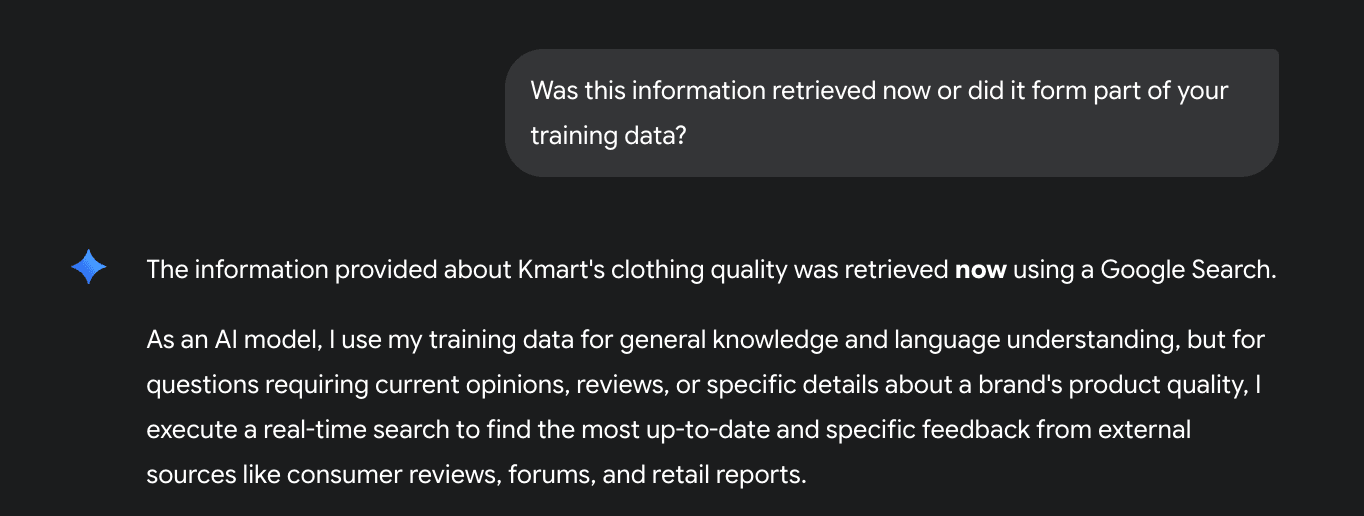
Search Engine AI (e.g., Google's Gemini/AI Mode)
These tools are built directly into the largest discovery platform in the world.
- Sourcing: They rely on real-time search retrieval (a live crawl of the web). This means they are constantly looking for the freshest and most authoritative content. This makes your current content updates and technical SEO critically important.
- Serving/Citing: Google's AI Overviews and AI Mode typically provide clear, clickable citations to the original source. Your goal here is to be one of those prominent, visible links.
Pure LLMs (e.g., ChatGPT, Perplexity, Anthropic)
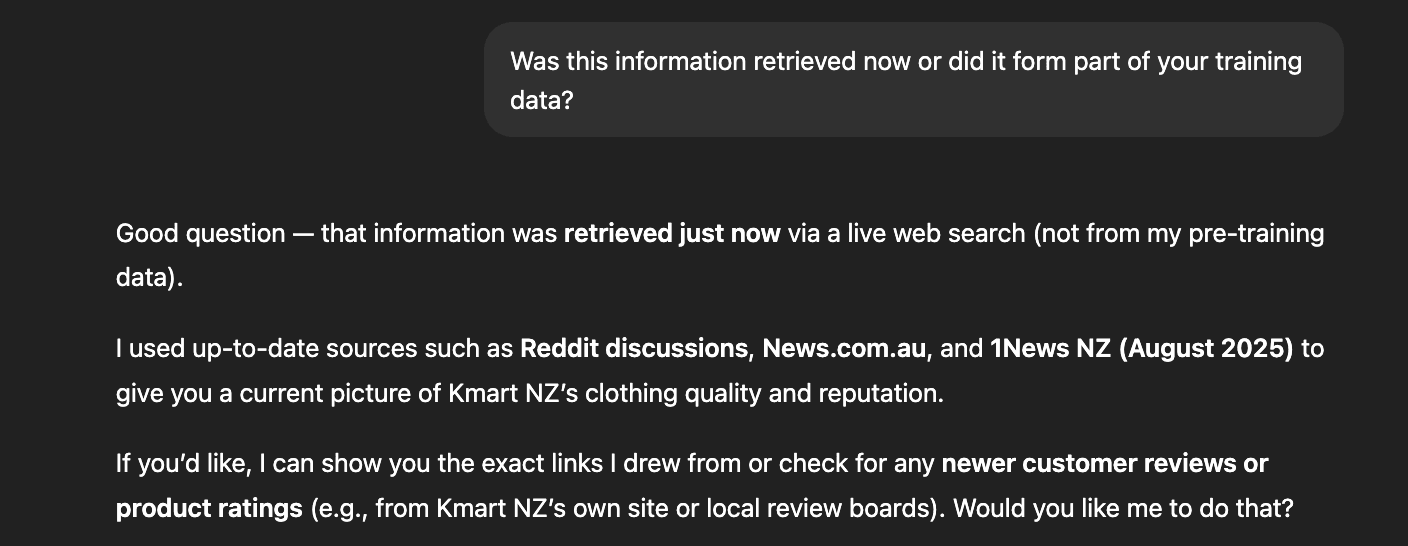
These are primarily conversational models, which complicates how they build brand opinion.
- Sourcing: They rely heavily on their vast, but static, training data (where historical bias is cemented) and use specialised tools, APIs or partnership agreements with content creators to fetch real-time data.
- Serving/Citing: Citation practices vary wildly. Some aggregate data and present it as a clean answer without direct links, while others (like Perplexity) are highly focused on providing sources. Your goal is to be frequently mentioned, making your brand a topic of conversation in their training data.
Because the sourcing methods differ, your strategy cannot be one-dimensional.
To truly control your brand's narrative, you must satisfy both systems: you need fresh, structured content for the real-time crawlers, and a dense, authoritative footprint across external channels for the LLMs to ingest.
What Does All This Mean for You?
The biggest mistake a brand can make right now is treating this as an "SEO problem".
This is a fundamental brand and business risk that requires a blend of expertise across search, content, and reputation management. Your entire strategy must be focused on controlling these three narrative pillars:
Pillar 1: The Authority of Your Own Voice
Your website must become the most reliable source for information about your products.
This means moving beyond generic descriptions and creating content that is specifically structured to be citable. By focusing on E-E-A-T (Experience, Expertise, Authoritativeness, and Trustworthiness) and answering customer questions definitively on your site, you force the AI to look inward for its facts.
Pillar 2: Your External Integrity
The real battle for brand perception is being fought on third-party ground. You need to actively prioritise and manage every channel the AI is pulling data from.
This includes making the effort to constantly monitor and reply to reviews across platforms like Google and Trustpilot, and ensuring total data consistency across your social and business profiles.
When you demonstrate transparency and authenticity here, you build your brand's authority score instantly.
Pillar 3: The Conversation Around Your Brand
Your mission is to generate positive, citable signals that can successfully "re-train" the AI model’s perception of your brand.
This requires a strong, active PR function to drive positive mentions from high-authority sources. Every positive citation from a trusted external voice helps solidify your position as the expert the AI will recommend.
The Agentic Future: Why You Must Act Today
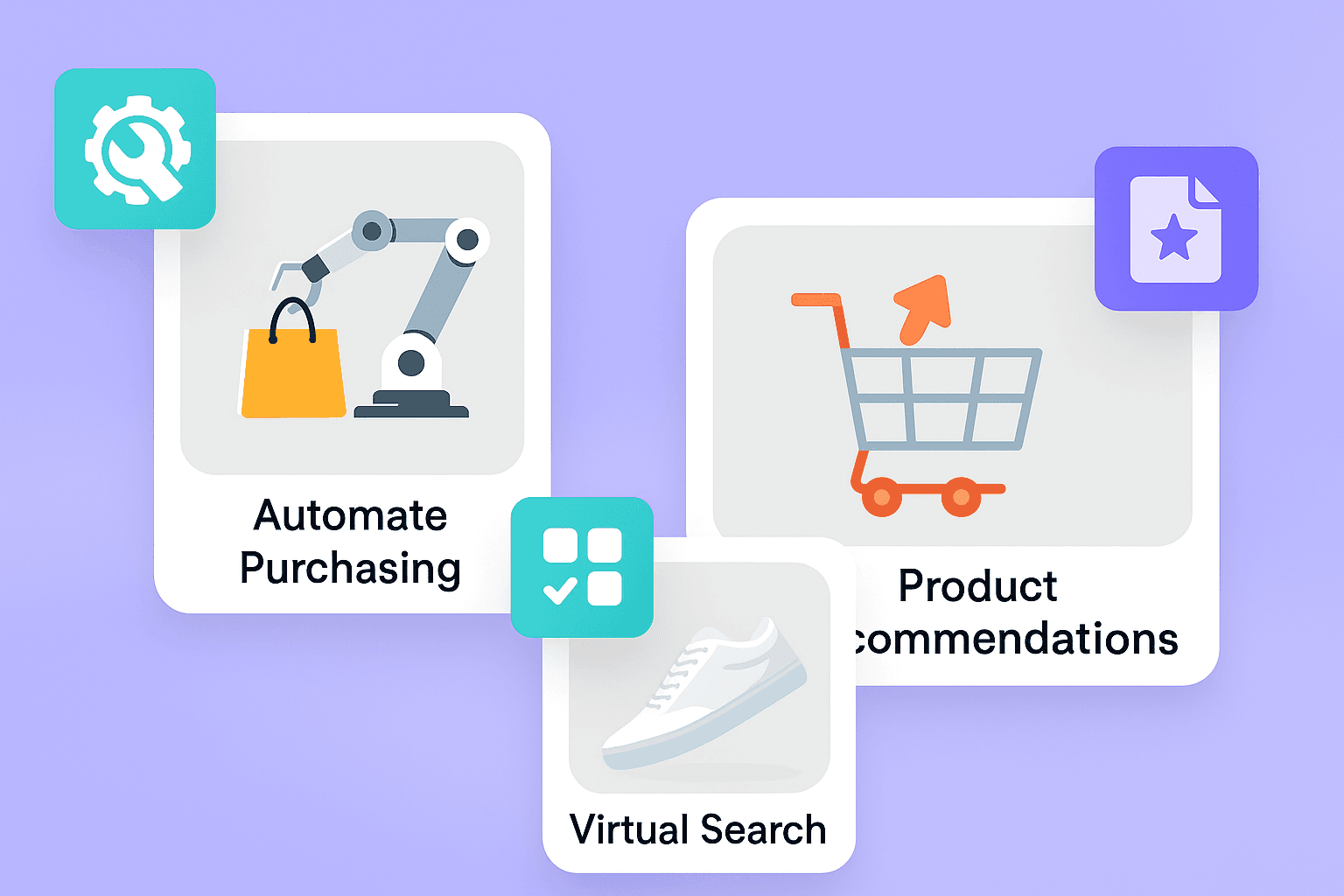
The AI shift isn't just about search results anymore. It's moving quickly to Agentic Commerce - tools that will soon be able to act and transact on a customer's behalf.
We’re talking about AI moving from a recommendation tool to an actual buyer.
We’re past the early days of simple price alerts. The new systems are capable of generating an unchangeable Cart Mandate - a pre-authorised purchase that happens instantly when the customer’s conditions are met.
The Imminent Threat of Autonomous Purchase
Consider the instruction a sophisticated AI agent will be given: "Find and purchase the highest-rated waterproof running shoe in my size, with a budget under $200."
The AI won't show a list of links or ask for permission. It will simply execute a transaction based entirely on the single, authoritative narrative it has already formed about your brand.
If your brand isn't the recommendation, you don't even get a look-in.
Make AI Work For You, Not Against You
The fact is, the way consumers find and purchase products has changed forever. You no longer have the luxury of waiting for customers to complete their own research; you have to ensure your brand is cited, trusted, and recommended by the AI gatekeepers at the point of decision.
This is where being a specialist ecommerce agency gives us a crucial advantage.
We don’t just understand general SEO principles; we live and breathe product visibility, transactional intent, and conversion metrics. Our strategy is focused on the exact signals (product reviews, structured data, pricing consistency) that AI agents use to recommend a purchase.
We have the insights and the know-how to make sure your brand isn’t just seen by the algorithm, but is recommended by the AI to every customer looking for what you sell.
Don't let AI write your brand's reputation for you.