How Does Google Use AI in its Search Engine?
9 October 2024

Roberta Johnston
SEO Lead
I'm an SEO specialist with over 8 years of experience helping brands grow through strategic, data-driven search optimisation. I've worked with large e-commerce websites and niche brands alike, developing a deep understanding of ranking algorithms, generative AI, and LLMs like ChatGPT, Perplexity AI, and Gemini. My expertise spans technical SEO, ensuring sites - whether a few dozen pages or 100,000+ - are crawled and indexed effectively.
Tags
Artificial Intelligence (AI) might sound like something out of a sci-fi movie, but in 2024, it’s woven into the very fabric of how we do business - and search engines are no exception. Here at Blackpepper, we’ve embraced AI in ways that enhance everything from everyday operations to the sophisticated search solutions we offer our clients. AI helps us work smarter, not harder, and we’ve seen firsthand just how powerful it can be.
It’s no surprise that Google is also heavily using AI to evolve its search engine. In fact, it’s already happening with tools like RankBrain, which helps Google understand the context of search queries; BERT, which interprets the nuances of natural language; and MUM, which allows Google to answer complex, multi-part questions in more detail. These AI advancements mean Google’s search engine isn’t just answering questions - it’s learning how to think like a human, helping users find what they need faster and more accurately than ever.
With a good chunk of traffic coming through search engines, understanding what’s going on behind the scenes - especially with AI’s growing role - is a must.
In this blog, we’re diving into how Google’s AI systems, like RankBrain, BERT, and MUM, are changing the search landscape. By understanding how Google uses AI to refine search results, you can make sure your ecommerce site stays competitive and visible to the right audience.

The Role of AI in Google Search
Google has evolved far beyond a simple search engine that matches keywords to websites. Today, AI is the backbone of its operations, transforming how search results are ranked, how relevant information is surfaced, and even how personalised results are delivered to each user.
With AI, Google can better understand complex queries, analyse massive amounts of data in real-time, and improve the overall user experience.
Key AI Elements Driving Google Search
One of the first AI models used by Google, RankBrain helps understand the meaning behind queries, even those it hasn’t encountered before. Instead of just matching keywords, RankBrain interprets the user’s intent to deliver more relevant results.
BERT (Bidirectional Encoder Representations from Transformers)
BERT takes this a step further by processing the context of words in search queries. It allows Google to better understand natural language, which is especially important when users ask longer or more conversational questions.
MUM (Multitask Unified Model)
A recent advancement, MUM can process information across multiple languages and formats (like text and images) and provide deeper insights into user queries. For example, you can ask MUM to compare two complex topics, and it will deliver nuanced, (mostly) accurate results.
These AI models are constantly learning and improving, helping Google understand not only what users are searching for, but why they're searching for it, and delivering content that meets these needs.
Why This Matters for Your Ecommerce Site
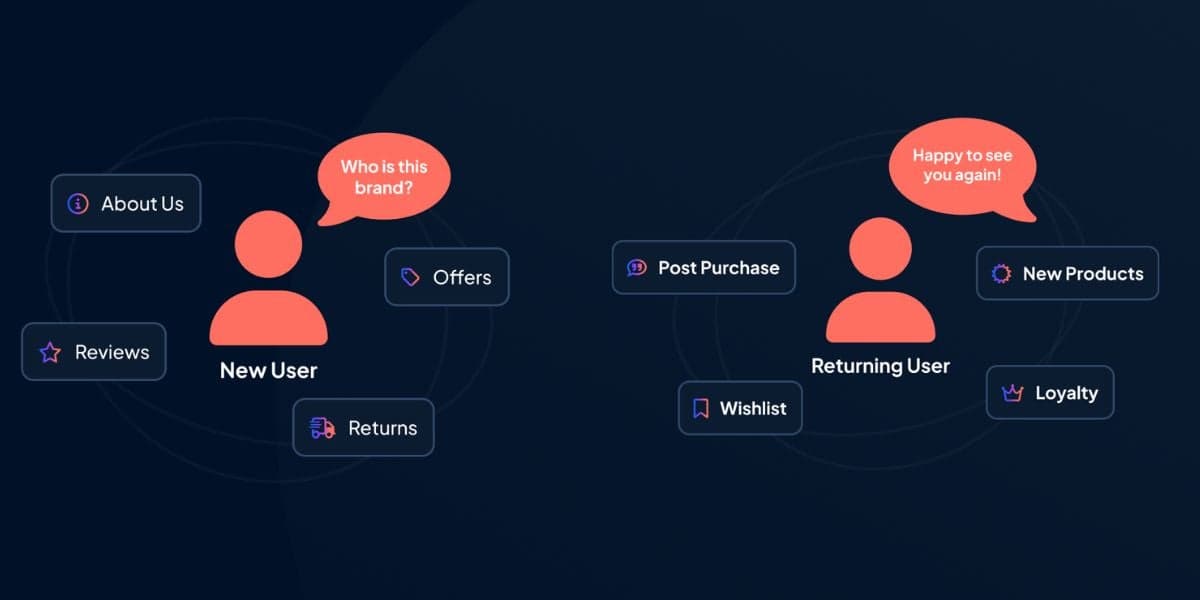
When your ecommerce business leverages AI in its own strategies (like product recommendations, automated customer support, or personalisation), you’re aligning with the direction Google is moving in. Google’s AI-driven search engine rewards websites that cater to user intent, provide valuable content, and offer a great user experience.
This shift means that ranking high in search results isn’t just about traditional SEO practices like keywords and backlinks anymore - it’s about how well your site meets the needs of the searcher, and AI is at the heart of that.
How AI Enhances the Search Experience for Users
Google’s integration of AI has revolutionised the search experience, making it more intuitive, relevant, and personalised. For ecommerce businesses, these AI-driven improvements mean adapting to new ways of reaching customers across both organic and paid search.
1. Personalisation of Search Results
AI enables Google to tailor search results based on user behaviour, search history, and even past purchasing habits. For ecommerce businesses, this means your products or website could rank higher for users who have shown interest in similar products. If a customer frequently searches for certain brands, your relevant products or services are more likely to be displayed at the top of their search results.
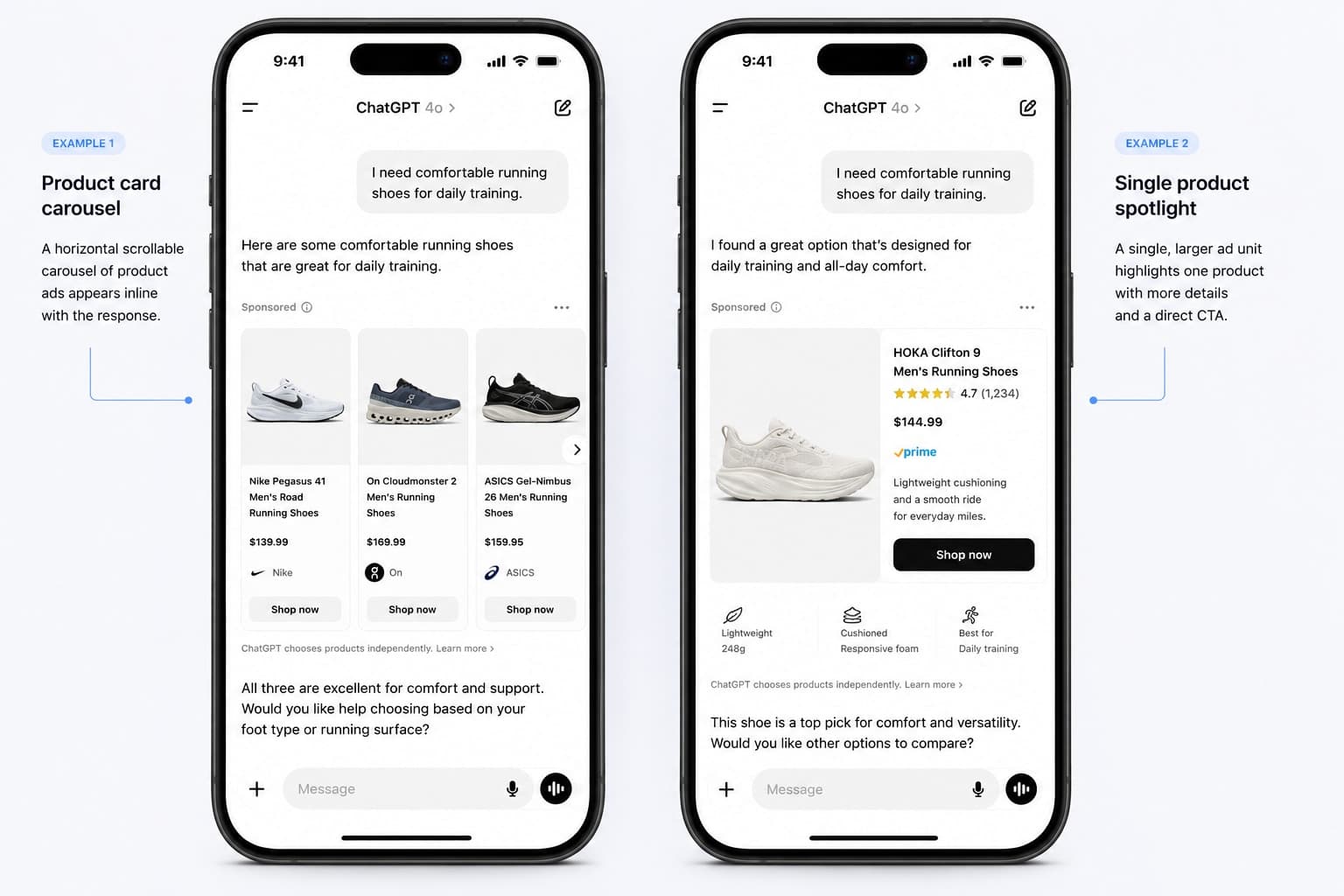
For example, a customer who often shops for sneakers may see your ecommerce store’s sneaker listings in higher positions if your site is optimised. This is great for organic traffic but also means your paid ads can be more targeted. Google knows the user's preferences, so showing paid ads for similar products can improve CTR (Click-Through Rate) and conversion rates.
2. AI in Visual Search
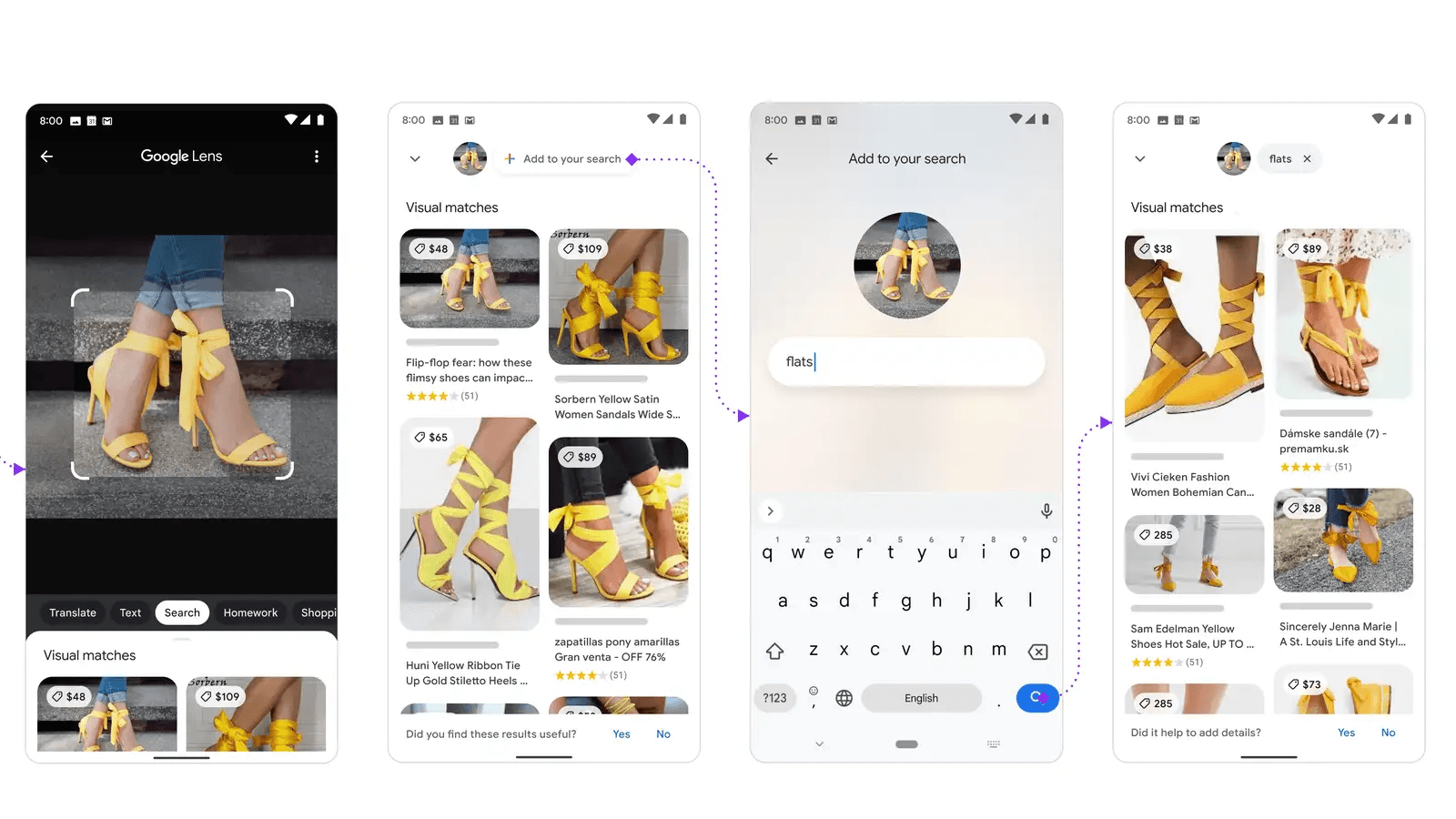
Google Lens, powered by AI, allows users to search by images instead of keywords. Visual search is becoming increasingly important in ecommerce, where customers can upload a picture of a product and instantly see where it’s available online. This can boost visibility for ecommerce sites that properly optimise their images for visual search.
Let’s say a potential customer snaps a photo of a trendy jacket they see someone on the street wearing. Google’s AI can identify similar items, and if your ecommerce site has high-quality images and good product descriptions, your product could be featured in the search results.
By investing in product descriptions and image optimisation, your products have a better chance of appearing, increasing both paid and organic visibility.
3. AI Overviews (Formerly Search Generative Experience)
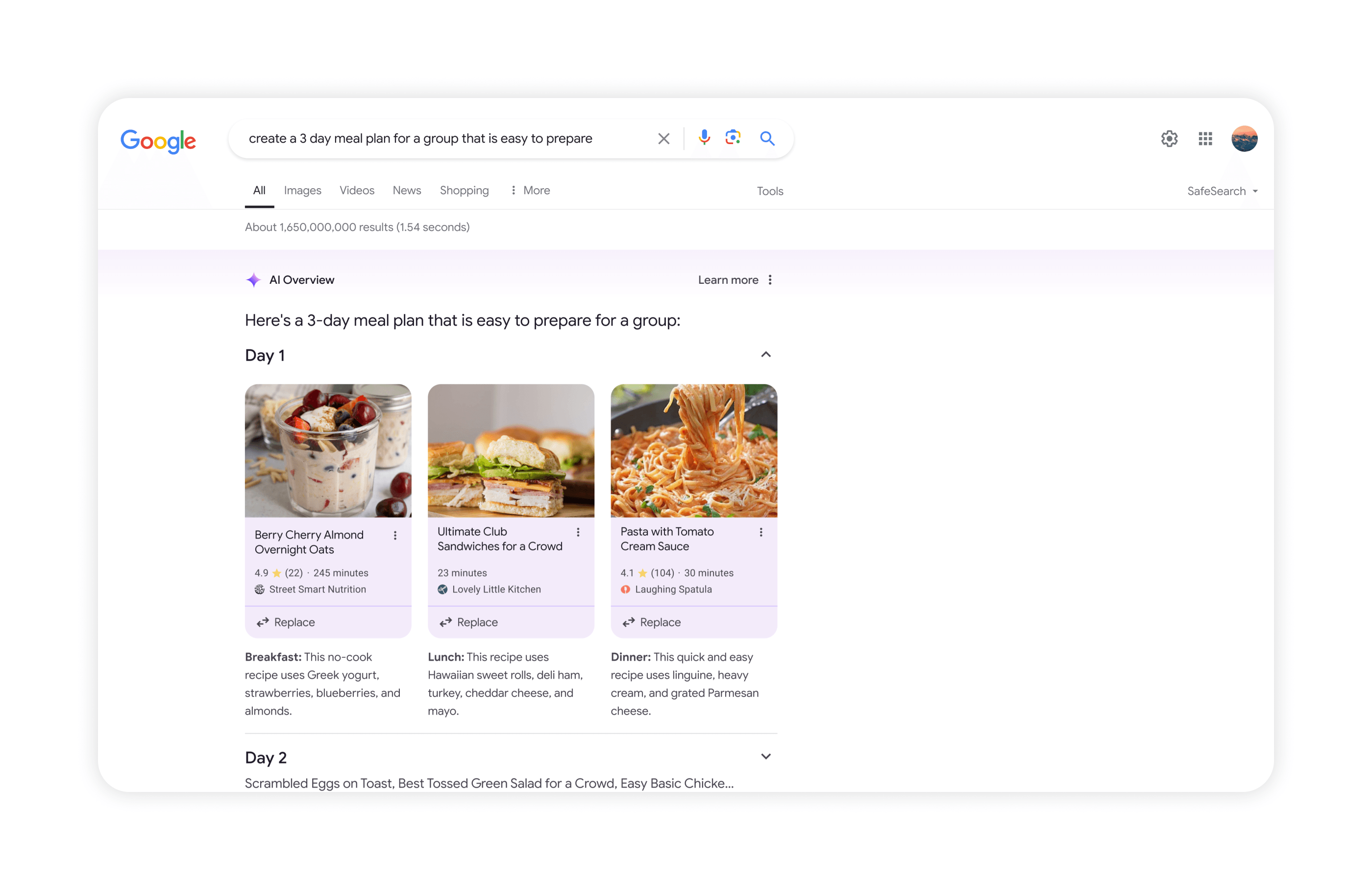
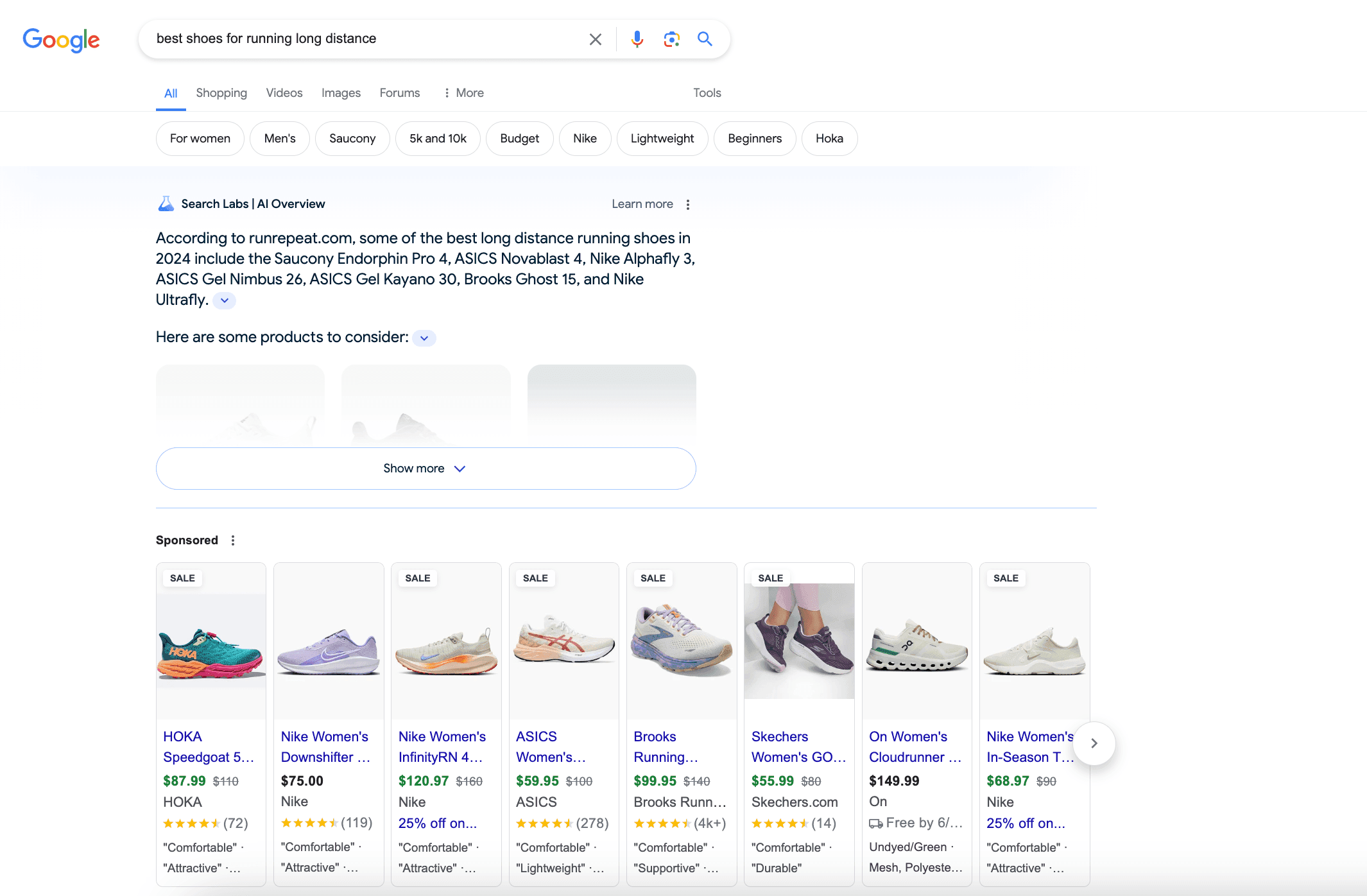
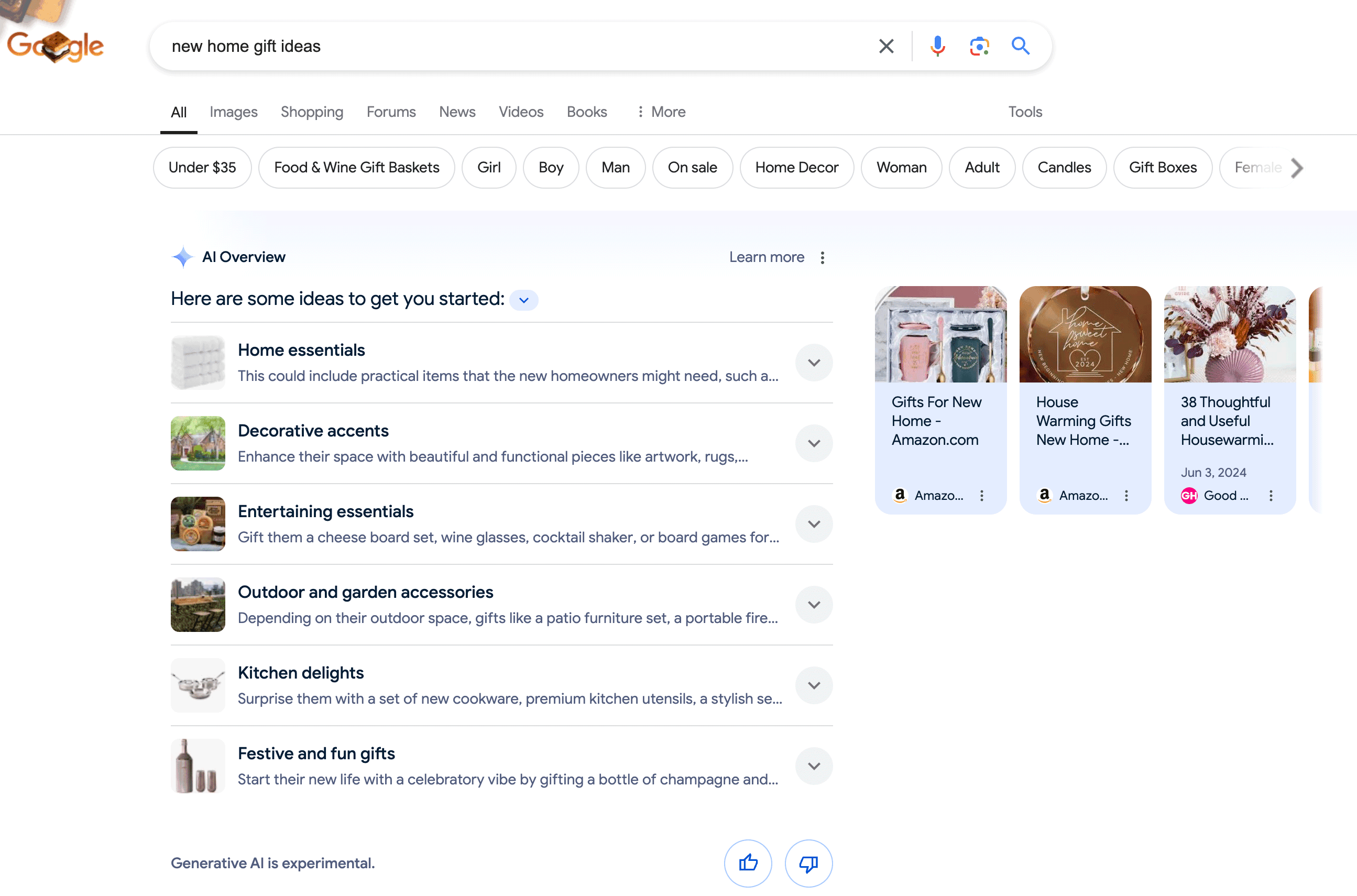
Google’s AI Overviews (AIOs) uses AI to generate detailed answers to complex queries, often providing users with a summary response in addition to traditional results.
For ecommerce businesses, this feature is particularly important for product pages, FAQs, and content marketing efforts. AIO can synthesise product details or reviews, which means well-structured, informative content on your site is more likely to be referenced in these AI-generated summaries.
Imagine a customer is searching for “best eco-friendly backpacks.” Instead of just showing a list of links, SGE could generate a summary of top eco-friendly brands and products, potentially highlighting your ecommerce site’s backpack offerings. Well-optimised content on your product pages - covering sustainability, materials, and product reviews - can help your site get featured in this AI-generated response, boosting organic visibility.
4. Voice Search
Voice search, while still relevant, plays a slightly smaller role for many ecommerce businesses. However, with the rise of smart devices like Alexa and Google Assistant, optimising for conversational queries is still beneficial.
Ecommerce sites should consider voice search by ensuring content is formatted to answer direct questions that users might speak aloud. Blog content is a great way for ecommerce sites to do just that - as well as offer a way to branch out, expand on your content and acquire additional traffic from informational-intent queries like these.

How Google Uses AI to Understand and Rank Content
Google’s ability to deliver the most relevant and valuable content to users relies heavily on AI. For ecommerce sites, this means that the more Google’s AI understands your content, the better your chances of ranking higher in both organic and paid search. Let’s dive into some key ways AI helps Google understand, evaluate, and rank your website.
1. Natural Language Processing (NLP)
Google’s AI is powered by advanced NLP models, like BERT (Bidirectional Encoder Representations from Transformers), which helps the search engine understand the context behind users’ search queries and the content on websites. With BERT, Google can interpret the full intent behind long-tail queries, which are increasingly common in ecommerce.
Let’s say a customer searches for “affordable organic cotton shirts with free shipping.” Before NLP advancements, Google might have focused only on keywords like “organic cotton shirts.” Now, with BERT, Google understands the full context, including “affordable” and “free shipping.” This allows ecommerce sites that meet those specific criteria to rank higher, provided they have clear product descriptions, pricing, and shipping details on their site.
2. Content Quality & E-E-A-T (Experience, Expertise, Authoritativeness, Trustworthiness)
Google’s AI evaluates content quality using the E-E-A-T framework. For ecommerce sites, this means product pages and blog content should not only be informative but also trustworthy and authoritative. AI helps Google assess whether your content is written by experts, backed by credible sources, and provides genuine value to users.
If your site sells skincare products, Google’s AI will favor pages that are authored by dermatologists or skincare experts, include detailed product ingredients, and feature customer reviews. If your content demonstrates authority and trustworthiness, it’s more likely to rank well, which is essential for both SEO and building consumer trust.
3. User Experience Signals
Google’s AI is increasingly able to assess on-page user experience factors, including site speed, mobile-friendliness, and overall usability. Google’s Core Web Vitals play a significant role in determining whether your site offers a smooth experience, and AI is used to monitor these metrics to ensure the best results for users.
If your ecommerce site has fast-loading pages, intuitive navigation, and a seamless checkout process, Google’s AI will recognise these positive signals. This can directly affect your rankings, as Google rewards sites that deliver a superior user experience, pushing you higher in the SERPs and improving both paid and organic visibility.
4. Product Reviews and User-Generated Content
Google’s AI also evaluates user-generated content like reviews and ratings. For ecommerce sites, genuine customer reviews can have a massive impact on rankings. Google favours fresh, honest content that helps other users make informed buying decisions.
Your site’s product reviews are not only valuable to potential customers but also to Google’s AI. High-quality, detailed reviews can signal to Google that your site is providing useful, trustworthy information, increasing the chances of those pages being ranked higher. This can give a big boost to both organic rankings and paid ad performance, where reviews often enhance click-through rates.
By integrating AI, Google continues to refine how it ranks content and evaluates ecommerce websites. Understanding these processes gives you the opportunity to optimise your site - or let us do it for you! - in ways that align with Google's AI-driven ranking factors, ensuring your business stays competitive in both paid and organic search.
Why AI in Google Search Matters for Ecommerce
At Blackpepper, we’ve witnessed firsthand how AI is transforming the way Google handles search, and the impact on ecommerce businesses can’t be overstated. From understanding user intent to improving site ranking through content quality and user experience, AI is driving smarter, faster, and more relevant results for customers. This means ecommerce businesses need to adapt by creating content that resonates with both users and Google’s AI, improving site performance, and making use of advanced search technologies to stay ahead.
It’s not just about ticking boxes for SEO anymore; it’s about leveraging AI to align your site with Google’s ever-evolving algorithms. The businesses that understand how to work with AI – to improve customer experience, create trustworthy content, and ensure seamless shopping journeys – are the ones that will thrive in search rankings and drive sustainable growth.
If you’re looking to make sure your ecommerce site is optimised, AI-ready and primed for success, Blackpepper is here to help. We’ve been integrating AI into our strategies for years, and we can help you take your site to the next level with expert insights and tailored solutions. Stay ahead, stay informed, and make AI work for your business.