How Long Does SEO Take to Work?
19 November 2025

Roberta Johnston
SEO Lead
I'm an SEO specialist with over 8 years of experience helping brands grow through strategic, data-driven search optimisation. I've worked with large e-commerce websites and niche brands alike, developing a deep understanding of ranking algorithms, generative AI, and LLMs like ChatGPT, Perplexity AI, and Gemini. My expertise spans technical SEO, ensuring sites - whether a few dozen pages or 100,000+ - are crawled and indexed effectively.
Tags
Sorry, but it depends...
It's the first question every serious business asks, and it usually comes with a frustratingly simple answer: "How long until I rank?"
For years, the industry line has been a lukewarm promise of "three to six months." But that answer is outdated, oversimplified, and often simply wrong. It treats SEO as a singular, technical sprint, when the reality is far more complex.
Modern SEO is no longer a simple checklist; it's brand building, it's technical optimisation, it's copywriting. And it relies - more heavily than you think - on how strong your brand already is.
The real, strategic answer to "How long does SEO take to work?" is: It depends entirely on where your brand starts and how consistently you commit to a comprehensive strategy.
We're moving past the notion of a fixed timeline and focusing on acceleration. Your SEO velocity is determined by five core pillars.
The stronger those pillars are, the faster you will see sustainable organic growth and increased revenue.
What Determines How Fast SEO Works for You?
If you are serious about reducing your time-to-ranking, you'll need to take an honest look across these five strategic pillars (or get us to do it for you!).
Your current standing on these points is the single greatest determinant of how quickly you’ll see organic growth. We're talking traditional search engines and AI/Large Language Models (LLMS) alike.
1. How well known is your brand in the "real" world?
Both Google and the powerful AI models want to prioritise proven, trusted entities. An entity is a thing, essentially: A person, a business, a product. Everything you do online adds to what search engines and AI understand about your entity.
And unfortunately, they are designed to reward the known players.
If your brand already commands real-world respect - through reputation, industry mentions, or just being the best at what you do and having people acknowledge that - you get an unfair head start online.
That established offline trust significantly accelerates your SEO results because you don’t have to spend months building authority from scratch.

2. How technically sound is your website?
This is a big one - and usually the one C-suite and management are least on top of.
Think of your website as the engine of a Formula 1 car. You can have the best driver (content) in the world, but if the engine is failing, you lose.
A strong technical foundation is the non-negotiable baseline. Slow loading times (known as Core Web Vitals), broken or missing pages, frustrating mobile experience, or tricky navigation don’t just annoy your customer; they signal to Google and the AI models that your site is unreliable.
If your site is a pain to crawl or use, every other SEO effort is undermined. Prioritise speed and a flawless user experience.
3. How strong is your content? How often are you putting out fresh content?
Today’s search user - and the AI that answers them - doesn't want ten different 300-word blurbs; they want one definitive, expert-level answer.
SEO success is about establishing Topic Authority. This means creating deep, helpful content that covers a subject completely, not just scattering keywords.
If your content is the most trustworthy, current, and comprehensive source available, both the search engine and the LLM will reward you by prioritising it. Consistency then proves you’re serious about maintaining that authority.
And yes, this is important for ecommerce, too. Your website isn't just a place to shop: it's a very real representation of your customer experience, your brand, your offering, even how you compare to competitors. Without content, you leave AI and search engines - and users, too - in the dark.
When you don't tell AI, search engines or users what your brand and product offering is all about, you leave them to make their own conclusions. And AI still get things wrong.
Is that a risk you're willing to take?
4. How much of an online presence does your brand have?
This is about digital reputation.
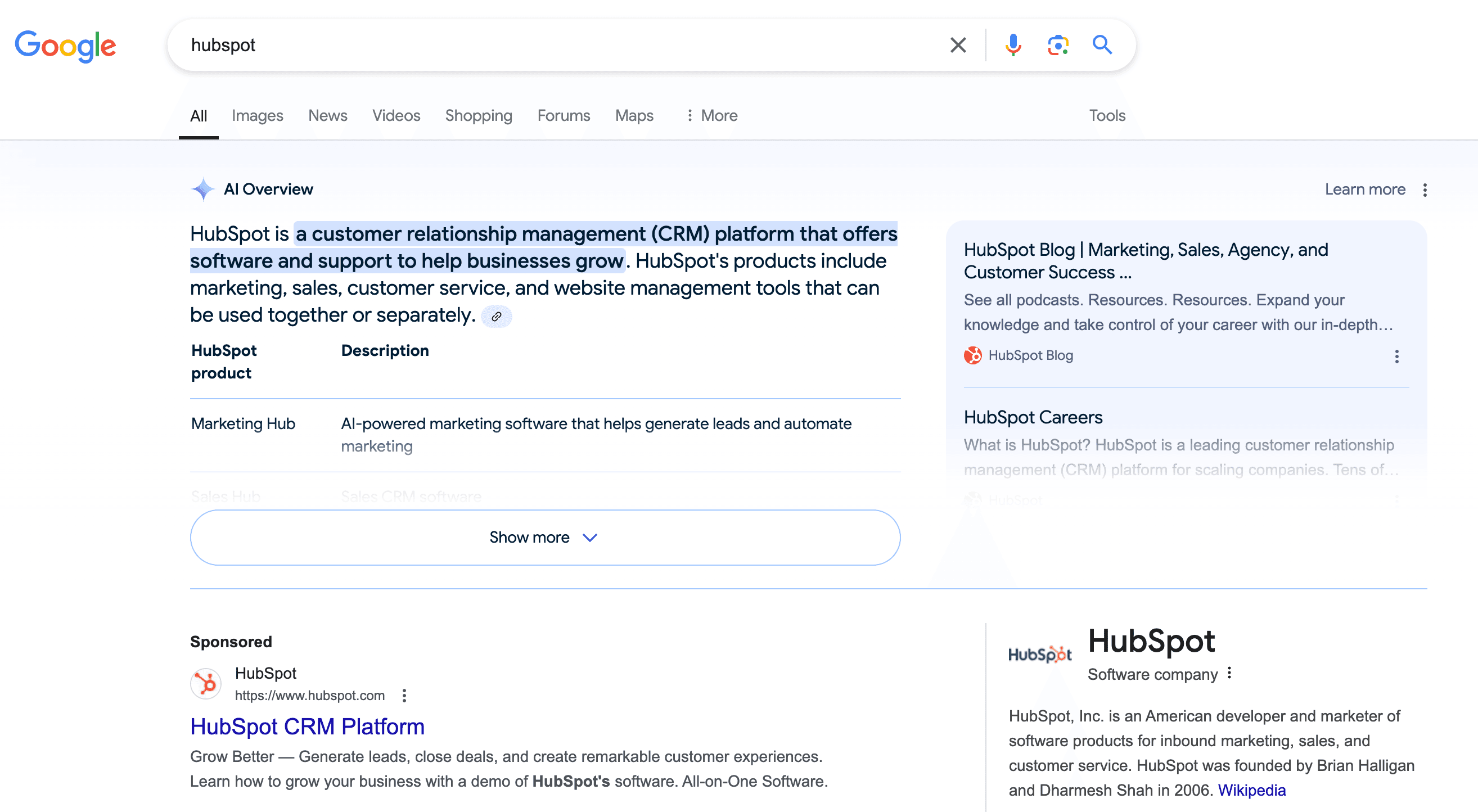
If the most respected, authoritative websites in your industry (publications, review sites, even user-run sites like Reddit) are linking to or talking about your site, it acts as a powerful vote of confidence. This signal remains one of the fastest ways to build trust and authority in the eyes of search engines and AI.
Consider this: If a customer had to ask ChatGPT what other people are saying about your brand, what would it say?
Even social media can work in your favour. If your brand is consistently spoken about by the sites, people or brands that matter, it's far easier to improve your organic performance.
Honestly? More online presence = better digital marketing overall!
5. How active are you on social media? Are you currently running ads?
We've said this many, many times: the path to purchase, the customer journey, the marketing funnel - they're not straight lines anymore.
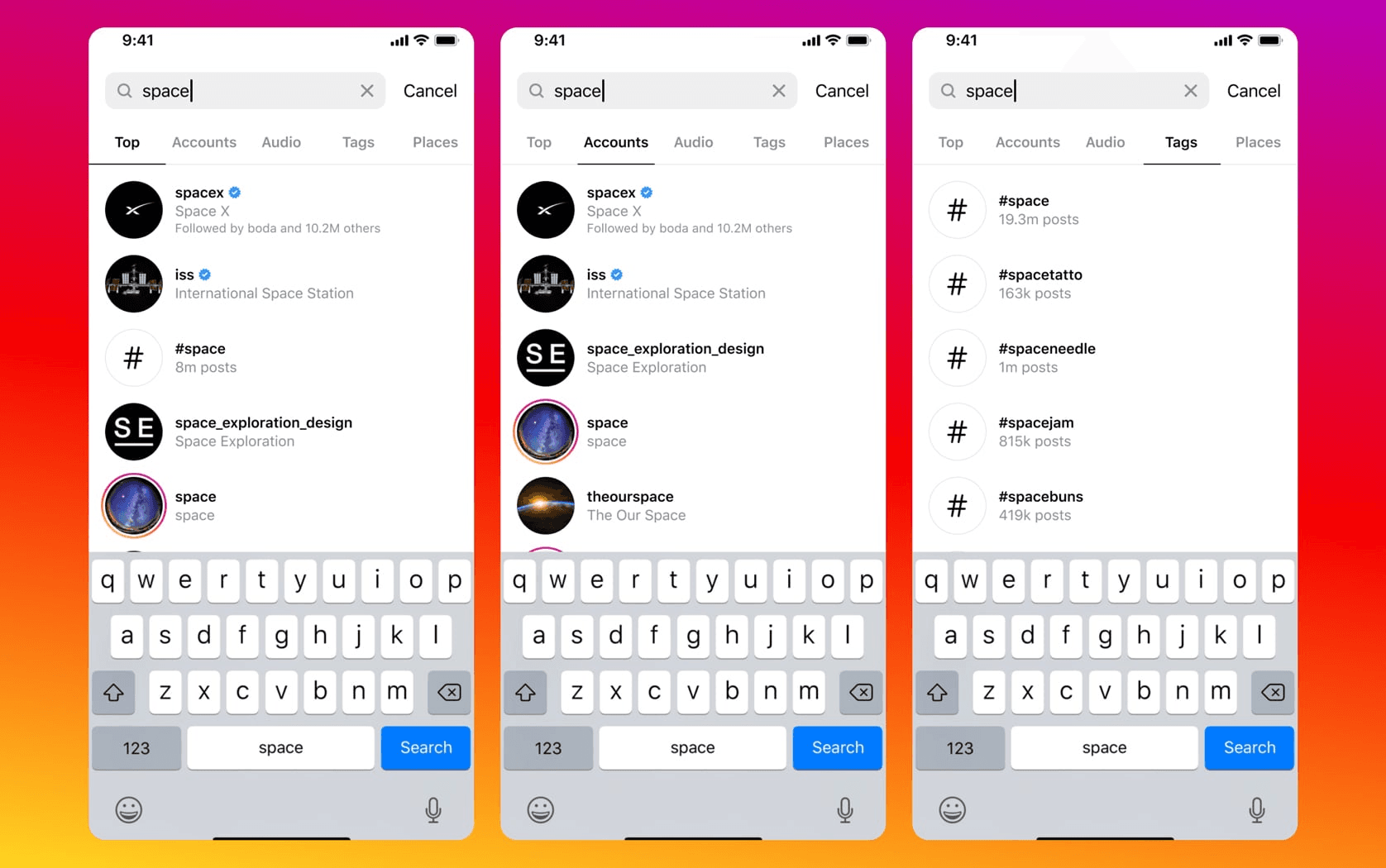
Today, your customer finds you across multiple discovery points: organic social (TikTok, Instagram, and Pinterest are now search engines themselves), paid search (Search Engine Marketing), and paid social (Social Media Marketing).
If you are already running effective paid campaigns, you gain immediate market share and brand familiarity. When a user sees your paid ad, and then sees your content ranking organically, the brain processes it as validation.
Dominating across these channels creates an omnipresent brand effect, giving you a powerful, integrated advantage that Google and AI rewards with faster organic ranking and more confidence.
What If You're Starting From Zero?
Are we saying SEO can't work if you have zero brand presence, authority, or awareness?
Absolutely not.
It's a fair question, but here is the essential distinction: If you lack brand equity (Pillar 1), your Time-to-Ranking will simply be longer and more resource-intensive.
You will be starting at a competitive disadvantage, and you must compensate for that missing trust by being exceptional in the other four pillars. You will need to make a sustained effort to:
- Over-invest in Technical Cleanliness (Pillar 2). Your site must be flawless.
- Over-deliver on Content Authority (Pillar 3). Your answers must be exponentially better than the current ranking brands.
- Aggressively pursue high-quality Link Acquisition (Pillar 4). You need those third-party votes of confidence.
The blueprint for success doesn't change - it just requires a heavier lift and more patience. For start up or small brands, SEO is a marathon that starts uphill, but the finish line remains the same: profitable, compounding organic growth.
SEO, GEO, AIO - The Goal is the Same
There's been lots of talk in the SEO industry about what it should be called, given all the new AI stuff. Thing is, it doesn't really matter - the result you want to achieve is the same.
SEO as a discipline has changed more in the last year than it did in the five years before that. It’s a living, breathing component of your marketing stack that requires constant strategic oversight.
Today, the major force driving change isn't just an algorithm tweak; it's the rise of Artificial Intelligence and Large Language Models (LLMs).
How you optimise your content now influences not just traditional search engine results pages (SERPs), but also how LLMs consume and synthesise information to answer user queries directly. Whether you call it SEO, GEO (Generative Engine Optimisation), or AIO (AI Optimisation), the name doesn’t really matter.
The overall desired end result is: Better visibility, better brand presence, and - most critically - better organic revenue.
So...How Long WILL It Take to Work?!
Sorry, but it's still "it depends"!
The speed of your growth is directly proportional to your brand’s initial standing and the quality of your strategic investment across those five pillars.
If your competitors have stronger foundations, better content, or greater visibility, they will see faster results. This isn't a problem; it's a strategic audit.
Stop guessing where your budget should go. We assess your specific digital maturity, diagnose the weakest pillars, and apply concentrated effort where it will deliver the fastest, most profitable acceleration.
Let's get you visible!