How to Appear in Google’s AI Overviews
11 September 2025

Roberta Johnston
SEO Lead
I'm an SEO specialist with over 8 years of experience helping brands grow through strategic, data-driven search optimisation. I've worked with large e-commerce websites and niche brands alike, developing a deep understanding of ranking algorithms, generative AI, and LLMs like ChatGPT, Perplexity AI, and Gemini. My expertise spans technical SEO, ensuring sites - whether a few dozen pages or 100,000+ - are crawled and indexed effectively.
Tags
A Year+ Later: What We've Learned about AI Overviews
AI Overviews aren’t new anymore. Since launching in May 2024, they’ve gone from experimental to expected - now appearing on most high-value Google searches.
These AI-generated summaries pull from trusted sources across the web, scanning content across Google’s index in real time. If your brand’s not in the mix, you’re not part of the conversation.
And while paid placements can get you a foot in the door, organic visibility remains the bigger prize - because it isn’t dictated by your ad budget.
What used to be a game of rankings is now a test of relevance, authority, and real-time trust.
If you want to be visible in the AI-powered search results of tomorrow, your marketing (SEM + SEO) needs to be smarter, faster, and more strategic than ever.
Recap: What Are AI Overviews?
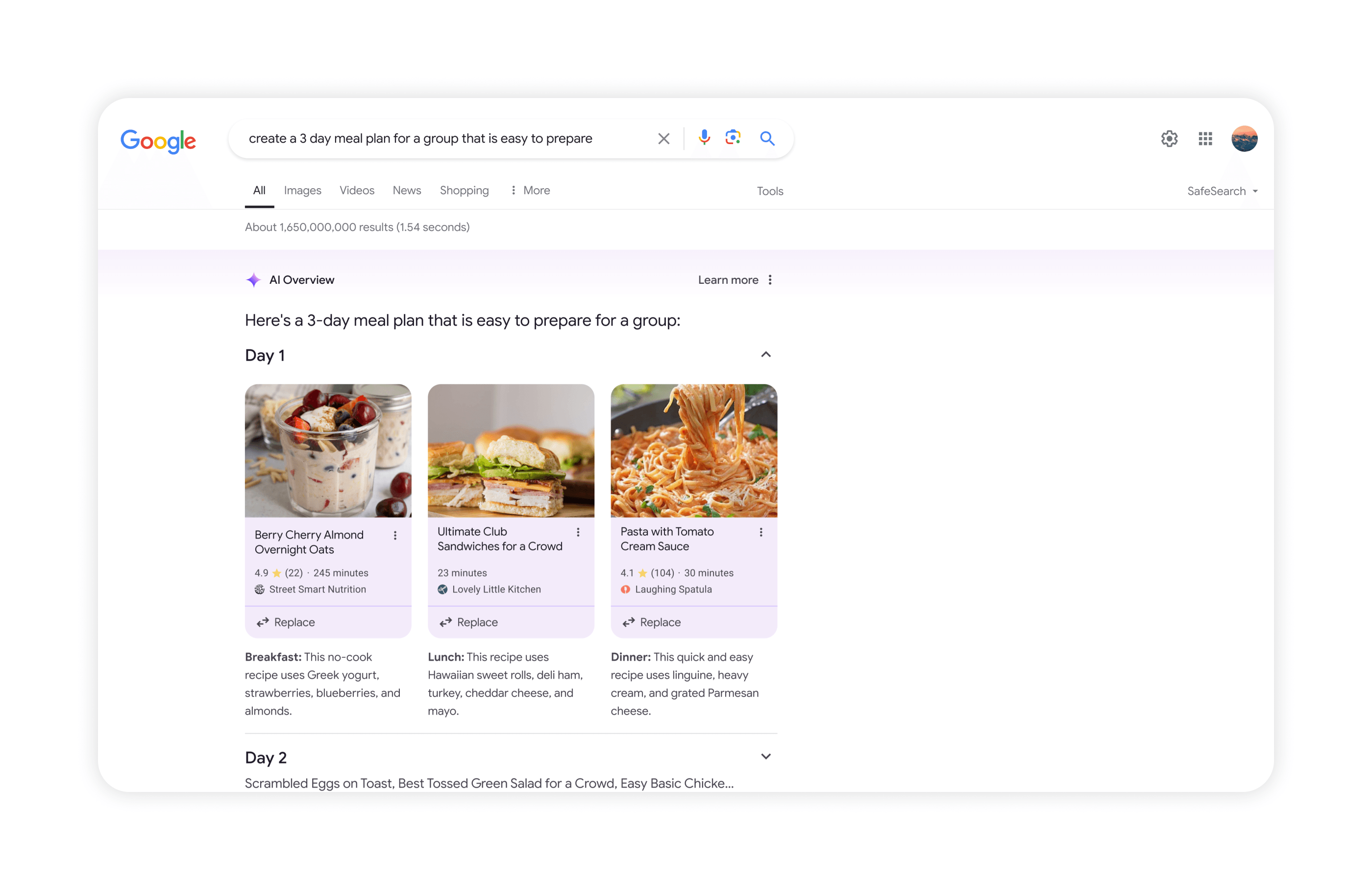
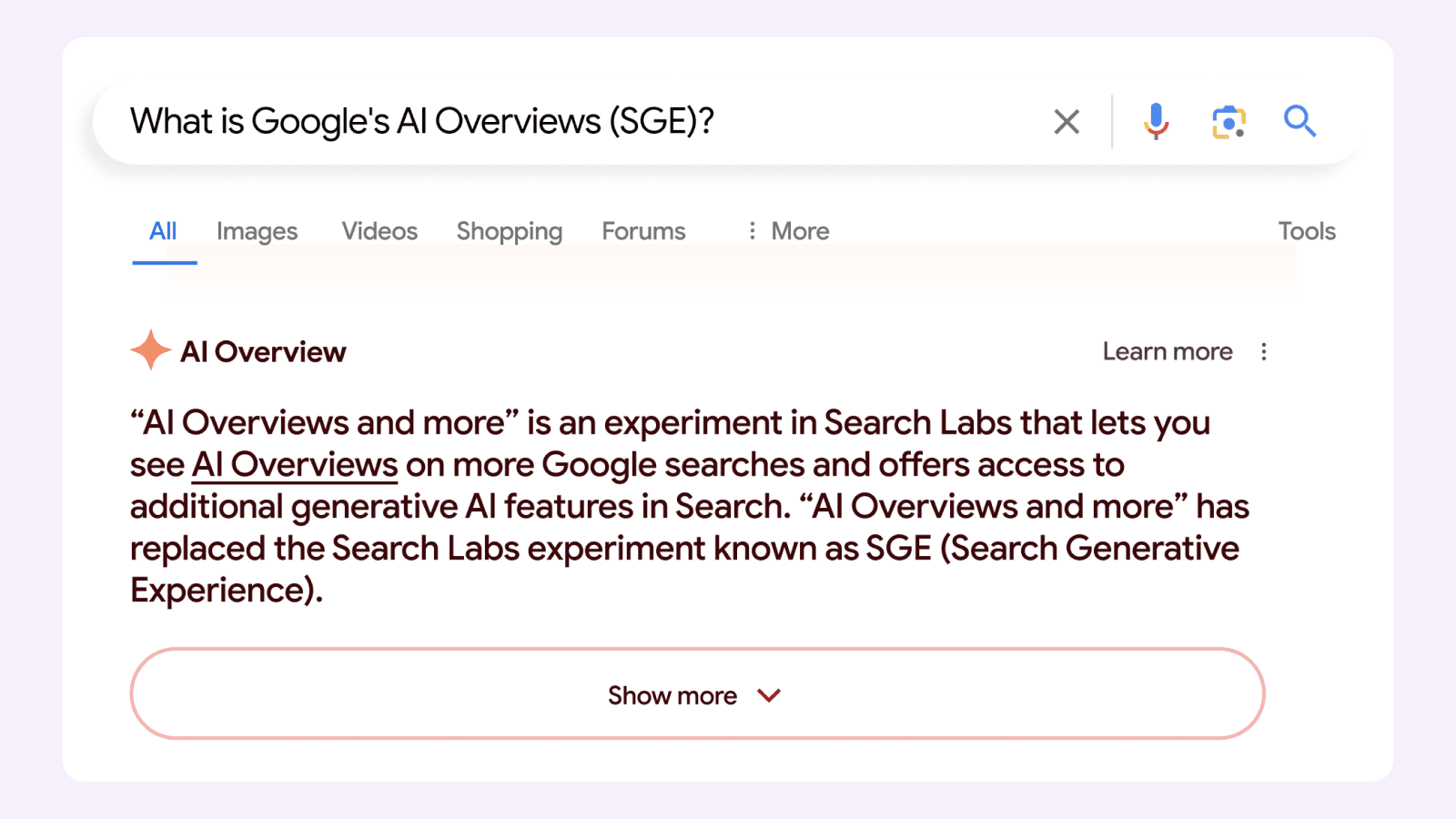
Google’s AI Overviews (AIOs) - first called Search Generative Experience - are short, AI-generated answers that appear right at the top of the search results page.
They're designed to give users a fast, clear summary of what they’re looking for - without needing to click through multiple links.
These overviews scan content from trusted sources across the web and use Google’s Gemini AI to stitch together a helpful response. You’ll often see links woven in underneath or within the summary, pointing to the original sources (hopefully yours!).
It’s Google’s way of saying: “Here’s the best answer we could find - no digging required.”
If your content isn’t being pulled into these summaries, you’re not part of the conversation. Visibility here doesn't just earn you bragging rights - it’s make-or-break real estate for ecommerce brands.
AI Overviews Today
When AI Overviews launched in May 2024, ecommerce wasn’t first in line.
The earliest Overviews focused on educational, health, travel, and how-to queries - leaving transactional searches untouched. But that’s changed.
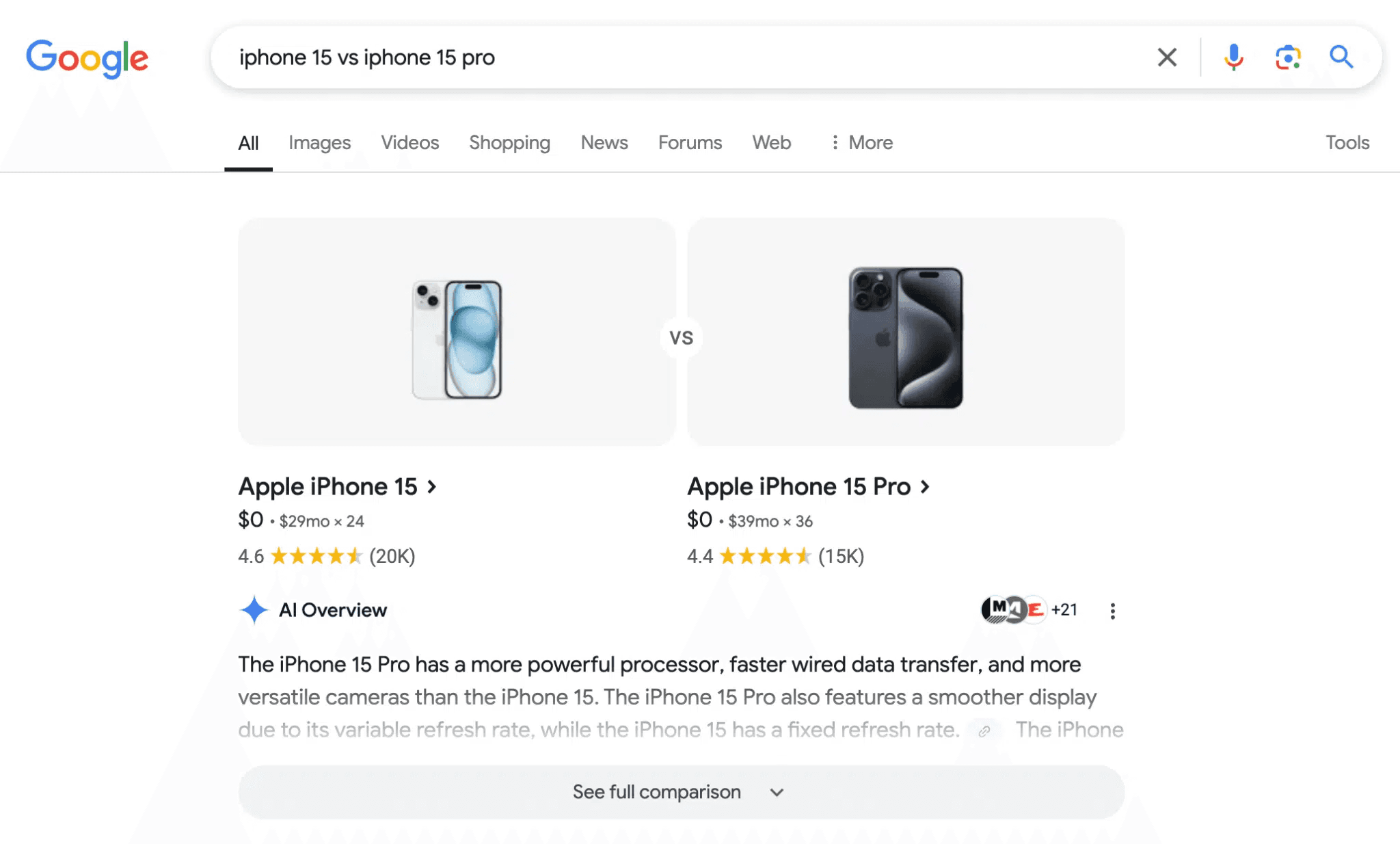
While AI Overviews still show up far less on commercial queries than informational ones (recent studies put them on less than 10% of ecommerce searches), don't let that number fool you. The game has absolutely changed - a clear signal of how the top of the funnel is being reshaped here in NZ, across the ditch in Australia, and around the globe.
What’s more, the results users see in an AI Overview can differ significantly from what they’d get searching in Gemini or AI Mode. That’s because Google’s AIOs aren’t powered by the same system as its standalone Gemini chatbot.
Instead, Overviews rely on a real-time blend of traditional ranking systems, its shopping graph, and its latest generative models - meaning your content could be visible in one context and absent in the other.
For ecommerce brands, that means two things:
- AI Overviews are now a serious organic battleground.
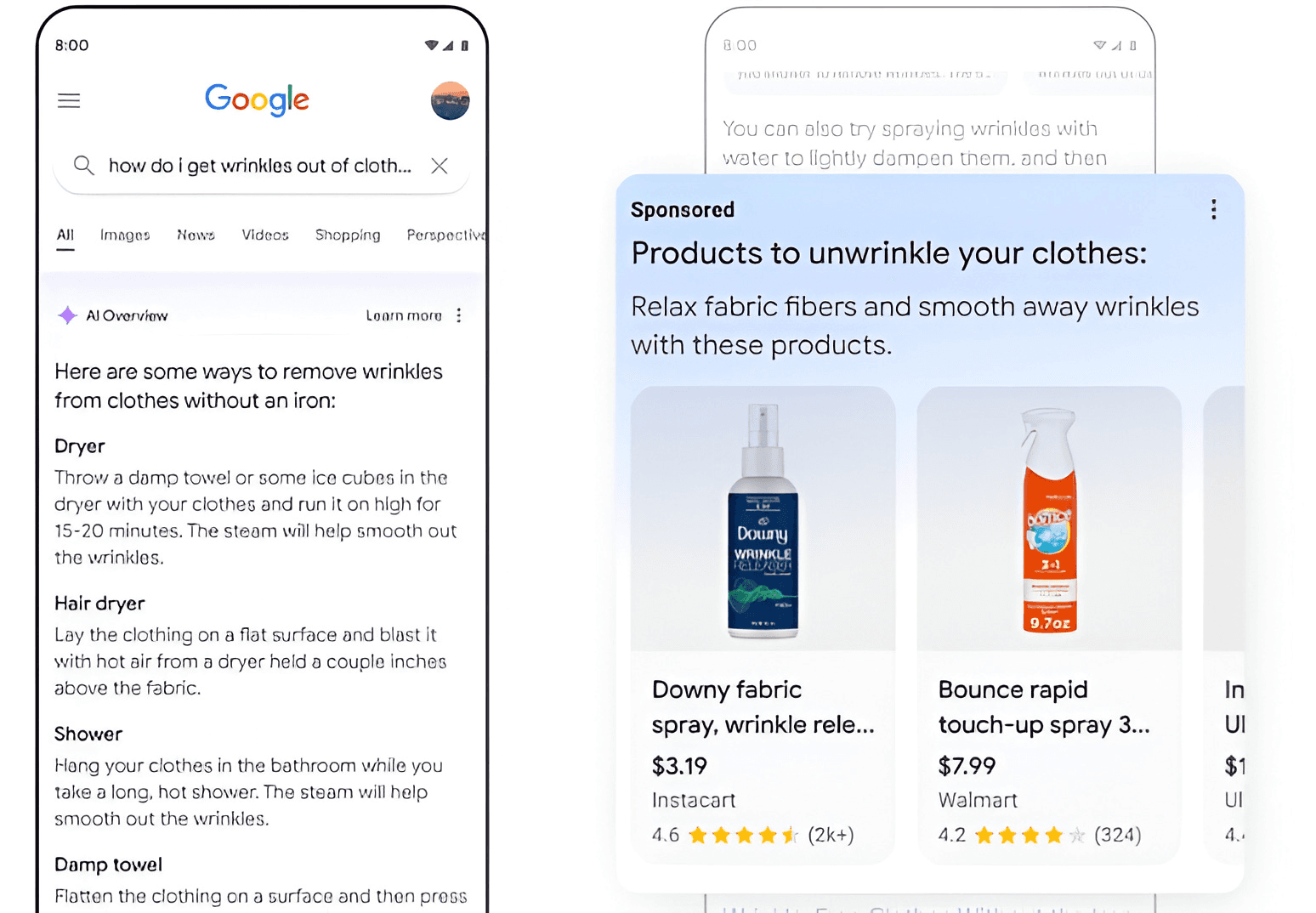
- And paid placements (like Shopping and Sponsored inclusions) are increasingly showing up inside the Overview box.
You can’t optimise for AIOs the same way you do for traditional rankings - and you definitely can’t game them.
All you can do is make sure your content is clear, trustworthy, and technically sound enough for Google’s AI to recognise and reuse it.
That’s the job of modern SEO. And it’s also your best shot at securing a spot inside the Overview box without relying solely on your ad budget.
What Content Gets Pulled Into AI Overviews?
If you're wondering what the secret sauce is for landing in an AI Overview, Google themselves have provided the recipe.
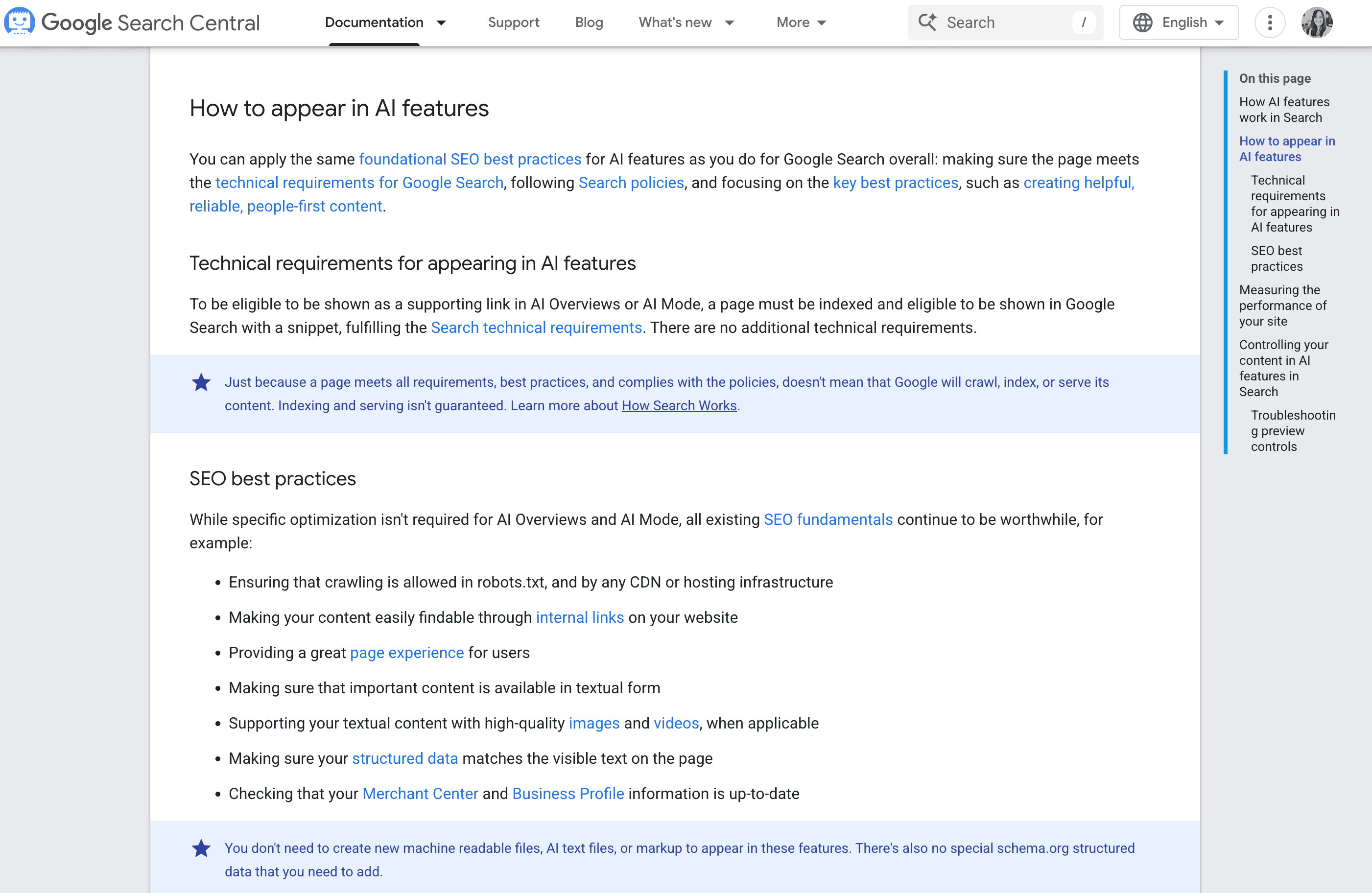
While they've stated that "specific optimisation isn't required for AI Overviews and AI Mode," they’ve also made it clear that "all existing SEO fundamentals continue to be worthwhile".
This means the game hasn't changed, it's simply evolved. The core principles of modern SEO are no longer just about rankings, they're about being selected by Google's AI.
Google Search Central
Same Old SEO....But Different?
This is where the AI-nuance comes in.
The foundations of SEO remain the same - you still need great content written for human readers - but the way you present it matters more than ever.
The AI needs to be able to scan and understand your content quickly and accurately. This is where proper content formatting, clarity, cohesion, and comprehensiveness are key. Google's AI systems are designed to retrieve information and use it to generate a summary, so if your content is messy, unclear, or stale, it's not going to make the cut.
And while Google says you don't need "special schema.org structured data," they do emphasise the importance of making sure "structured data matches the visible text on the page".
Think of structured data as a clear data layer that helps the AI understand your content in a machine-readable way. The better you map out your data, the more likely you are to improve your chances of an AI Overview appearance.
Once the technical elements of your site are solid, the biggest focus becomes owning your brand narrative.
We've seen how important it is to feed the AI the right information about your business, because leaving it up to the systems isn't practical - or beneficial. Building trust with the AI means building trust with your audience through every touchpoint.
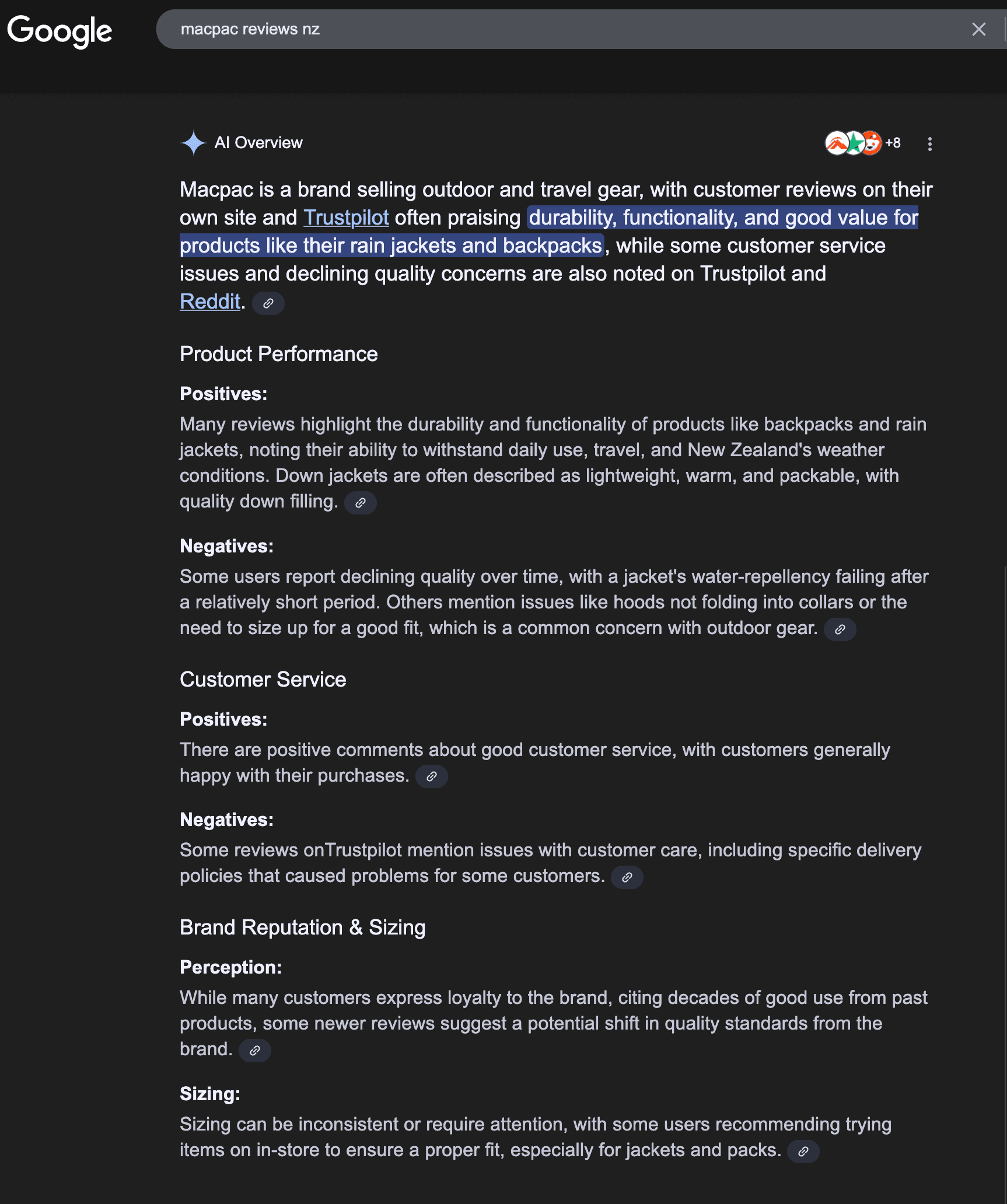
AI Overviews retrieve information about your brand from more than just your website. Own your narrative!
TOF Queries Were Important All Along...
AI Overviews have proven the immense value of top-of-funnel (TOF) content.
While initial AI Overviews focused on informational queries, they have since shown how valuable they are for building brand awareness, trust, and credibility, not to mention capturing users early on into their shopping journey online.
This shifts the focus of your content marketing from just high-intent, transactional queries to also including content that answers those early-stage questions and builds a relationship from the very first search.
Google has even noted that clicks from pages with AI Overviews are "higher quality" and that users are more likely to spend more time on the site.
Here's how to create content that earns its place in an AI Overview:
- High-quality, helpful content that directly answers user intent. This content should be well-structured, easy to scan, and written in a conversational tone to help the AI summarise it.
- Clear topical authority. Google needs to know you're the best source for a topic, which is established by creating comprehensive "content clusters".
- Technical best practices like schema markup and well-structured HTML still matter. Structured data, in particular, helps the AI understand your content in a machine-readable way.
- Consistency across touchpoints. A strong brand reputation across your website, social media, and reviews tells the AI that you are a credible and trustworthy source.
- Recent updates. AI systems have a "recency bias," so regularly updating your content signals freshness to Google's systems.
Is Paid Media a Shortcut Into AI Overviews?
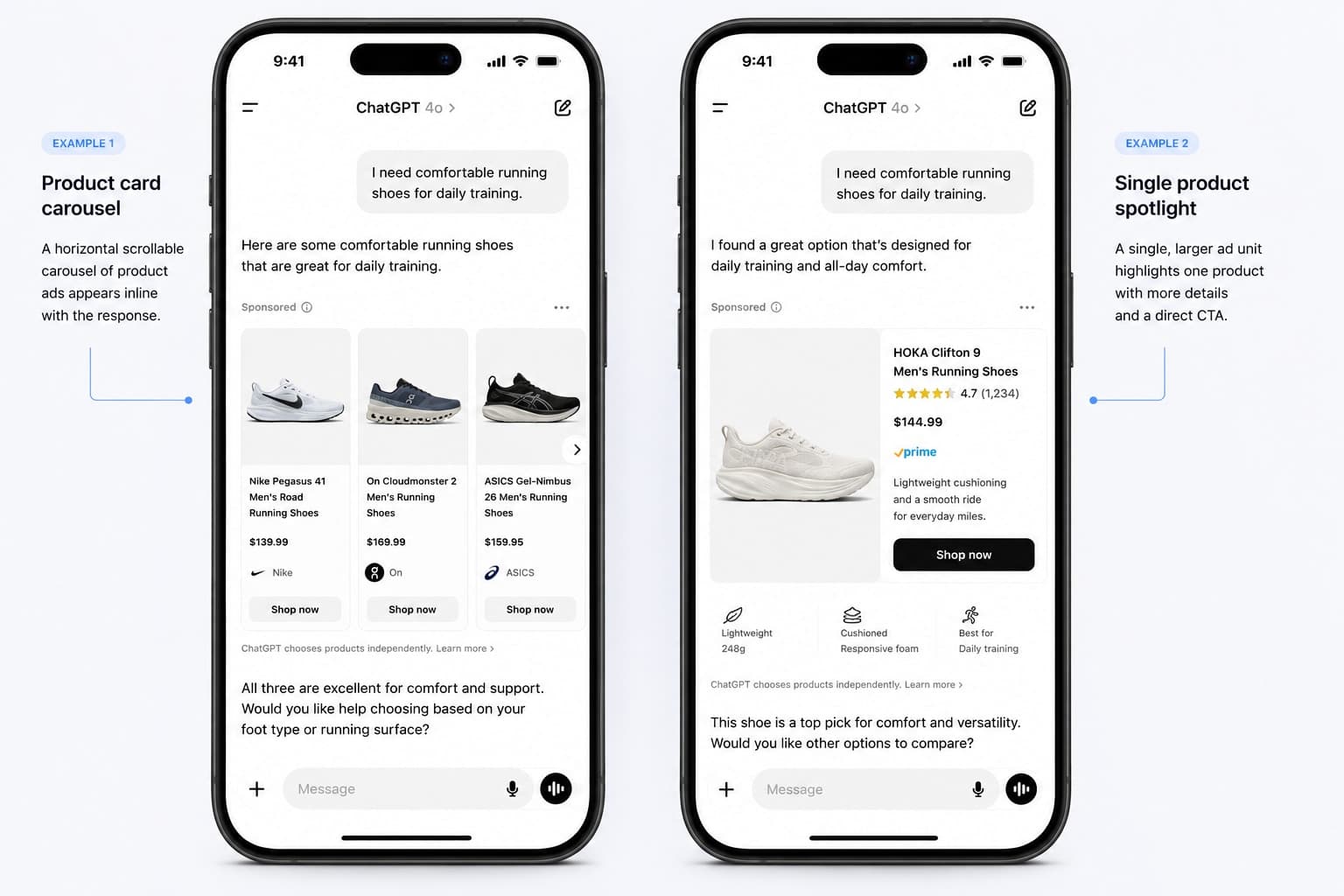
You've probably noticed by now that Google's AI Overviews aren't just about organic content. For a while now, paid placements have been an important part of this new search landscape, and they are increasingly showing up inside or around the Overview box.
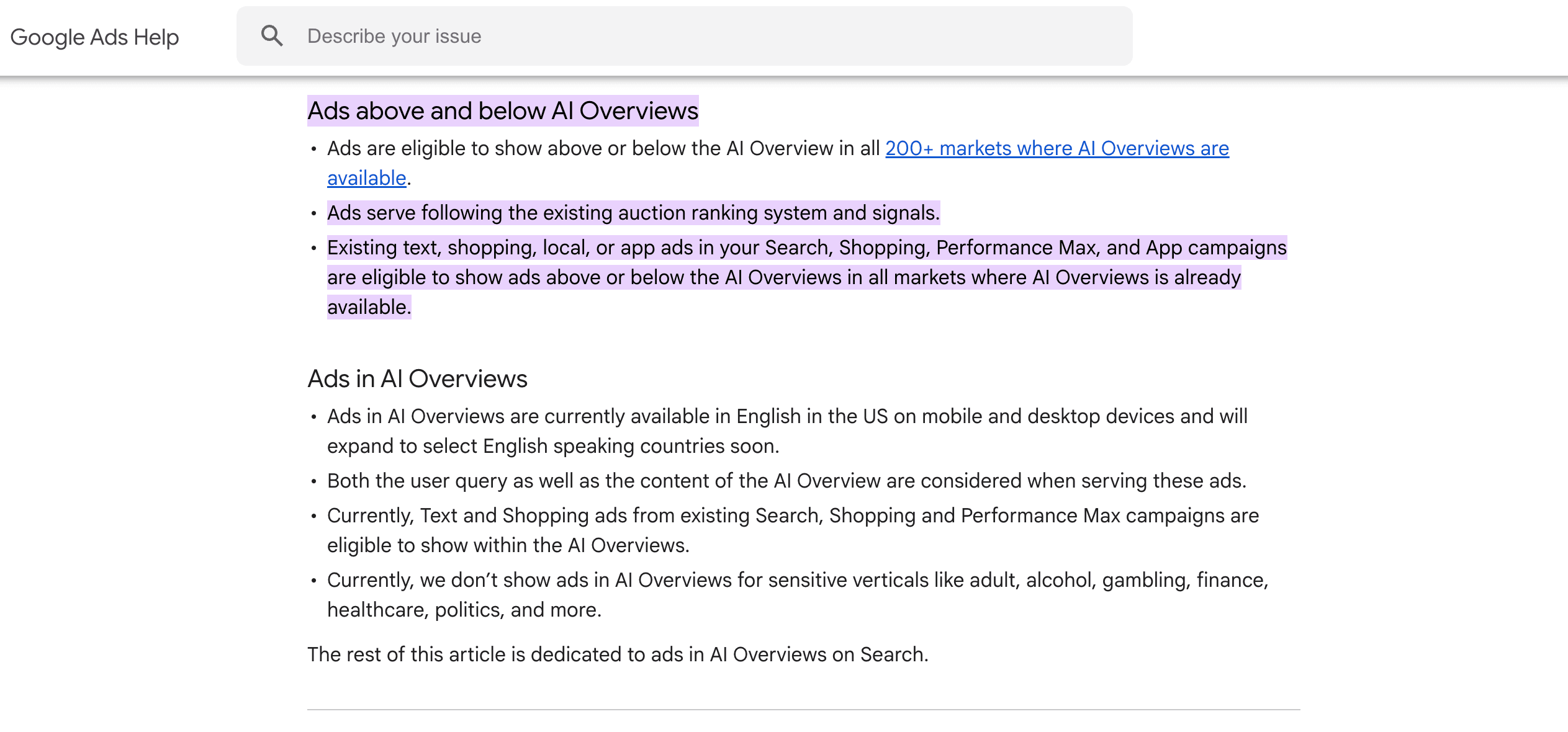
In fact, Google has explicitly stated that ads are eligible to be shown "above, below or within" AI Overviews.
Google Ads Help
This means brands can absolutely appear in AI Overview-like spaces through ads, but it’s a paid placement - not earned. Google has integrated AI into its ad products, with tools like Performance Max and AI Max for Search automatically leveraging machine learning to deliver ads across all Google channels, including those where AI Overviews appear.
Your existing Search and Shopping campaigns are now automatically eligible for these new spots, with ads placed based on whether Google's algorithms detect commercial intent in the query.
But here's the thing: you can't directly target AI Overview placements, and you can't opt out of them either. And while paid media can secure you a foot in the door, it is no substitute for the long-term value of earned visibility.
This is a clear signal that SEO and paid media need to be part of the same strategy. For a brand to truly dominate the search landscape, you need a unified approach that leverages both earned media through SEO and paid media to capture those new, high-visibility placements.
So, How Do You Appear in an AI Overview?
To truly dominate the AI-powered landscape, your strategy needs to leverage both organic and paid visibility in tandem.
SEO now serves a dual purpose. It's still about ranking in traditional SERPs, but it’s also about feeding into Google's AI systems to earn a place in AI Overviews. This is the long game. SEO works to build the fundamental authority and trust that the AI needs to select your content as a source.
It's a powerful approach for capturing users early in their journey with top-of-funnel (TOFU) and middle-of-funnel (MOFU) content, all while securing your place for bottom-of-funnel (BOFU) searches. A strong SEO strategy is a long-term investment that continues to deliver value over time.
Paid media, on the other hand, is the short game. It provides speed and a surer way of holding a spot through strong bids and a strategic budget. Ads in AI Overviews are designed for queries with commercial intent, making them a direct path to users who are ready to buy.
Paid media can give you immediate visibility and traffic, which is a powerful way to capitalise on short-term opportunities.
The most effective results, however, are achieved when these two strategies work together.
A unified SEO + SEM `approach allows you to capture users at every stage of their journey, from the initial informational query (SEO) to the final transactional search (SEM).
When a brand appears in both the organic and paid results, it reinforces credibility and trust with the user. This is how you truly dominate the modern search landscape - by building a comprehensive, full-funnel strategy.
A unified SEO and SEM strategy is the gateway to AI Overview visibility.
It's Not About Gaming the System. It's About Earning It.
The era of AI Overviews is here to stay, and it's fundamentally changing how users discover and trust brands. What was once a game of rankings is now a test of relevance, authority, and real-time trust.
As we’ve seen, there are no silver bullets, and you can’t game your way into a spot.
Instead, the brands that are investing in SEO now are the ones who are already seeing the returns. They understand that to be visible in tomorrow's search results, they need to prioritise high-quality, human-first content and a unified marketing strategy that seamlessly combines the long-term power of organic with the immediate, targeted impact of paid media.
It’s about building a digital presence so authoritative and trustworthy that Google’s AI is compelled to choose your brand as a source of truth.
So, do you want to be found by searchers and selected by AI? Let's build a strategy that earns your place in tomorrow's search results.