How to Do Competitor Analysis: An SEO Guide
31 July 2024

Roberta Johnston
SEO Lead
I'm an SEO specialist with over 8 years of experience helping brands grow through strategic, data-driven search optimisation. I've worked with large e-commerce websites and niche brands alike, developing a deep understanding of ranking algorithms, generative AI, and LLMs like ChatGPT, Perplexity AI, and Gemini. My expertise spans technical SEO, ensuring sites - whether a few dozen pages or 100,000+ - are crawled and indexed effectively.
Tags
If you're looking to boost your SEO game, understanding what your competitors are doing is a crucial piece of the puzzle. Just like in our PPC guide, competitor analysis for SEO can give you the insights you need to outperform your rivals and capture more search engine traffic. In this guide, we'll walk you through everything you need to know about competitor analysis for SEO, from identifying your competitors to creating an actionable plan.
Let's dive in and start uncovering the secrets behind your competitors' success!
Why Competitor Analysis is Crucial for SEO
Understanding your competitors' SEO strategies can provide invaluable insights that help you enhance your own. Competitor analysis for SEO is essential for several reasons. First, it allows you to uncover opportunities by identifying gaps in your competitors' strategies. This might include targeting underserved keywords, creating better content, or improving technical aspects of your site.
Second, competitor analysis helps you identify potential threats to your SEO performance. If a competitor is ranking higher for key terms, understanding their approach can help you counteract and improve your own rankings. Third, it enables you to benchmark your performance in terms of keywords, content, backlinks, and other SEO factors, giving you a clear picture of where you need to improve.
Additionally, by studying your competitors' strategies, you can learn best practices and apply them to your own SEO efforts. This is particularly useful as competitors often set the standard for what works well in your industry. Finally, regular competitor analysis ensures you stay ahead of trends and adapt your strategy to remain competitive in the constantly evolving digital landscape.
Competitor analysis isn’t just about copying what others are doing - it’s about gaining insights to make informed decisions and craft a unique strategy that positions you for success!

Step 1: Identifying Your Competitors
The first step in competitor analysis is identifying who your competitors are. You need to consider direct competitors, indirect competitors, and SERP competitors.
Direct competitors are businesses that offer the same products or services and target the same audience as you. For example, if you sell organic skincare products online, your direct competitors would be other online stores selling similar products.
Indirect competitors, on the other hand, offer different products or services but target the same audience. For instance, if you sell organic skincare products, an indirect competitor might be a wellness blog that promotes various organic lifestyle products.
SERP competitors are those websites that rank for your target keywords but might not be your direct business competitors. These could include blogs, review sites, or informational websites.
To find your competitors, start with a simple Google search for your main keywords and see who ranks on the first page. These are your primary SERP competitors. Additionally, using SEO tools like SEMrush, Ahrefs, and Moz can help you identify competitors by analysing shared keywords and backlinks. Industry reports and market analyses can also highlight key players in your niche.
Categorising your competitors into primary and secondary groups can help focus your analysis. Primary competitors are the top competitors you’ll analyse in detail, while secondary competitors might be less direct but still relevant to understand for a broader perspective. By clearly identifying and categorising your competitors, you’ll have a focused list to analyse in the next steps of your SEO competitor analysis!

Step 2: Analysing Competitors’ Keywords
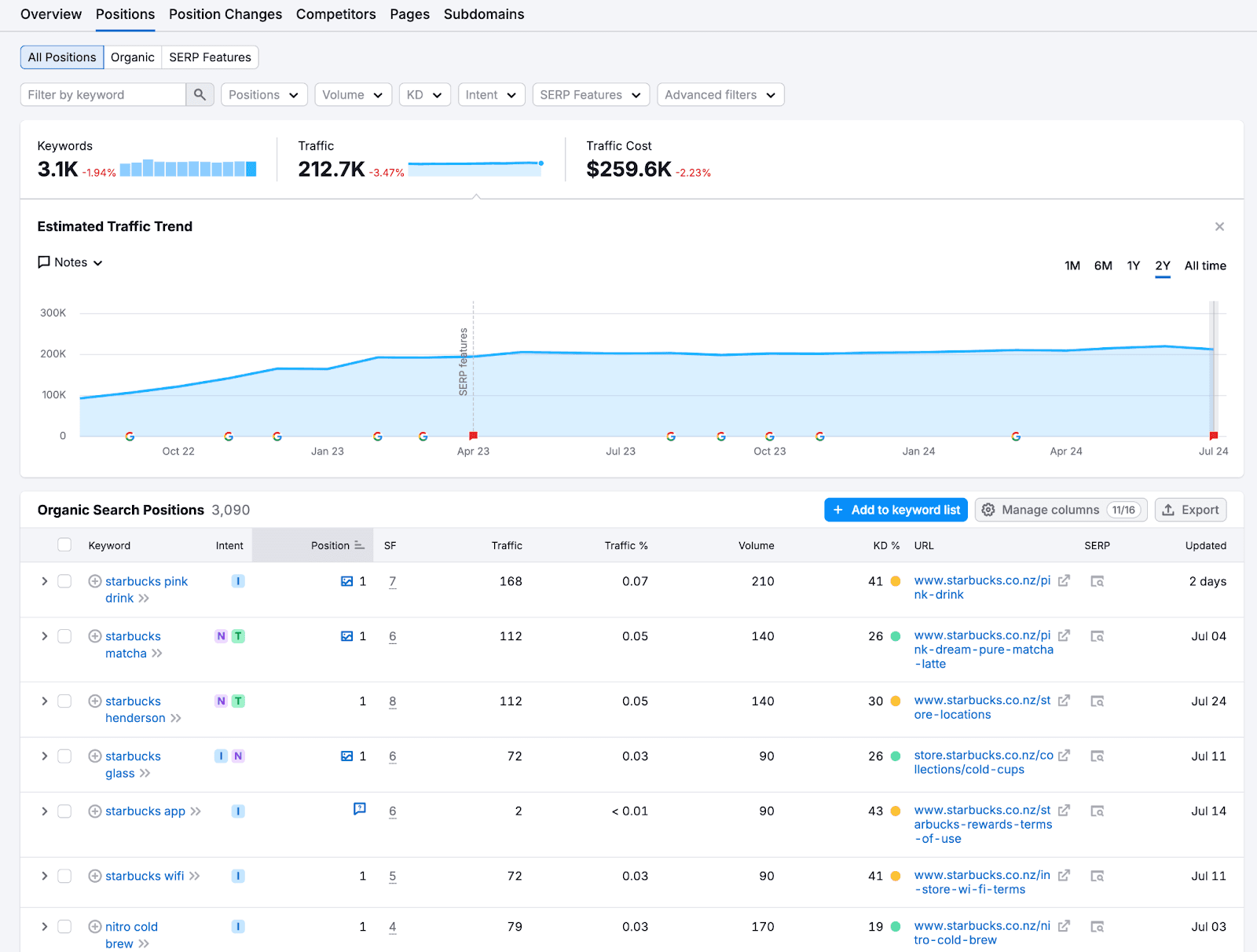
Once you’ve identified your competitors, the next step is to analyse the keywords they’re ranking for. Understanding which keywords drive traffic to your competitors’ sites can reveal opportunities for your own SEO strategy.
Start by identifying which keywords your competitors are targeting. Tools like SEMrush, Ahrefs, and Moz are invaluable for this purpose (we love SEMrush and use this ourselves!). These tools allow you to input a competitor’s URL and see a list of keywords they rank for, along with important metrics such as search volume, keyword difficulty, and traffic estimates. By comparing these metrics, you can identify high-value keywords that you might not be targeting yet.
When evaluating the competitiveness and relevance of these keywords, consider both short-tail and long-tail keywords. Short-tail keywords are broad and often highly competitive, while long-tail keywords are more specific and can be easier to rank for. Look at the keyword difficulty score provided by SEO tools to determine how hard it would be to rank for each keyword. Also, consider the search intent behind the keywords. Are users looking for information, ready to make a purchase, or seeking specific services? Matching the intent of your content with the intent of the search can significantly boost your SEO efforts.
Additionally, analyse the content your competitors have created around these keywords. Look at the quality, length, and structure of their content. Identify gaps where you can provide more value or a different perspective. For example, if a competitor's article on a particular keyword is outdated, you could create a more current and comprehensive piece to capture that traffic.
By systematically analysing your competitors’ keywords, you can uncover opportunities to enhance your own keyword strategy. This will help you attract more targeted traffic and improve your search engine rankings.
Step 3: Evaluating Competitors’ On-Page SEO
Next, it’s time to dive into your competitors’ on-page SEO strategies. On-page SEO refers to the optimisation of individual web pages to rank higher and earn more relevant traffic in search engines. Key elements to analyse include title tags, meta descriptions, headers, content quality, URL structure, and internal linking.
Start with title tags and meta descriptions. These elements are crucial as they influence click-through rates from search engine results pages (SERPs). Use tools like Screaming Frog and Moz to audit your competitors' title tags and meta descriptions. Look for patterns in how they structure these elements and the keywords they use. Notice if they use compelling language that encourages clicks and if there are opportunities for you to create more engaging tags and descriptions.
Headers (H1, H2, H3, etc.) are another critical component of on-page SEO. Examine how your competitors use headers to structure their content. Effective use of headers not only makes content more readable but also signals the main topics to search engines. Ensure that your own headers are clear, descriptive, and keyword-rich to improve both user experience and SEO.
Content quality is paramount. Analyse the depth, accuracy, and freshness of your competitors’ content. Are they providing comprehensive information, engaging media, and up-to-date data? Content that thoroughly answers users' queries tends to rank higher. Aim to create content that is more valuable, detailed, and engaging than what your competitors offer.
URL structure should also be considered. Look at how your competitors organise their URLs. Are they clean, descriptive, and include relevant keywords? A well-structured URL can improve user experience and SEO.
Keep Reading: The Importance of Logical URL Structures
Lastly, evaluate their internal linking strategy. Internal links help distribute link equity throughout a site and improve navigation. Check if your competitors are effectively using internal links to connect related content and guide users through their site. Implementing a robust internal linking strategy on your site can enhance user engagement and SEO performance.

Step 4: Reviewing Competitors’ Off-Page SEO
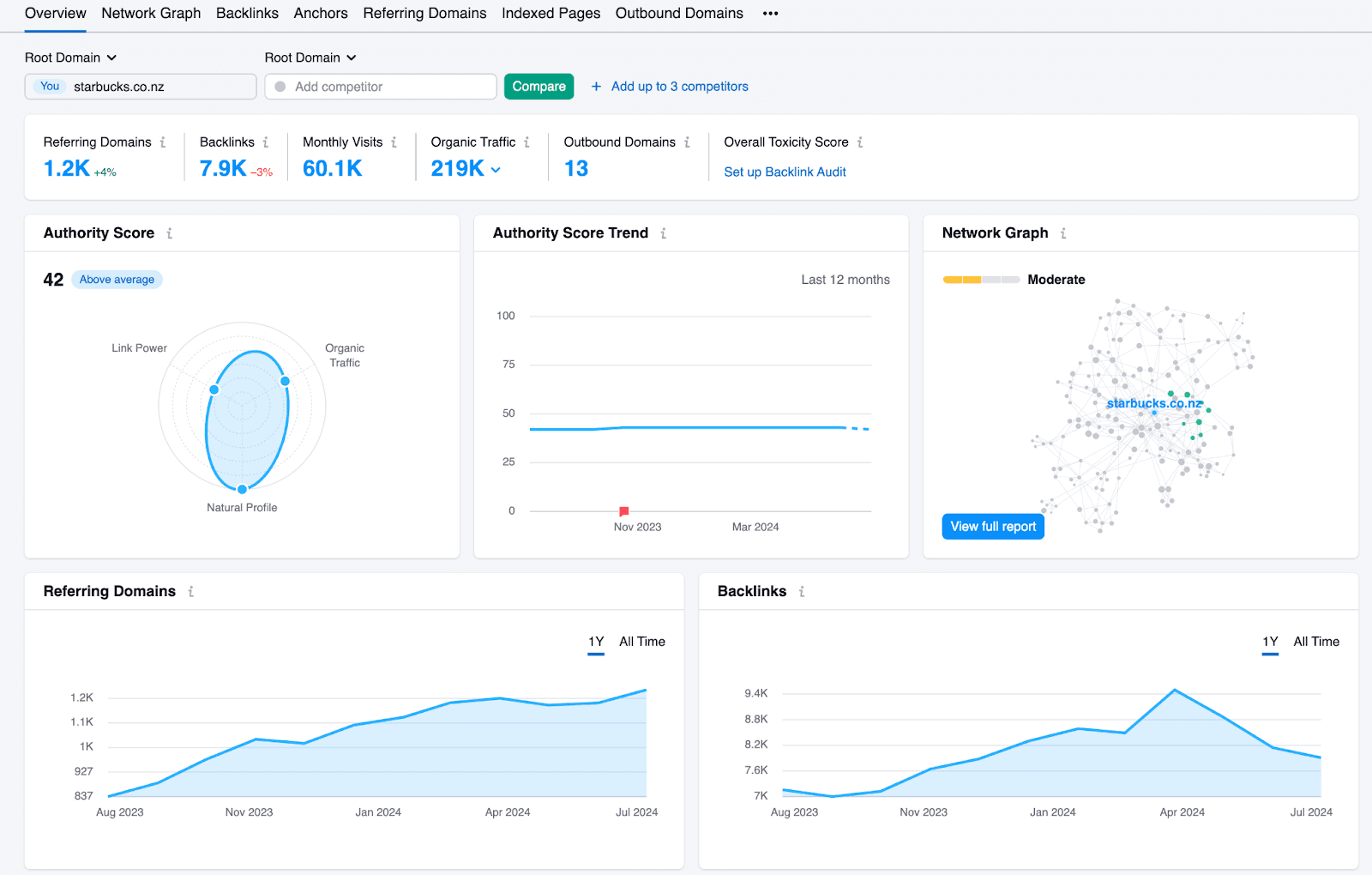
Off-page SEO is just as crucial as on-page SEO for boosting your website's visibility and authority. This involves analysing your competitors’ backlink profiles to understand the quantity and quality of links pointing to their site. Backlinks are a significant ranking factor in search engines - even Google - as they signal trust and authority.
Related: Building Backlinks for SEO - Quality vs Quantity
Start by using tools like Ahrefs, Majestic, or SEMrush to analyse your competitors’ backlink profiles. Enter your competitor’s URL into the tool, and you'll get a detailed report of all the backlinks pointing to their site. Pay attention to the number of backlinks, the diversity of referring domains, and the authority of those domains. High-quality backlinks from reputable sites can significantly boost a site's SEO performance.
Next, evaluate the quality of these backlinks. Look at the domain authority (DA) or domain rating (DR) of the linking sites. High DA/DR sites typically pass more link equity, which can improve your rankings. Also, consider the relevance of the linking sites. Links from sites within your industry or niche are more valuable than those from unrelated sites.
Analyse the anchor text used in these backlinks. Anchor text is the clickable text in a hyperlink, and it provides context about the linked page. Diverse and relevant anchor text can enhance SEO, while over-optimisation or irrelevant anchor text can be harmful. Identify patterns in your competitors’ anchor texts and look for opportunities to diversify and optimise your own.
It’s also important to note the type of content that attracts backlinks for your competitors. Are they getting links to blog posts, infographics, videos, or product pages? Understanding what type of content performs well can inform your own content creation strategy. For example, if your competitor has a popular blog post attracting numerous backlinks, consider creating a more comprehensive, updated version of that content.
Step 5: Analysing Competitors’ Content Strategy
Content is king in the world of SEO - trust us (and also read our guide about how content remains crucial in 2024). Analysing your competitors’ content strategy can reveal valuable insights into what works well in your industry and highlight opportunities for you to differentiate and excel.
Start by reviewing the types of content your competitors produce. This includes blog posts, videos, infographics, podcasts, whitepapers, and social media content. Take note of the content formats that appear to engage their audience the most. For example, if a competitor’s videos consistently receive high engagement, it might be worth investing in video content for your own site.
Evaluate the quality of their content. High-quality content is well-researched, informative, engaging, and free of errors. Look for gaps in their content where you could provide more value. For instance, if your competitor's blog posts are informative but lack depth, you could create more comprehensive guides or detailed analyses on the same topics.
Engagement metrics are also crucial. Examine how much engagement their content receives in terms of comments, shares, and likes. High engagement indicates that the content resonates well with the audience. Tools like BuzzSumo can help you see the most shared content for any given topic or competitor, providing insights into what types of content are most effective.
Frequency and consistency are other important factors. Determine how often your competitors publish new content and whether they maintain a consistent posting schedule. Regularly updated content keeps the audience engaged and signals to search engines that the site is active and relevant. Aim to match or exceed your competitors' posting frequency while maintaining high quality.
Identify content gaps and opportunities. This involves finding topics or questions that your competitors haven’t fully addressed. Keyword research tools can help you discover long-tail keywords and niche topics that are underserved in your industry. By filling these gaps with high-quality content, you can attract more targeted traffic and stand out from your competitors.
Finally, analyse their content promotion strategies. How do they promote their content? Do they leverage social media, email marketing, or collaborations with influencers? Understanding their promotion tactics can help you devise a more effective content distribution strategy for your own content.

Step 6: Assessing Technical SEO
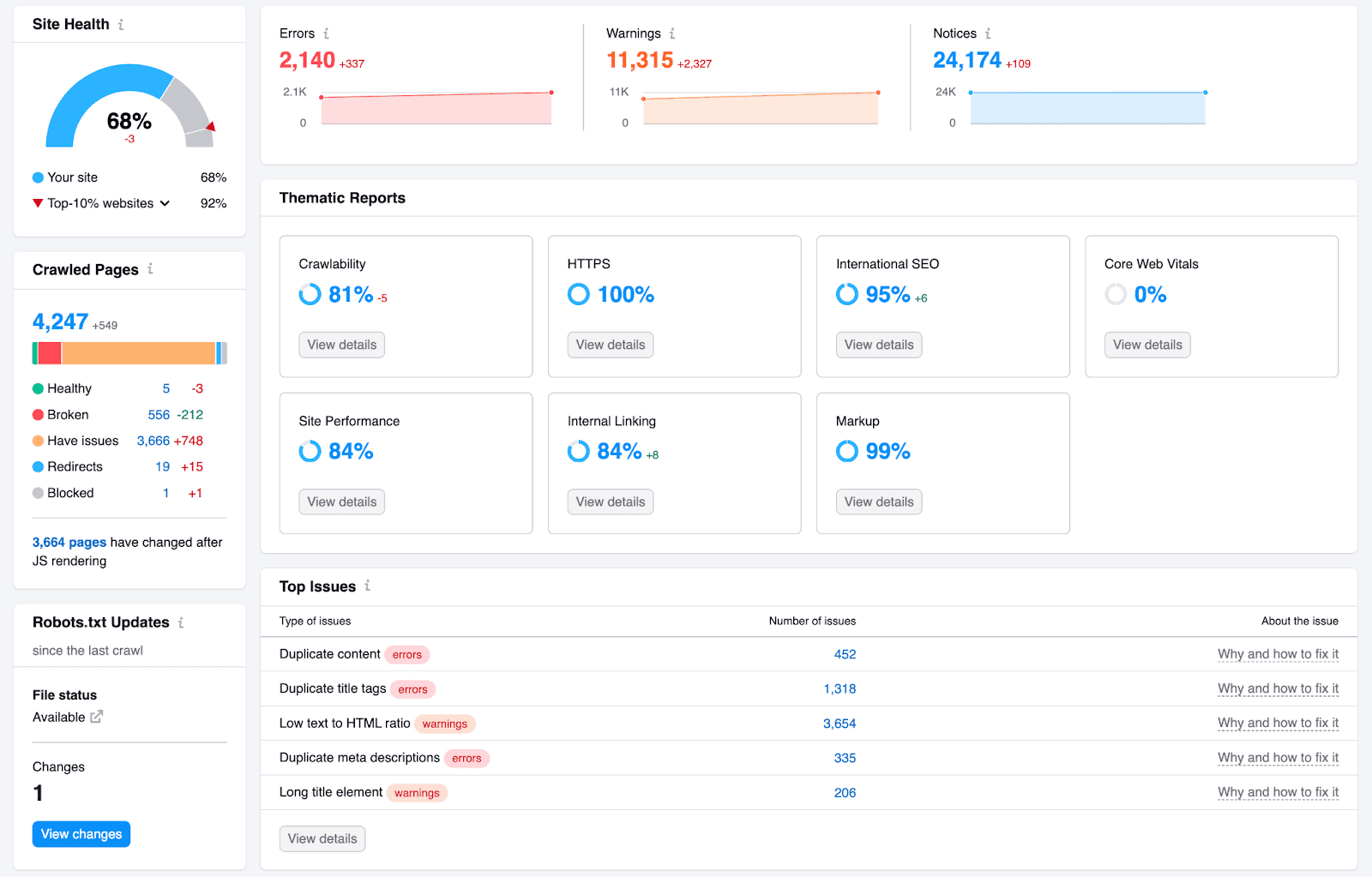
Technical SEO is the backbone of your website’s performance, ensuring that search engines can easily crawl and index your site. By assessing your competitors’ technical SEO, you can identify areas where your own site might need improvement. Here’s how to do it:
First, evaluate site speed. Site speed is a critical factor for both user experience and SEO rankings. Slow-loading sites can frustrate users and lead to higher bounce rates. Use tools like Google PageSpeed Insights, GTmetrix, or Pingdom to analyse your competitors’ site speed. Compare their loading times to yours and identify areas for improvement. Look for suggestions such as optimising images, leveraging browser caching, and minimising JavaScript.
Related: The Impact of Website Speed on User Experience & SEO
Next, check mobile-friendliness. With the increasing use of mobile devices, it’s essential that your site is mobile-friendly. Google’s Mobile-Friendly Test tool can help you see how well your site and your competitors’ sites perform on mobile devices. Ensure that your site is responsive, easy to navigate on smaller screens, and that text is readable without zooming.
Site architecture is another crucial aspect of technical SEO. A well-structured site makes it easier for search engines to crawl and index your content. Use tools like Screaming Frog to analyse the site architecture of your competitors. Look at how they organise their content, the depth of their site structure, and the use of internal linking. Compare this to your own site to ensure your architecture is logical and efficient. Aim to keep important pages within three clicks from the homepage and use a clear, hierarchical structure for your content.
Check for HTTPS implementation. Security is a ranking factor for search engines, and using HTTPS ensures that data transferred between the user and the site is encrypted. Ensure that your site and your competitors’ sites use HTTPS. Tools like SSL Labs can help you analyse the security level of your site’s HTTPS implementation.
Analyse schema markup usage. Schema markup helps search engines understand the content on your site better and can enhance your search listings with rich snippets. Use Google’s Structured Data Testing Tool to see if your competitors are using schema markup effectively. Look for opportunities to implement or improve schema markup on your own site, such as adding structured data for reviews, products, or events.
Read More: What is Structured Data Markup?
Assess the presence of technical errors. Use tools like Google Search Console and SEMrush to identify any technical issues on your site and your competitors’ sites. Common issues include broken links, duplicate content, missing alt text for images, and crawl errors. Regularly monitoring and fixing these issues can help maintain your site’s health and improve its SEO performance.
Final Step: Putting It All Together & Creating an Actionable Plan
After gathering all this information, it’s time to compile your findings into a comprehensive competitor analysis report and create an actionable plan for your own SEO strategy.
Start by summarising your key findings. Highlight the strengths and weaknesses of your competitors in terms of keywords, on-page SEO, off-page SEO, content strategy, and technical SEO. This will give you a clear overview of where you stand in comparison to them.
Next, identify actionable insights and opportunities. Based on your analysis, pinpoint specific areas where you can improve. For example, you might find that you need to target new keywords, create more engaging content, or build more high-quality backlinks.
Develop a strategic SEO plan. Outline the steps you will take to address the identified opportunities. This might include:
Keyword Strategy: Target new high-value keywords, optimise existing content for better keyword relevance, and create new content around underserved topics.
Content Plan: Develop a content calendar that includes regular blog posts, videos, and other types of content that fill the gaps you’ve identified. Focus on creating high-quality, engaging content that provides value to your audience.
On-Page SEO Improvements: Optimise your title tags, meta descriptions, headers, and URL structure based on the best practices you’ve observed in your competitors. Ensure that your content is well-structured and easy to read.
Off-Page SEO Tactics: Build a robust backlink strategy by reaching out to high-authority sites and leveraging the skyscraper method. Focus on earning backlinks from relevant and reputable sources.
Technical SEO Enhancements: Improve site speed, mobile-friendliness, site architecture, and security. Regularly monitor your site for technical issues and fix them promptly.
Master the Search Results with Blackpepper
Competitor analysis is a powerful tool in your SEO arsenal. By understanding your competitors’ strategies and identifying opportunities for improvement, you can craft a more effective and targeted SEO plan. Regularly performing competitor analysis will keep you ahead of the competition and ensure your site remains optimised and competitive.
BUT. We know - this is a whole lot of work! Conducting a thorough competitor analysis and crafting an actionable SEO plan can be time-consuming and complex. But that's exactly why we're here. At Blackpepper, we specialise in doing the heavy lifting for you. Our team of SEO experts can dive deep into competitor analysis, uncover valuable insights, and develop a tailored strategy that helps you stay ahead of the competition.
Whether it’s identifying high-value keywords, optimising your on-page SEO, building a robust backlink profile, or enhancing your technical SEO, we’ve got you covered. Let us take care of the nitty-gritty details so you can focus on what you do best: running your business.