How to Prepare for the End of Third-Party Cookies
13 March 2024

Roberta Johnston
SEO Lead
I'm an SEO specialist with over 8 years of experience helping brands grow through strategic, data-driven search optimisation. I've worked with large e-commerce websites and niche brands alike, developing a deep understanding of ranking algorithms, generative AI, and LLMs like ChatGPT, Perplexity AI, and Gemini. My expertise spans technical SEO, ensuring sites - whether a few dozen pages or 100,000+ - are crawled and indexed effectively.
Tags
2024 Will bring significant transformation for the digital marketing landscape as Google progresses further in its phased approach to eliminate third-party cookies. This move by the tech giant has sent ripples across the online advertising world, prompting businesses to rethink their marketing strategies and adapt to the evolving terrain.
For years, third-party cookies have been the backbone of digital advertising, enabling marketers to track user behaviour, personalise ads, and measure campaign effectiveness. However, concerns over user privacy and data protection have led to Google's decision to sunset these cookies, signalling a paradigm shift in how online advertising operates.
As experts in digital marketing, the team at Blackpepper has been closely monitoring these developments, staying ahead of the curve to help ecommerce businesses navigate the changing landscape. In this comprehensive guide, we'll dive into the intricacies of Google's phase-out plan, explore alternative solutions, and provide actionable insights to help businesses thrive in a cookie-less world.
What are Third-Party Cookies?
Before we explore the implications of Google's phase-out plan, let's first unravel the role of third-party cookies in the digital ecosystem. In essence, third-party cookies are small pieces of data stored on a user's browser by websites other than the one they are currently visiting. These cookies enable cross-site tracking, allowing advertisers to gather insights into user behaviour across multiple websites.
Imagine browsing for a pair of running shoes on an online store. Later, as you scroll through your social media feed, you notice ads showcasing similar running shoes. This is made possible by third-party cookies, which track your activity across different websites and feed that data back to advertisers, enabling them to deliver targeted ads based on your interests and browsing history.
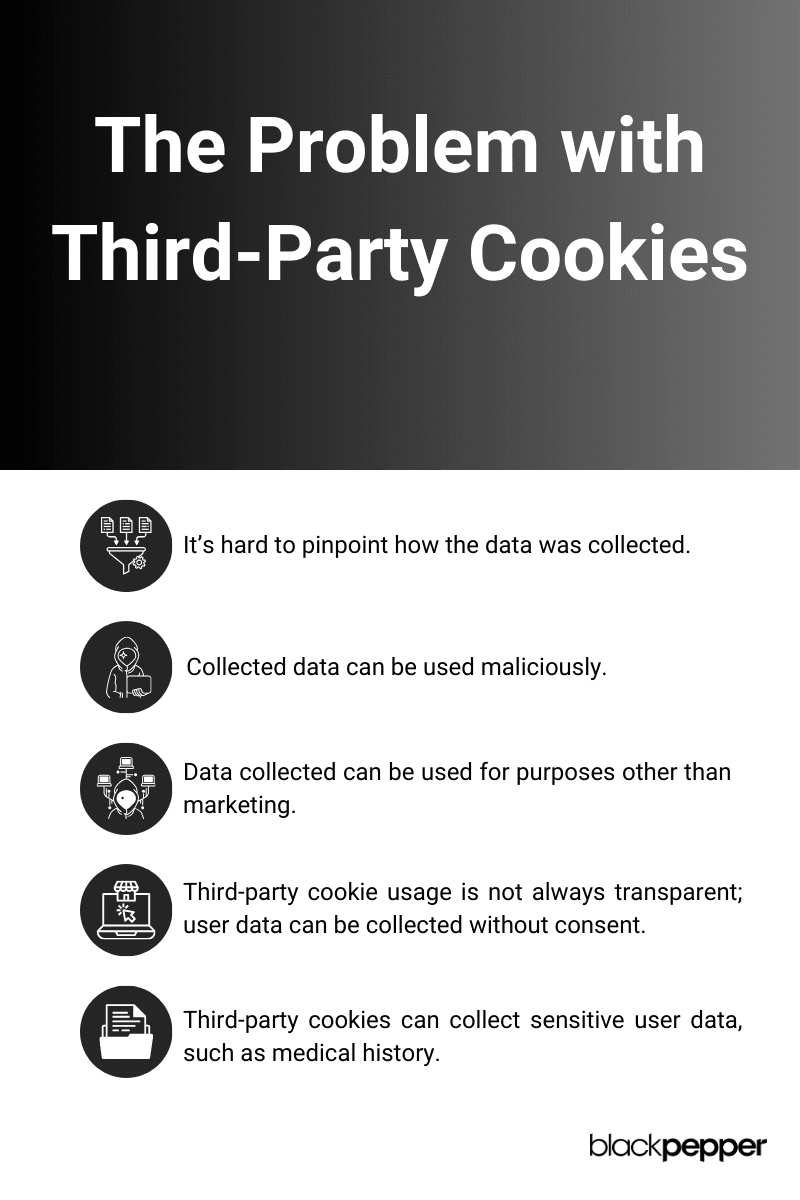
While third-party cookies have been instrumental in fuelling personalised advertising and improving user experiences, they have also raised concerns regarding user privacy and data security. Critics argue that the extensive tracking enabled by these cookies compromises user privacy by allowing advertisers to build detailed profiles of individuals without their explicit consent.
As part of its broader initiative to enhance user privacy and data protection, Google announced its intention to phase out third-party cookies from its Chrome browser, following in the footsteps of other browsers like Safari and Firefox. This move marks a significant shift in the digital advertising landscape and presents both challenges and opportunities for businesses reliant on targeted advertising strategies.

Google's Phase-Out Plan and What It Means for Businesses
Google's decision to phase out third-party cookies stems from its commitment to bolster user privacy while still ensuring the vitality of the digital advertising ecosystem. The company aims to strike a delicate balance between privacy concerns and the need for personalised advertising, acknowledging the growing demand for greater transparency and control over personal data.
The phase-out plan unfolds in several stages, with gradual restrictions on third-party cookies to minimise disruption and allow businesses to adapt to the changes. As of March 2024, Google has initiated the process by restricting third-party cookies for a small percentage of Chrome users, paving the way for broader implementation in the coming months.
This phased approach serves multiple purposes. Firstly, it allows Google to test alternative solutions and gather feedback from users and stakeholders to refine its privacy-preserving mechanisms. Secondly, it provides businesses with ample time to audit their reliance on third-party cookies and explore alternative strategies for data collection and advertising targeting.
For businesses heavily reliant on third-party cookies for targeted advertising and user tracking, Google's phase-out plan poses significant challenges. Without access to cross-site tracking data, businesses may struggle to deliver personalised ads, measure campaign effectiveness, and attribute conversions accurately. This disruption could potentially impact advertising ROI and necessitate a reevaluation of marketing strategies.
However, amidst the challenges lie opportunities for innovation and adaptation. Businesses can leverage Google's Privacy Sandbox initiative, which offers privacy-focused alternatives to third-party cookies, such as Federated Learning of Cohorts (FLoC) and Topics. These alternatives aim to maintain advertising relevance while safeguarding user privacy, albeit through different methodologies.
What’s more, businesses can explore first-party data strategies, focusing on cultivating direct relationships with their audience and leveraging their own website data for targeted advertising and personalised experiences. By investing in robust data management platforms and customer relationship management systems, businesses can mitigate the impact of the third-party cookie phase-out and enhance their long-term resilience in the evolving digital landscape.
Keep Reading: The Future of Search - Google’s Search Generative Experience
As Google progresses with its phase-out plan throughout 2024, businesses must stay proactive and adaptable, embracing privacy-centric strategies and technologies to navigate the shifting advertising paradigm successfully.
Why the Phase-Out of Third-Party Cookies Matters
Although browsers like Firefox and Safari have been third-party cookie-free for years now, the phase-out by Google has larger implications simply because it holds the greatest market share. And as the browser on which most online retailers and businesses advertise, this significant change demands close attention.
Here’s why you need to take note of the end of third-party cookies:
Impact on Targeted Advertising
Third-party cookies have long been the lifeblood of targeted advertising, enabling advertisers to track user behaviour across websites and deliver personalised ads based on browsing history and interests.
With the demise of third-party cookies, advertisers will face significant challenges in targeting and retargeting consumers effectively, leading to a decline in ad relevance, reach, and performance. Online retailers reliant on paid advertising to drive traffic, conversions, and revenue will need to reassess their advertising strategies, shift towards first-party data-driven approaches, and explore alternative targeting solutions to maintain competitiveness in the digital marketplace.
No More Cross-Site Tracking
Third-party cookies have facilitated cross-site tracking, allowing advertisers to follow users across the web and serve them with relevant ads based on their online behaviour.
The phase-out of third-party cookies will disrupt cross-site tracking capabilities, making it increasingly difficult for businesses to attribute conversions accurately, measure campaign effectiveness, and optimise marketing spend.
Online retailers leveraging cross-site tracking for retargeting, attribution modelling, and audience segmentation will need to adopt new measurement methodologies, invest in advanced analytics solutions, and prioritise data-driven decision-making to drive sustainable growth and ROI.
Privacy and Consumer Trust
The growing emphasis on user privacy and data protection has fueled regulatory scrutiny and consumer demands for greater transparency, control, and accountability from businesses handling personal data.
The phase-out of third-party cookies aligns with this broader trend towards privacy-centric digital experiences, signalling a paradigm shift towards consent-driven data collection and privacy-by-design principles.
Online retailers that prioritise user privacy, implement robust data governance practices, and demonstrate a commitment to ethical data use will not only comply with evolving regulations but also build trust and loyalty with their customers, fostering long-term relationships and brand advocacy.
Adaptation to a Changing Landscape
As the digital marketing landscape evolves rapidly, businesses must adapt to changing consumer behaviours, technological advancements, and regulatory requirements to stay ahead of the curve.
The phase-out of third-party cookies presents an opportunity for online retailers to rethink their marketing strategies, innovate their customer engagement initiatives, and invest in sustainable, future-proof solutions that prioritise user privacy and data protection.
Related: Why PPC Marketing is More Important than Ever
By embracing alternative measurement technologies, leveraging first-party data assets, and focusing on value-driven marketing approaches, businesses can not only weather the storm of cookie deprecation but also emerge stronger, more agile, and more resilient in the face of uncertainty.

Preparing for the Third-Party Cookie Phase-Out
As Google advances its phase-out of third-party cookies, businesses must take proactive steps to adapt their marketing strategies and mitigate the impact of this significant change. Here's a couple of useful tips to help businesses prepare for the transition:
1. Audit Your Third-Party Cookie Usage
Begin by conducting a thorough audit of your website's use of third-party cookies. Identify instances where third-party cookies are utilised for user tracking, advertising, or analytics purposes. Use developer tools like Chrome DevTools to inspect and analyse the cookies set and sent on requests. Look for cookies with the SameSite=None attribute, which indicates third-party cookies.
Evaluate the role of third-party cookies in your marketing stack and assess their importance in tracking user behaviour, targeting ads, and measuring campaign performance.
2. Understand the Alternatives
Familiarise yourself with Google's Privacy Sandbox initiative and the alternative solutions it offers to replace third-party cookies. These include Federated Learning of Cohorts (FLoC), Topics, and other privacy-preserving APIs.
Explore first-party data strategies and prioritise building direct relationships with your audience. Focus on collecting and leveraging data obtained directly from your website visitors through consent-driven interactions.
Read More: Pros and Cons of Google Analytics 4
3. Test for Compatibility
Test your website's functionality and advertising campaigns in an environment where third-party cookies are restricted or disabled. Use browser settings or command-line flags to simulate the absence of third-party cookies.
Identify any potential issues or discrepancies that arise from the absence of third-party cookies, such as ad targeting limitations or measurement inaccuracies. Address these issues promptly to ensure a seamless user experience.
4. Explore Privacy-First Solutions
Investigate privacy-centric alternatives to third-party cookies, such as contextual targeting, cohort-based advertising, and interest-based advertising without relying on individual user identifiers.
Consider implementing privacy-enhancing technologies like differential privacy and on-device processing to protect user data while still delivering personalised experiences.
5. Collaborate with Experts
Chances are, much of this advice is like reading a foreign language. Unless you work with the tools every day, you should seek guidance from digital marketing experts and agencies with expertise in navigating the evolving advertising landscape - like Blackpepper.
Leverage our insights and experience to develop tailored strategies for adapting to the third-party cookie phase-out.
Related: Blackpepper - Top 3% Google Premier Partner for Three Years Running

6. Stay Informed and Adaptive
Stay informed about updates and developments related to Google's phase-out of third-party cookies and other privacy initiatives. Monitor industry trends, best practices, and regulatory changes that may impact your marketing strategies. Remain agile and adaptive in your approach, continuously evaluating and adjusting your marketing tactics in response to evolving consumer preferences, technological advancements, and regulatory requirements.
As the digital marketing landscape undergoes unprecedented transformation, partnering with a forward-thinking agency like Blackpepper can empower you to navigate uncertainty with confidence, seize new opportunities, and drive measurable business impact.
Contact us today to learn more about how we can help you thrive in a post-cookie world.