Performance Killers: 5 SEO Issues Hurting Ecommerce Sites
1 October 2025

Roberta Johnston
SEO Lead
I'm an SEO specialist with over 8 years of experience helping brands grow through strategic, data-driven search optimisation. I've worked with large e-commerce websites and niche brands alike, developing a deep understanding of ranking algorithms, generative AI, and LLMs like ChatGPT, Perplexity AI, and Gemini. My expertise spans technical SEO, ensuring sites - whether a few dozen pages or 100,000+ - are crawled and indexed effectively.
Tags
When you think about “what’s holding our performance back?”, most ecommerce brands look at ad spend, product-market fit, or creative. But technical SEO often gets missed - not because it’s unimportant, but because it’s invisible.
It’s not glamorous, and it’s not always easy to understand.
Yet for ecommerce brands, technical SEO is one of the most crucial - and underrated - drivers of visibility, traffic, and conversions. If your product pages aren’t indexed, if your site structure is confusing to Google, or if your sitemap is a mess, then all the ad spend and great content in the world won’t matter.
This is part one of our new series: Performance Killers. Each post tackles a different (but common) issue we see dragging down results for ecommerce brands.
First up, we’re diving into the technical SEO issues that sabotage performance - and what you can do to fix them.
TL;DR – The SEO Performance Killers Hurting Ecommerce Sites
Short on time? Here are the five silent killers we see most often - and why they matter. Click through to dive deeper into each one.
- Unindexed Product Pages – if Google can’t see it, customers can’t buy it.
- Crawl Bloat – too much junk content wastes crawl budget and hides your best pages.
- Over-Optimisation – keyword stuffing and AI-at-scale content can tank trust and rankings.
- Sitemap Issues – broken, bloated, or outdated sitemaps send Google in circles.
- No Structured Data – without schema, you’re invisible in AI Overviews and rich results.
1. Unindexed Product Pages
If Google can’t see it, your customers can’t either.
Unindexed product pages are one of the most damaging - yet surprisingly common - issues we see on ecommerce websites.
On the surface, everything might look fine: the product exists, the page loads, you’ve optimised it with keywords. But behind the scenes, Google hasn’t actually added that page to its search index.
And that means it’s invisible to anyone searching for it organically.
What does this look like in real life?
You might notice:
- A new product page isn’t generating any organic traffic
- A top-selling item stopped showing up in search unexpectedly
- A bulk upload of seasonal products isn’t ranking at all
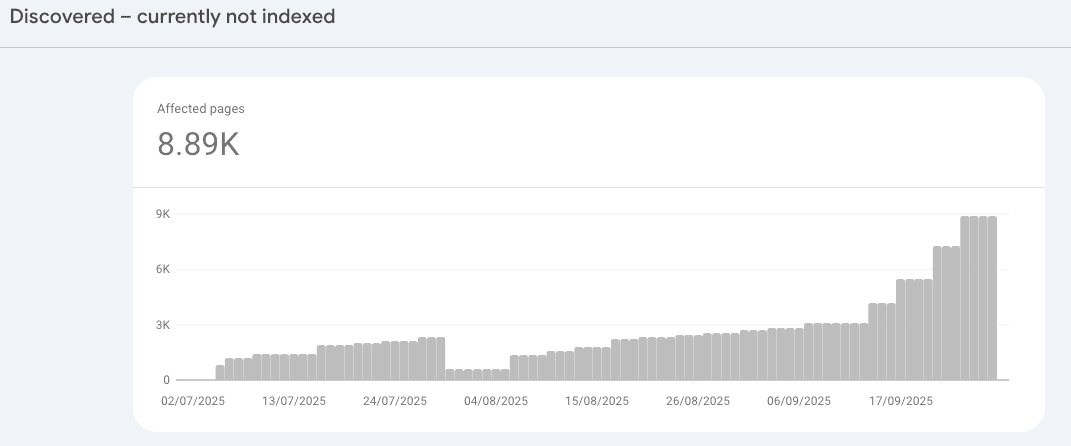
- Products showing “Discovered - currently not indexed” in Google Search Console
These kinds of indexing issues often go unnoticed until someone goes looking for them - and by then, you’ve lost time, visibility, and potential sales.
Why it happens:
- Thin or duplicate content: If your product descriptions are copied from a supplier or are too short, Google may decide they’re not valuable enough to index.
- Blocked by robots.txt or meta tags: Sometimes devs or plugins accidentally prevent pages from being crawled or indexed.
- Poor internal linking: If there’s no clear path from other pages to your product page, Google might never find it.
- Crawl budget issues: Large ecommerce sites with thousands of pages may overwhelm Google’s crawler, meaning some pages simply never get seen.
What to do:
- Use Search Console’s URL Inspection Tool to test whether your key pages are indexed and why they might not be.
- Audit your product pages for quality content - unique descriptions, helpful information, reviews, and specifications all help.
- Ensure important products are internally linked from category pages, blog posts, or featured sections.
- Submit missing or updated URLs via your XML sitemap and make sure your sitemap is healthy (we’ll cover that later).
If your products aren’t indexed, they’re not searchable - and that’s revenue you’ll never recoup.
2. Crawl Bloat
Just because Google can crawl it, doesn’t mean it should.
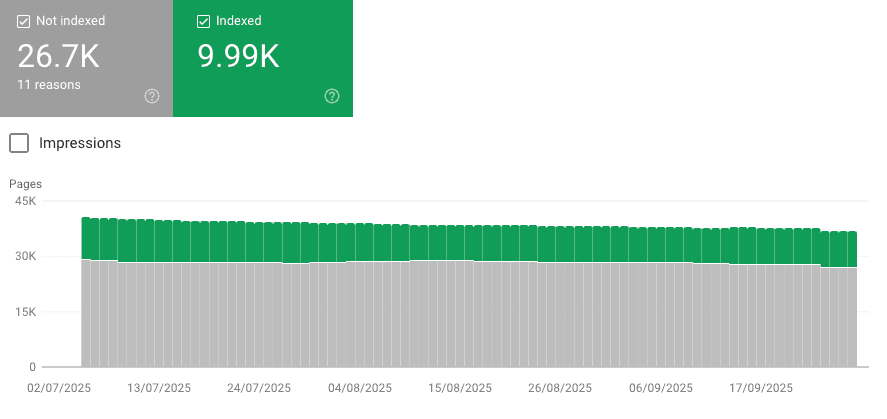
Crawl bloat happens when your site has too many low-value or redundant URLs, and Google wastes time crawling the wrong pages - instead of the ones that actually matter for search performance.
For ecommerce brands, this can quietly kill your visibility, especially on large sites with lots of products, filters, variants, or outdated content.
What does this look like in real life?
You might spot:
- Your crawl stats in Search Console show thousands of URLs - most of which don’t need to be indexed
- Filtered or faceted URLs (like
?size=8&colour=blue) being crawled repeatedly - Old, discontinued product pages still live (and crawlable) years later
- Random landing pages or test URLs popping up in your crawl reports
- Google ignoring or de-prioritising your important category or product pages
If Google is spending its crawl budget on junk, it’s not spending that time on your revenue-driving pages. Worse still, it might dilute your site’s overall authority and slow down indexing of new content.
Why it happens:
- Faceted navigation creates near-infinite URL combinations with filters like size, colour, or price.
- Session or tracking parameters (like
?ref=123) generate duplicate versions of the same content. - Discontinued, outdated, or duplicate content stays on-site without being properly redirected or deindexed.
- CMS or platform quirks: Some ecommerce platforms auto-generate low-value pages or don’t handle canonical tags well.
What to do:
- Conduct a crawl analysis to identify low-value, duplicate, or redundant URLs.
- Use robots.txt and URL parameter settings in Search Console to control what Google can and can’t crawl.
- Ensure canonical tags point to the preferred version of each page.
- Regularly retire, redirect, or consolidate old or unused pages.
- Audit your faceted navigation with SEO in mind - not just UX.
3. Over-Optimisation
Trying too hard can hurt more than help.
Over-optimisation happens when well-meaning SEO tactics go too far - and instead of helping your pages rank, they end up making them unreadable, irrelevant, or even penalised.
SEO isn’t about keyword density or ticking boxes anymore. It’s about matching search intent and providing genuine value. If your content sounds like it was written for bots instead of humans, that’s a red flag to Google and your customers.
What does this look like in real life?
You might spot:
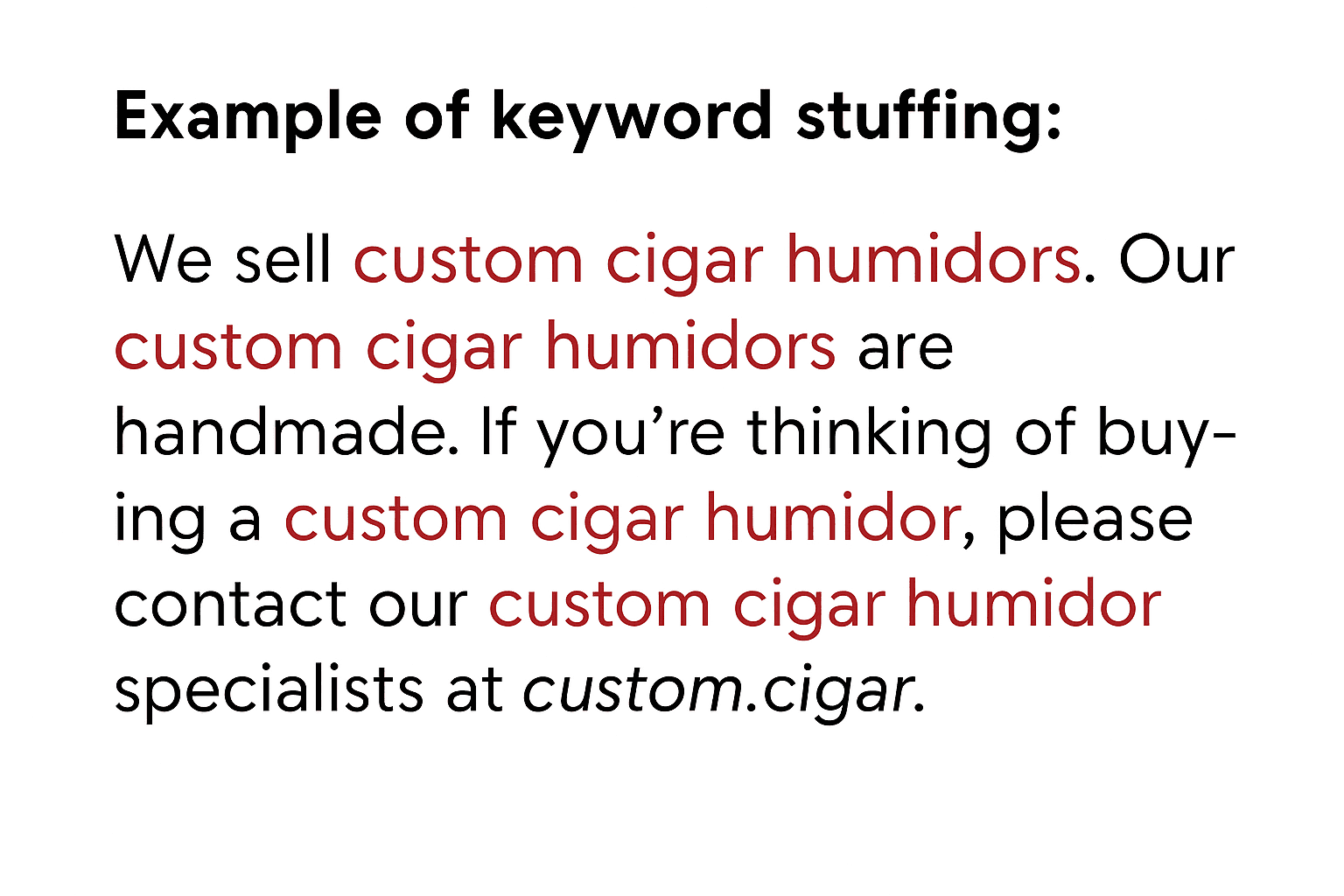
- Pages that repeat the same keyword dozens of times (“best pink hoodie nz”, anyone?)
- Product descriptions clearly written by AI with no real detail or originality
- Title tags stuffed with keywords instead of written to attract clicks
- Blog posts that try to “rank for everything” but say very little of substance
- Dozens of near-identical pages targeting micro keyword variations
In ecommerce, this is particularly common on product and category pages - especially when content has been written (or rewritten) quickly, without understanding the actual intent behind customer searches.
Why it happens:
- Misunderstanding what “optimisation” really means today
- Chasing keywords over clarity
- Using AI-generated content at scale with little editing
- Repeating content across products or categories
- Trying to trick Google with invisible or irrelevant content (which never works)
What to do:
- Write for people first, search engines second - always.
- Focus on intent-matching: what is the user really looking for, and does your page meet that?
- Vary content where it matters: duplicate descriptions across 500 products won’t help your rankings.
- Regularly audit your site (or let us do it!) for outdated tactics like keyword stuffing, and refresh content accordingly.
SEO success doesn’t come from “tricking” Google - it comes from helping users. Over-optimised content misses the mark on both.
4. Sitemap Issues
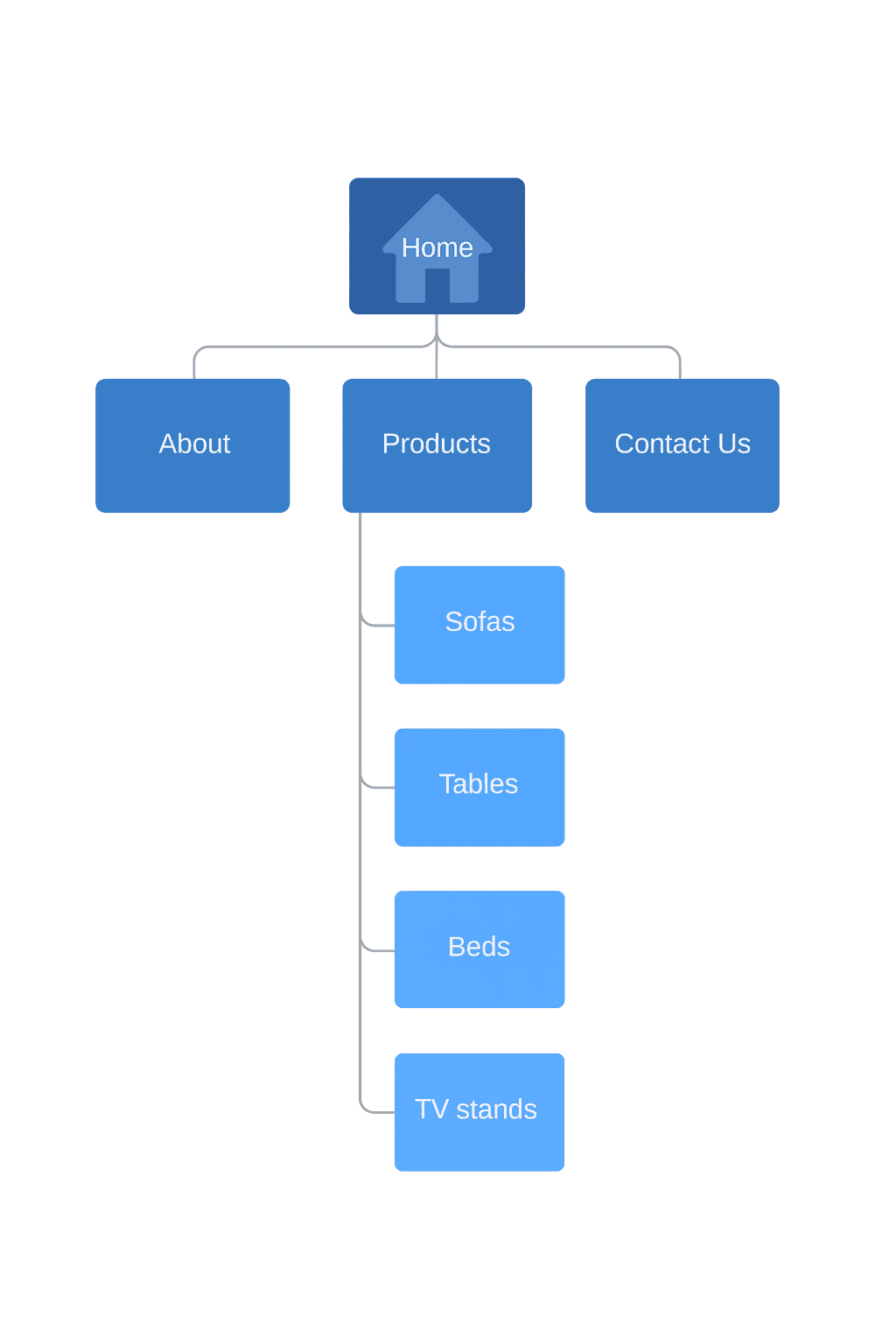
Your sitemap is like a roadmap for search engines - but what if it leads to dead ends?
A sitemap tells search engines what pages exist on your site and which ones should be prioritised. Think of it like a “cheat sheet” for crawling your site more efficiently.
But when your sitemap is outdated, messy, or incorrect, you’re sending Google and other search in the wrong direction - and that can seriously affect your organic visibility.
Common sitemap problems we see in ecommerce:
404s and 301s in the sitemap
These are pages that either no longer exist or have been redirected - and they absolutely should not be in your sitemap. Including them wastes crawl budget and signals that your site may be poorly maintained.
Outdated product/category URLs
If products are discontinued or categories have changed but the sitemap hasn’t been updated, you’re leaving search engines confused about what’s really on offer.
Massive sitemap files with low-value URLs
If your sitemap contains thousands of URLs including filters, sort pages, session IDs or internal search result pages, it creates crawl bloat and dilutes the focus on your high-priority content.
Missing high-value pages
Ironically, some sitemaps don’t even include all the important pages - like newly added collections, gift guides, blog content, or core landing pages.
Why it matters:
Google doesn’t rely on your sitemap alone but it’s one of the strongest signals you can send about what matters on your site.
A broken or bloated sitemap leads to:
- Slower or incomplete indexing
- Poor prioritisation of new or optimised pages
- Crawlers wasting time on irrelevant or broken content
- Missed opportunities to appear in AI Overviews and SERPs
What to do:
- Run regular sitemap audits - don’t just “set and forget.”
- Remove broken links, redirects, and outdated product/category pages.
- Keep your sitemap lean: focus on indexable, high-quality content.
- Ensure your sitemap is included in your
robots.txtfile and submitted to Google Search Console. - If your site is large (10,000+ URLs), consider using multiple segmented sitemaps by type (e.g., /products, /categories, /blog).
If your sitemap is broken, out-of-date, or bloated, you're making it harder for Google to surface the content that actually drives revenue.
5. No Structured Data
If your site’s not speaking the right language, it’s easy to be ignored.
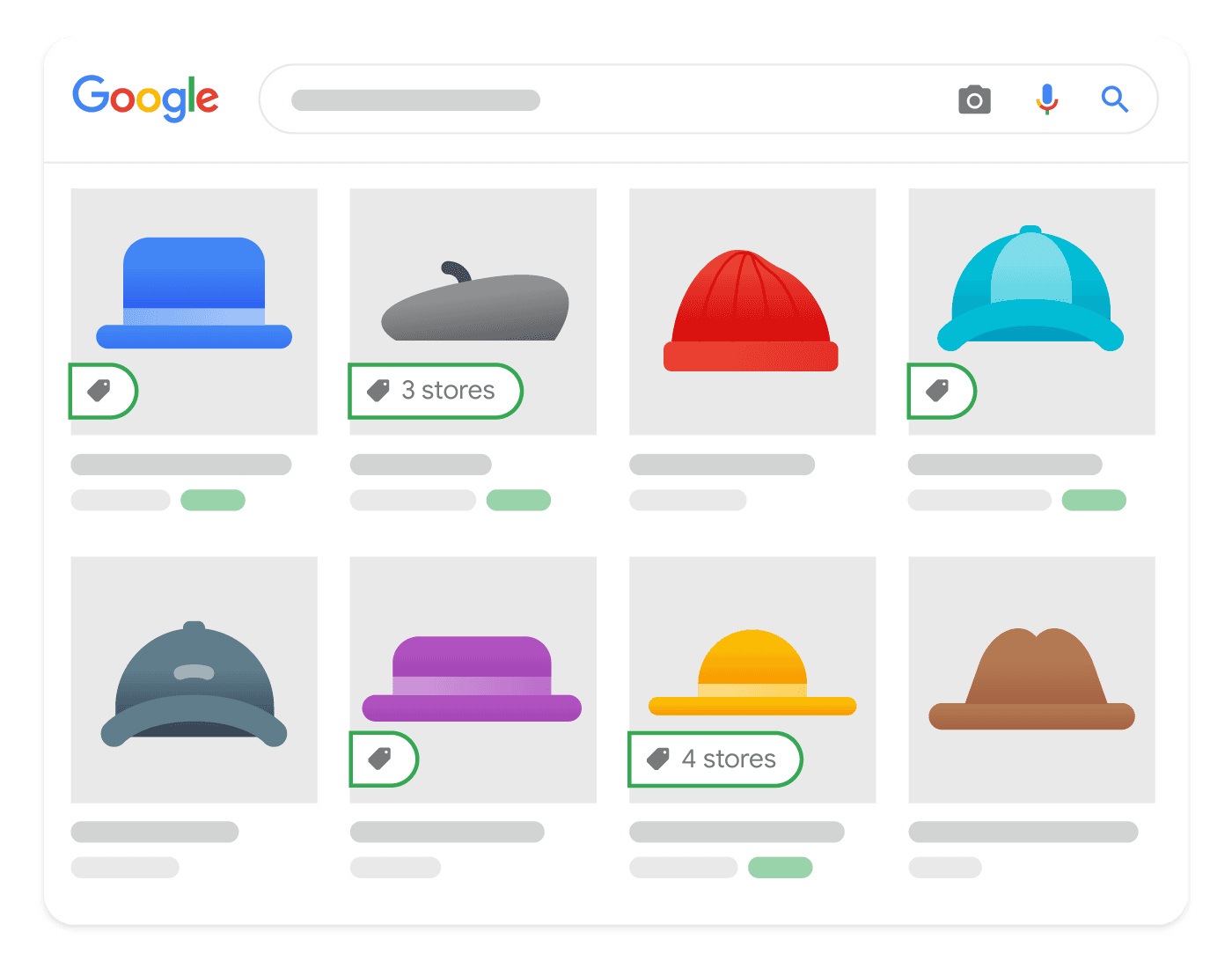
Structured data (also known as schema markup) is a special type of code you add to your webpages to help search engines better understand what the content is about.
For ecommerce sites, this can mean the difference between showing up with rich product info in search results… or not showing up at all.
With AI-powered search, structured data does even more heavy lifting. It helps these systems quickly identify relevant answers, trusted sources, and real-time product info to feature in AI Overviews and other enhanced result formats.
Google for Developers
Why this matters more than ever:
- Search engines - and, to some extent, AI systems - rely on contextual cues to decide which pages and products to trust.
- Structured data boosts your eligibility for enhanced listings like product snippets, FAQs, reviews, and more - which can increase CTR significantly.
- Most importantly, structured data helps ensure your product pages get cited in AI-driven answers - whether it’s an AIO, Gemini, or beyond.
What structured data enables:
Let’s say someone searches for “best curling iron for thick hair.” If your product page is marked up correctly with product type, hair type suitability, reviews, pricing, and availability, your product is far more likely to be featured in an AI Overview, rich result, or Shopping snippet.
Without structured data? Even if your product is perfect for the query, Google may not “see” it.
Common structured data issues:
- No schema at all (very common for smaller brands or custom platforms)
- Incomplete schema (e.g., missing reviews, price, availability)
- Errors in implementation (e.g., schema applied incorrectly or to non-canonical versions)
- Generic markup that doesn’t align with page content or product focus
What to do:
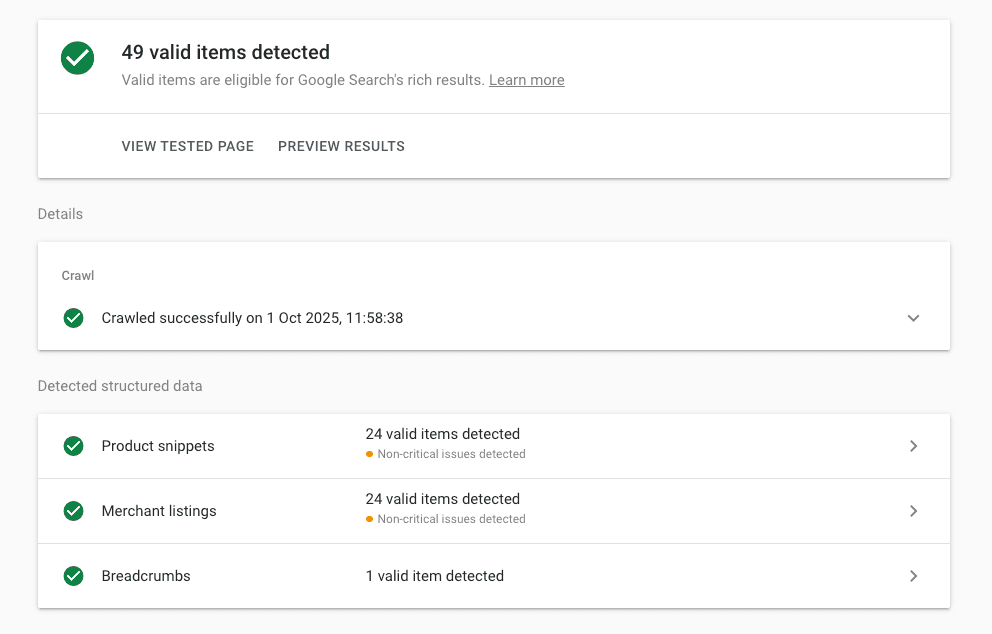
- Use Google’s Rich Results Test to check if your pages are eligible.
- Implement product schema with all relevant properties: name, description, price, availability, reviews, brand, SKU, etc.
- Add structured data to blog posts, how-to guides, and FAQs where possible to increase topical visibility and citation potential.
- Review Search Console’s Enhancements tab to spot schema-related errors or warnings.
Don't Ignore Your SEO - It Could Cost You
Unindexed products. Crawl bloat. Faulty sitemaps. Missing structured data. These aren’t minor oversights - they’re silent killers of visibility, revenue, and long-term growth.
And unfortunately... you usually don’t notice until it’s too late.
That’s why technical SEO isn’t optional. It’s the baseline that keeps every other marketing investment working at full strength - from your Google Ads to your social campaigns.
We treat site health as the foundation of ecommerce success. Because when your technical SEO is watertight, everything else - from rankings to revenue - scales faster.
Let’s make sure your site isn’t quietly holding you back. Get in touch today for an audit!
Up Next in the Series: PPC Performance Killers
Technical SEO is just one side of the story. The next silent performance killers live inside your paid campaigns.
From wasted spend on broad targeting to poor account structures, there are hidden traps that can drain budget and flatten ROI without you even realising it.
👉 Stay tuned for Part 2: PPC Performance Killers - or explore more of our insights right now: