The Future of Search: A Deep Dive into Google's SGE
1 February 2024

Roberta Johnston
SEO Lead
I'm an SEO specialist with over 8 years of experience helping brands grow through strategic, data-driven search optimisation. I've worked with large e-commerce websites and niche brands alike, developing a deep understanding of ranking algorithms, generative AI, and LLMs like ChatGPT, Perplexity AI, and Gemini. My expertise spans technical SEO, ensuring sites - whether a few dozen pages or 100,000+ - are crawled and indexed effectively.
Tags
Search Generative Experience (SGE) is still a work in progress and this blog has been updated to provide the latest insights available.
As the digital landscape continues to evolve, staying ahead of search engine trends is vital for New Zealand businesses to maintain their online presence. One such groundbreaking development is Google's Search Generative Experience (SGE), which promises to revolutionise paid and organic search results.
Blackpepper is a leading ecommerce SEO agency in New Zealand, and we understand the importance of staying on top of these changes. In this blog, we'll explore what SGE is, the changes it brings to search engine results, and how it may affect search going forward.
What is Google’s Search Generative Experience (SGE)?
Google's SGE is an innovative, and currently experimental (though it is slowly being rolled out to regions like the US and UK) approach to search that leverages artificial intelligence, machine learning, and natural language processing to deliver more dynamic and personalised search experiences. Unlike traditional search algorithms, SGE aims to provide users with highly relevant and interactive search results, tailored to their specific preferences and needs.
The primary tenet of SGE is the use of AI to enhance the search experience. It does so in three ways:
- AI snapshot, which generates a shortened response to a user’s search query references multiple sources for its answers
- Conversation mode, which allows users to essentially have a conversation that retains the context of the original question or search query. Suggested follow-up questions are provided, or a user can input their own and Google will ‘remember’ the original question to ensure the results it provides to follow-up questions are still in line with search intent.
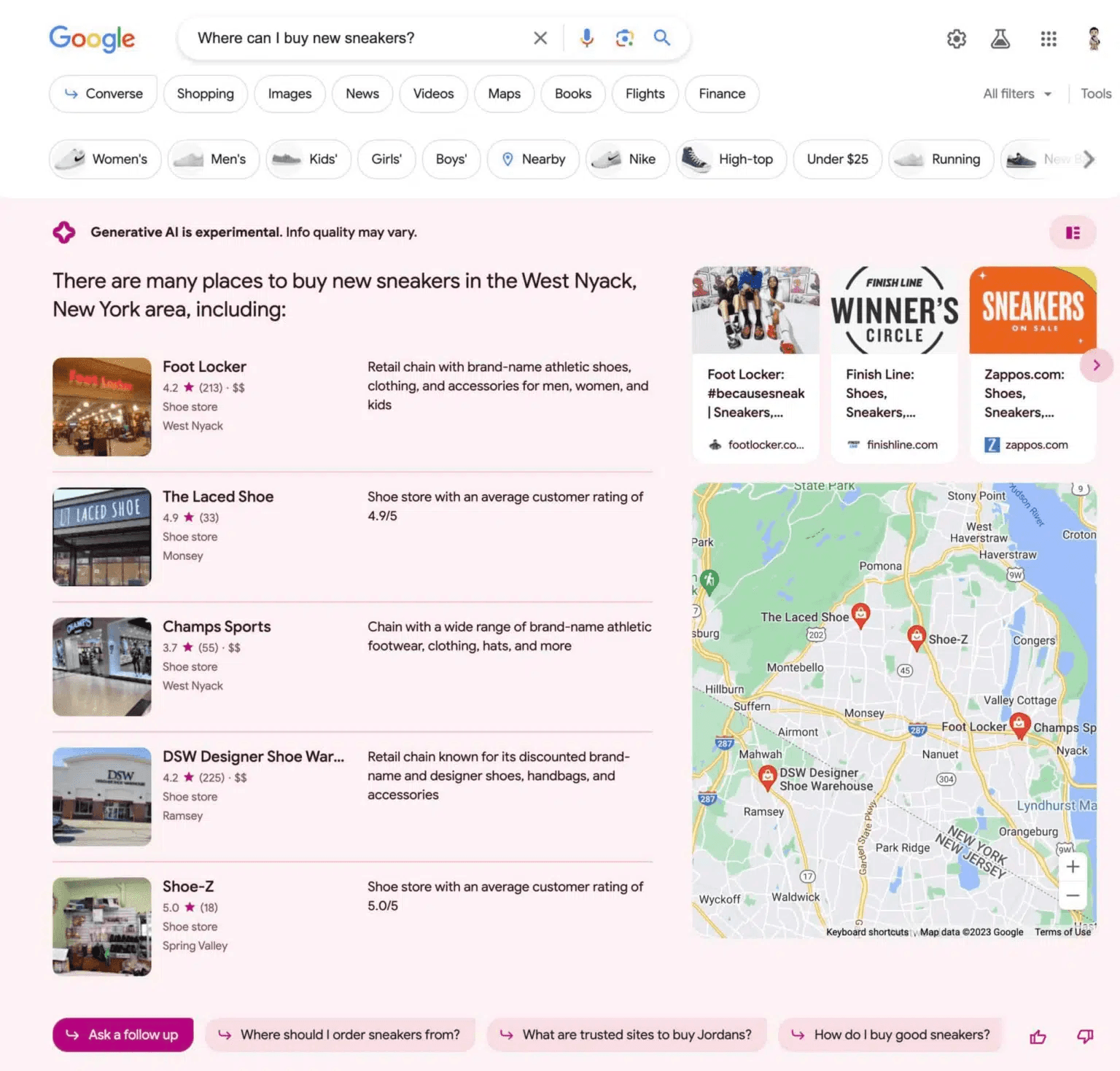
- Vertical experiences, which provides a detailed list of features, products, or places. The traditional list of sponsored ads feature below the search bar for commerce or transactional queries, followed by a more in-depth section of products.
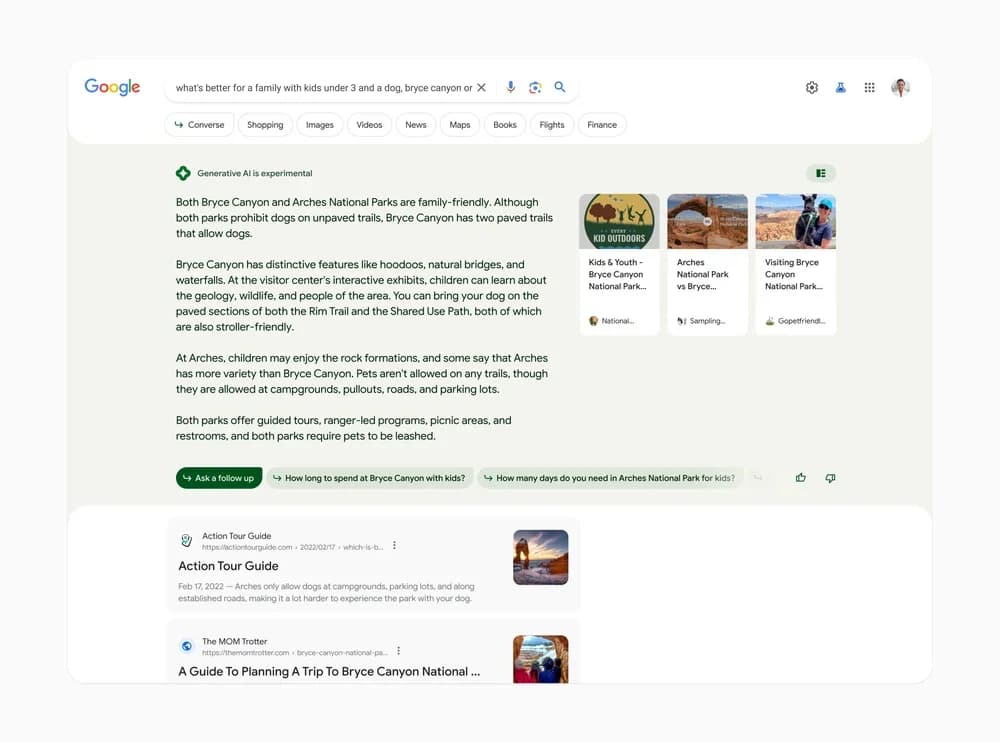
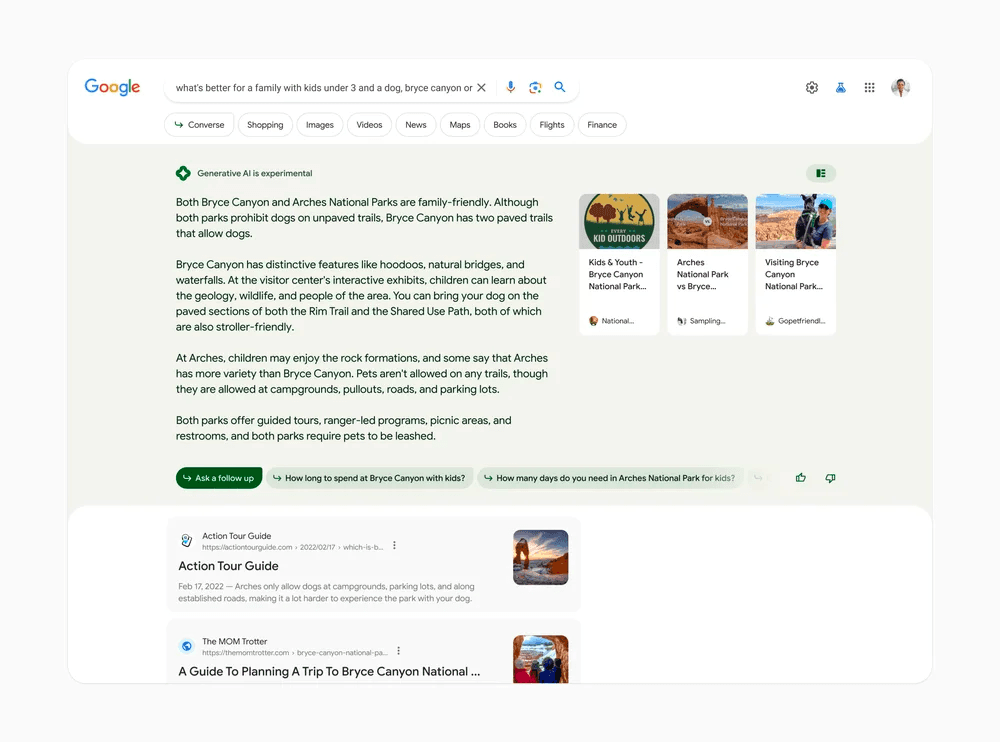
Below is a screenshot of the AI snapshot feature. This comes as a major change from the traditional list of blue links that users are accustomed to seeing in their search results pages. The new AI snapshot appears below the search bar and its background varies in colour, depending on the type of query conducted.
Source: Google
With SGE, Google is transforming Search Engine Results Pages (SERPs) into more engaging and informative platforms. Rich snippets, visual search, real-time information, and personalised recommendations are just a few of the enhancements introduced by SGE. These features empower users to find information more efficiently and make informed decisions, while also encouraging deeper engagement with search results.
Another added bonus is the legitimacy of the answers provided. Unlike prior AI models, like Google’s own Bard or OpenAI’s Chat GPT which are known to provide inaccurate information, Google’s SGE AI-based system corroborates its answers against actual sources and conveys these to the searcher, allowing them to click through to the website from which Google derived the answer.
How Does Google’s Search Generative Experience Work?
Google has recently acquired a patent for it’s Search Generative Experience addition and with it comes key insights into how it will work:
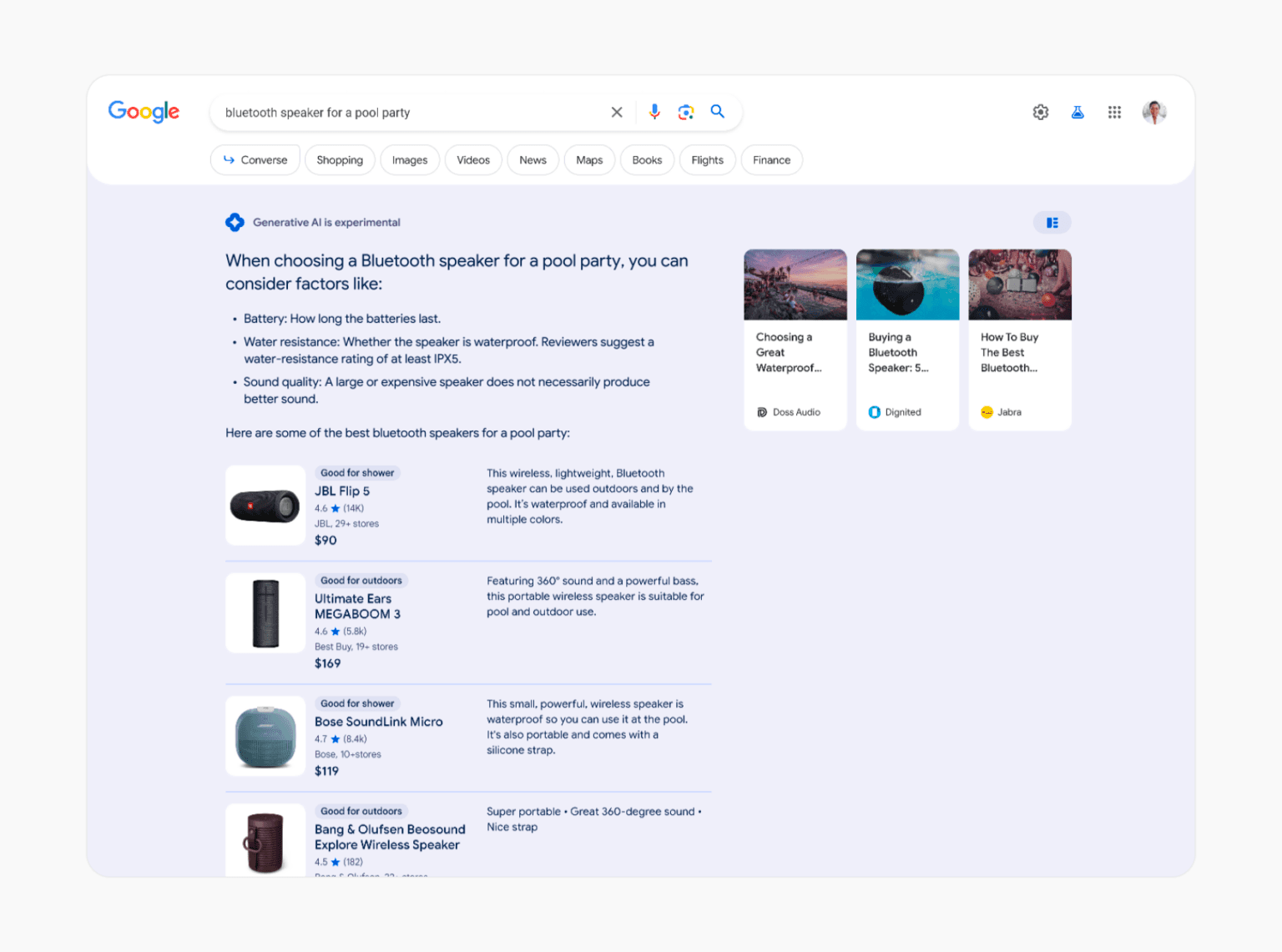
Google's patent on Search Generative Experience (SGE) takes us behind the digital curtain, revealing the intricate workings of this transformative technology. The patent's abstract speaks the language of an innovative symphony, where a Large Language Model (LLM) takes centre stage, orchestrating a natural language-based summary as a response to your query.
What's intriguing is how this LLM isn't just a one-trick pony. It selectively processes not only the content directly related to your query but also additional content, going above and beyond to ensure the summary hits the right notes. Picture it as a chef carefully blending various ingredients to create the perfect dish. By seamlessly integrating additional content, the patent aims to fine-tune the NL-based summary, preventing inaccuracies, and avoiding the pitfalls of being either too detailed or too vague.
It's a dance of precision, where the LLM twirls through the query content and additional information, ensuring the resulting NL-based summary is a harmonious blend of accuracy and relevance. This patent unveils Google's commitment to refining the search experience, sparing users from the woes of misleading or incomplete information. It's a nod to the future of search - a future where queries aren't just answered; they're masterfully crafted symphonies of knowledge.
Source: Search Engine Land / Google
What We Know About SGE So Far
Navigating the landscape of Google's Search Generative Experience (SGE) unveils a transformative shift in real estate within Search Engine Results Pages (SERPs). In stark contrast to the current SERP layout, SGE overviews, akin to featured snippets, consume a significant portion of the screen. For many queries, these auto-generated overviews extend across the entire desktop screen and necessitate scrolling on mobile devices.
Depending on the query, the SGE-powered search features an AI overview that supplants traditional ads, altering the hierarchy of organic results. The evolving layout of SGE introduces new dynamics, as Google experiments with different formats, such as a compact preview with a "Show more" button, diverging from the initial expansive overviews.
The impact of SGE on organic traffic is influenced by factors like the size of the overview, images displayed, and the potential drop in click-through rates (CTR) for regular organic results. The layout adjustments observed in September, with smaller overviews and fewer ads, highlight the dynamic nature of SGE. Google's ongoing testing and responsiveness to user feedback contribute to a fluid environment, where changes in query triggers, ecommerce categories, local packs, and ad placements are recurrent.
As SGE continues to evolve, its impact on site traffic remains subject to ongoing adjustments and refinements. Businesses navigating this dynamic landscape must stay vigilant and adapt strategies to align with the ever-changing dynamics of SGE, recognising that no two overviews for the same query are identical. The intricate interplay of layout variations, content adjustments, and user feedback underscores the need for a flexible and responsive approach in the face of SGE's evolving terrain.
The Benefits of Google’s SGE for Users
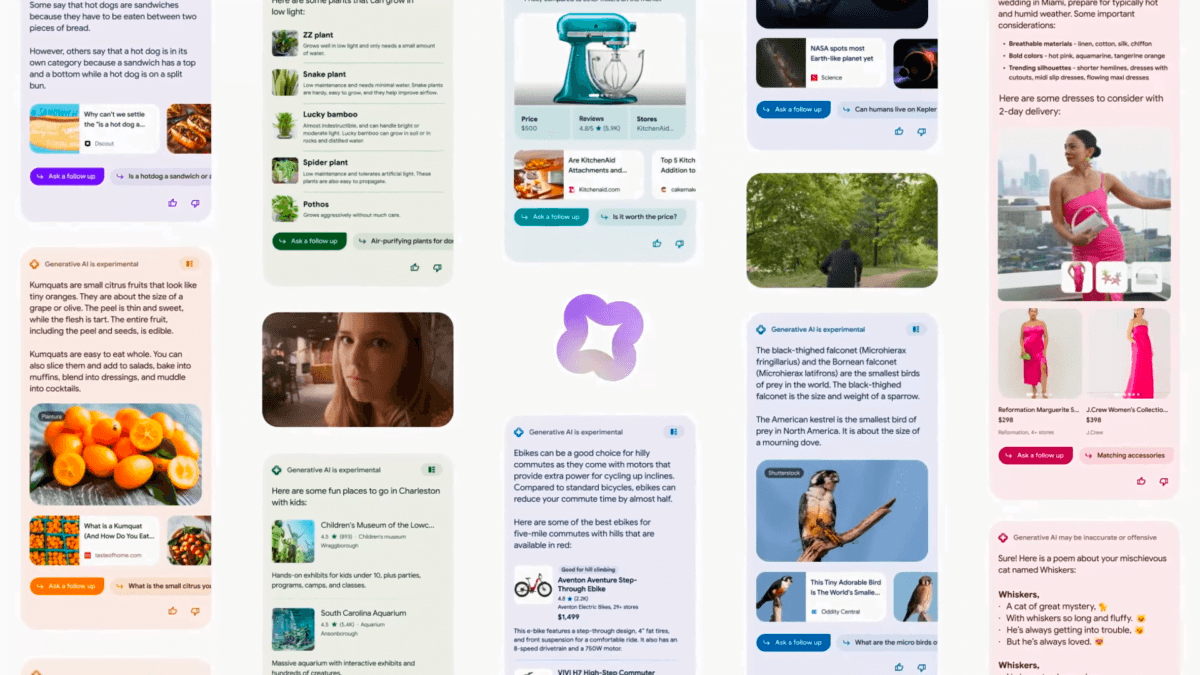
SGE brings several benefits to users. By leveraging advanced technologies, it enhances the accuracy and relevance of search results, ensuring users find what they need faster. The personalised nature of SGE allows for a customised search experience, catering to individual preferences and search history. Additionally, the potential improvements in voice search and conversational queries enable more natural and efficient interactions with the search engine.
But what do these changes mean for businesses?
Source: The Decoder / Google
How Will SGE Impact Site Traffic?
Insights from Search Engine Land suggest that the impact on organic traffic could be substantial, with potential decreases of up to 30%, analogous to the influence of featured snippets on certain search results. However, the extent of this impact varies based on factors such as niche, business model, and keyword types.
The key determinant of impact lies in the presence of an AI overview for a query. In cases where no AI overview is available, the impact is minimal. If users are encouraged to create an AI overview, a segment may follow through with the process. Yet, it's crucial to note that the creation of AI overviews takes time, and widespread adoption of this behaviour may not happen immediately among general users.
For websites that receive auto-generated AI overviews but don't appear in the response, there's a likelihood of a negative impact on traffic. Conversely, if a site does appear, the impact may be less severe. Notably, the placement of information on the left side of the overview is considered more crucial, aligning with the typical left-to-right reading pattern.
While concerns about the potential negative impact on traffic persist, there are notable benefits to consider. Ecommerce queries for products stand to gain prominence in AI overviews, potentially leading to increased click-through rates (CTR) for products with compelling images. Furthermore, the shift towards zero-click searches, where an answer is already provided in the search result, could become more prevalent with SGE, akin to trends observed with featured snippets.
Amidst the uncertainties, it's essential to acknowledge that Google is committed to the development and deployment of SGE, as evidenced by its dedication in their earnings call. The SEO community may need to adapt and observe how SGE unfolds in initial markets, potentially paving the way for strategic adjustments. As the SEO landscape evolves with SGE, the potential impact on site traffic underscores the need for businesses to stay agile and responsive to emerging search trends.
Source: SOCi / Google
Preparing for SGE: Strategies for Website Owners & Businesses
As SGE transforms SERPs, website owners and businesses need to adapt their strategies to maximise the potential visibility and engagement that SGE has to offer. While much of the same principles of quality content and user-centric approach remain important for organic, it's crucial to consider specific strategies for performance marketing channels like Google Ads and Shopping to succeed in the evolving search landscape.
For Organic, aka SEO:
The introduction of Google's Search Generative Experience has sparked a new set of considerations for website owners and businesses striving for optimal organic performance. While Google continues to emphasise the importance of quality content, the approach to harnessing SGE may require a subtle shift.
According to insights from Search Engine Journal, the skills needed to capitalise on SGE may not drastically differ from traditional SEO strategies. There's a notable overlap, and your SEO agency must navigate the balance between producing content for AI consumption and ensuring its value for end users. It's akin to a nuanced dance, where the goal is not just to rank but to communicate trust and usefulness to Google's AI.
The content that tends to thrive in SGE often features structured data, making it easily digestible for Google's algorithms. Additionally, comprehensive pillar pages that delve into topics in-depth and serve as a valuable resource have seen success. The key is to create content that AI, like large language models (LLMs), would reference when asked specific questions, but still adds a human touch that AI may miss.
In the era of SGE, the focus remains on being genuinely useful to end users. While the traditional principles of SEO endure, a net-new skill emerges - the ability to understand how LLMs generate answers and identify the nuances that human input can bring. This could include personal opinions, experiences, anecdotes, and other elements that enhance the depth and richness of content, addressing the gaps that AI-produced answers might overlook.
In essence, writing for SGE becomes a delicate balance of satisfying AI algorithms while ensuring content resonates with human users, a harmonious blend of technical finesse and genuine value creation.
Easy enough, right? Perhaps, but the new search landscape will undoubtedly bring about ranking and traffic adjustments (largely dependent on niche and industry) as well as create a more competitive environment - for both paid placements and organic results. Smaller businesses may face challenges in competing within the evolving search landscape, necessitating careful navigation and innovative strategies to maintain visibility.

For Google Ads:
- Ad Relevance and Quality Score: With SGE, the relevance of your ad to user intent becomes even more crucial. Ensure your ad copy aligns with the keywords and search queries you target, delivering an experience that matches user expectations. Focus on improving your Quality Score by enhancing your landing page experience, ad relevance, and expected click-through rate.
- Ad Extensions and Formats: Utilise various ad extensions and formats available, such as sitelink extensions, call extensions, structured snippets, and responsive search ads. These features help your ads stand out and provide additional information, increasing the chances of attracting clicks and engagement.
- Audience Targeting: Leverage audience targeting options to reach the right users at the right time. Utilise demographic targeting, in-market audiences, custom intent audiences, and remarketing lists to refine your targeting strategies and maximise the impact of your ads.
- Continuous Monitoring and Optimisation: Regularly monitor and analyse the performance of your ads to identify areas for improvement. Optimise your campaigns by adjusting bids, refining targeting, and testing different ad variations to enhance their effectiveness in SGE-driven SERPs.
For Google Shopping:
- Product Data Optimisation: Ensure your product data feed is comprehensive, accurate, and up to date. Optimise product titles, descriptions, attributes, and images to improve relevance and visibility in SGE-driven Shopping results.
- Structured Data and Merchant Center Integration: Utilise structured data markup, such as Schema.org, to provide detailed and structured information about your products. Sync your Merchant Center with your website to ensure accurate and consistent product information across platforms.
- Product Reviews and Ratings: Encourage customers to leave reviews and ratings for your products. Positive reviews and high ratings can enhance the visibility and credibility of your products in SGE-driven Shopping results.
- Bidding and Budget Optimisation: Continuously monitor and adjust your bidding and budget strategies to ensure maximum visibility for your products in SGE-driven Shopping ads. Experiment with bid adjustments, campaign priorities, and promotional offers to stay competitive in the evolving search landscape.
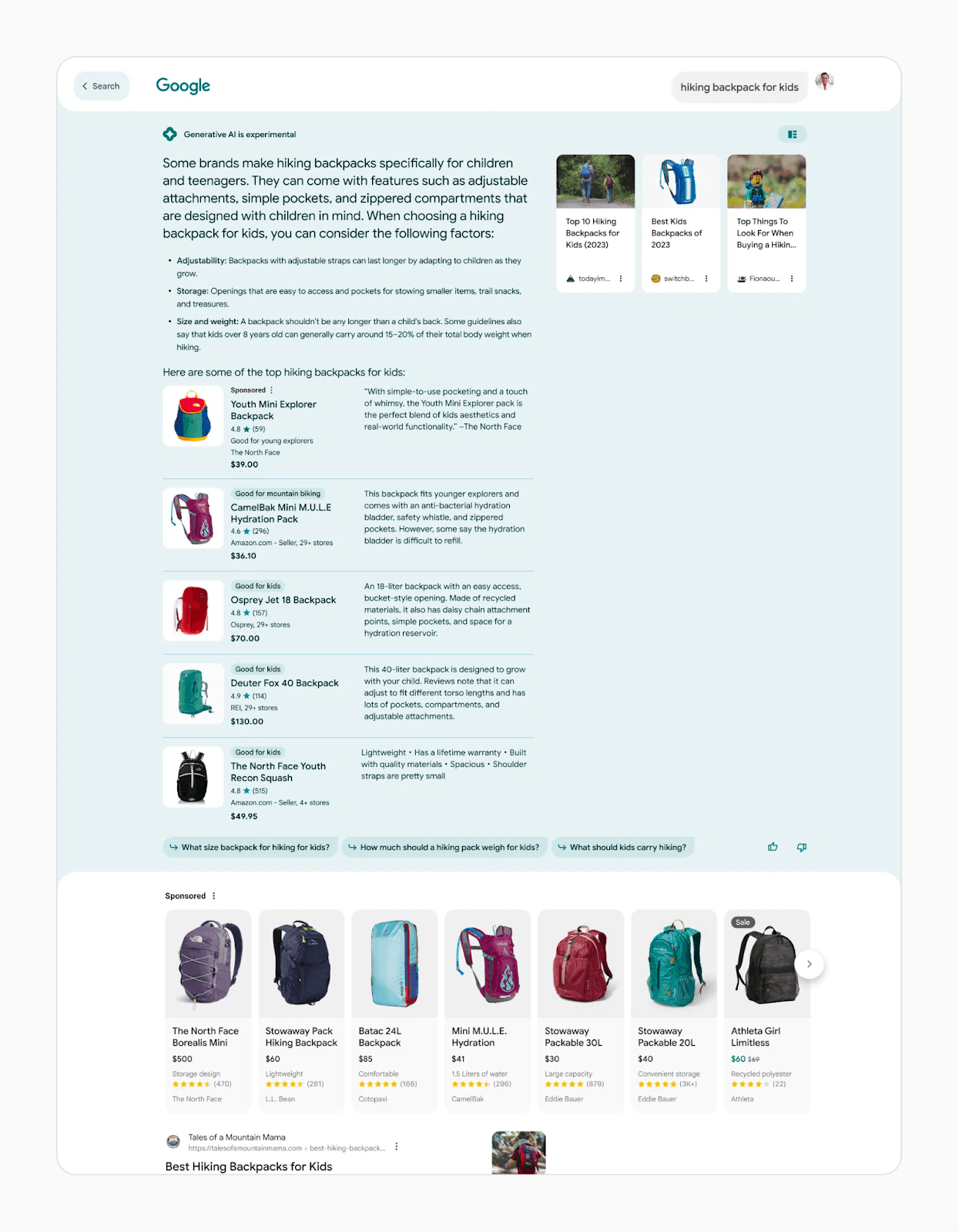
Source: Search Engine Land / Google
Stay Ahead of the SGE Curve and Beat the Competition
At Blackpepper, we understand the importance of optimising for SGE-driven search results. Our team recommends focusing on high-quality content, seamless user experiences, sound site architecture and mobile-friendliness. Additionally, structured data and schema markup play a crucial role in gaining visibility in rich snippets and other SGE features. Continuously monitoring SGE developments and adapting strategies accordingly will be key to staying ahead.
Given how fast SGE is changing and how soon we might be facing an all-new search experience, we strongly recommend not leaving your search visibility to chance. Get in touch with our team to find out how we can help keep you ahead of the curve - and, more importantly, ahead of the competition!