What Is Google Merchant Center Next?
3 April 2025

Roberta Johnston
SEO Lead
I'm an SEO specialist with over 8 years of experience helping brands grow through strategic, data-driven search optimisation. I've worked with large e-commerce websites and niche brands alike, developing a deep understanding of ranking algorithms, generative AI, and LLMs like ChatGPT, Perplexity AI, and Gemini. My expertise spans technical SEO, ensuring sites - whether a few dozen pages or 100,000+ - are crawled and indexed effectively.
Tags
How to Make GMCN Work for Your Ecommerce Brand
There’s a lot happening in the world of Google right now - from AI Overviews and Gemini 2.0 to shifting ad formats and changes to how product listings are surfaced.
In the middle of all this, Google Merchant Center Next (GMCN) has quietly become the new standard for product data management - whether you were ready for it or not.
And while the interface might look cleaner and more intuitive, the real question is: what does this mean for your ecommerce visibility, especially across organic and paid channels?
We work with ecommerce brands juggling thousands of SKUs across multiple categories. We know how critical it is to have a product feed that’s clean, accurate, and optimised for performance - not just on Google Ads, but also for free listings and organic discovery.
In this blog, we’re cutting through the noise to help you understand how GMCN works, how it overlaps with Google Ads, and what your brand needs to focus on to keep your product listings competitive.
What is Google Merchant Center Next?
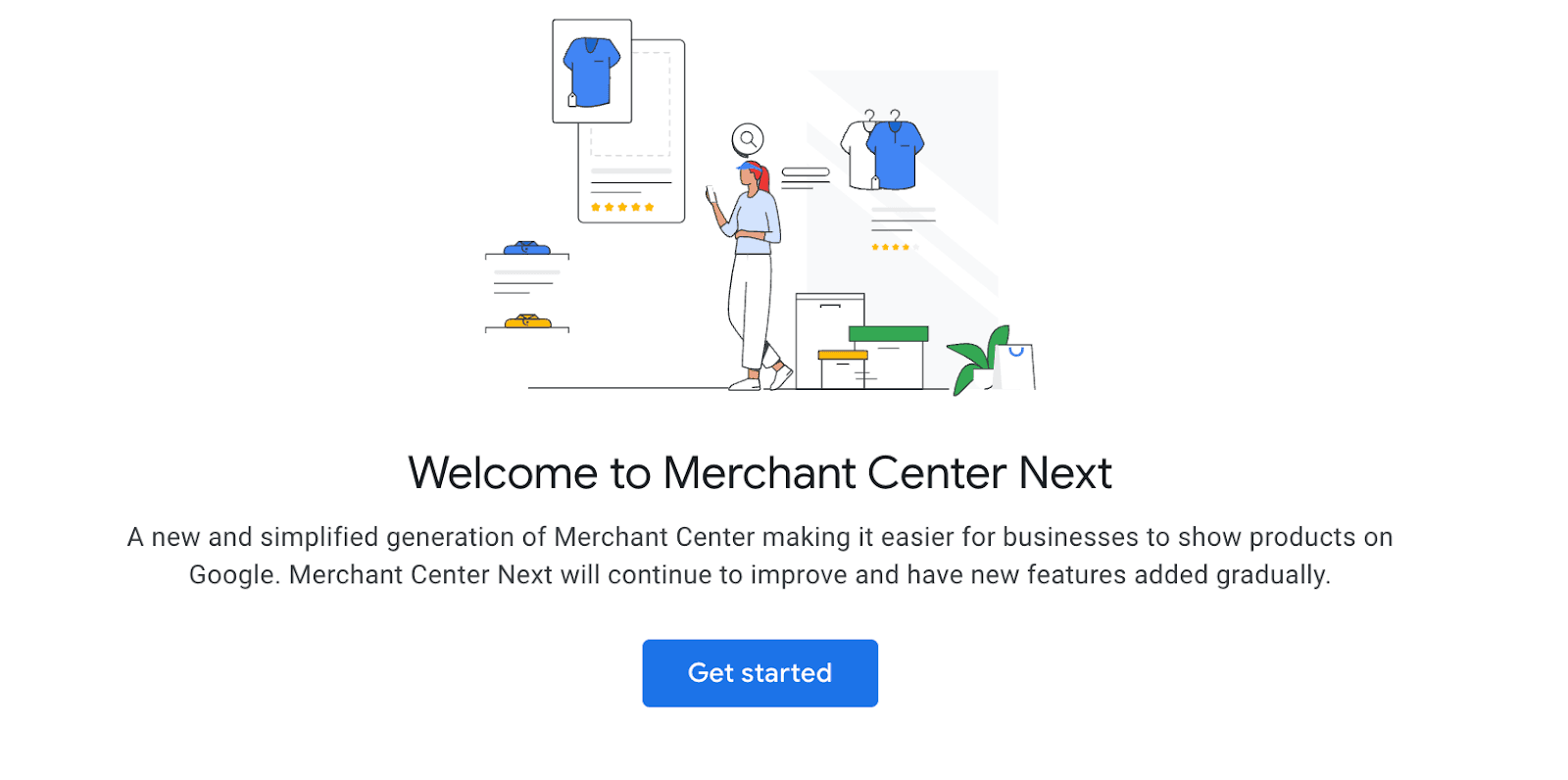
There’s been a significant shift in how product listings are managed on Google - and it’s called Google Merchant Center Next (GMCN), the OG Merchant Centre's new and improved upgrade.
It’s not brand new, but it is now the default for many retailers. And while it looks cleaner and is easier to navigate, it also brings some important changes under the hood.
GMCN in a Nutshell:
- GMCN automatically pulls product data from your site to populate listings - no spreadsheets required (mostly - more on that in a bit).
- It’s designed to be more intuitive, especially for small to mid-sized retailers getting started.
- It gives you clearer reporting on listing eligibility, across both paid ads and free listings.
- It still works alongside Google Ads - but Merchant Center is where your product data lives and breathes.

Our Take
GMCN isn’t a bad update. But for large-scale ecommerce brands juggling thousands of products, it’s not quite a set-and-forget solution.
We’ve seen how relying solely on GMCN’s automatic product scraping can lead to issues - missing sale pricing, inaccurate availability, or disapproved listings due to data mismatches.
That’s why we work directly with our clients and development teams to build structured product feeds that:
- Sync up with on-site content and structured data.
- Accurately reflect real-time pricing, availability and promotions.
- Minimise eligibility issues across both Google Shopping ads and organic listings.
So while GMCN makes life easier in theory, the brands that win in this space are still the ones who take control of their product data and treat it like a performance asset - not an afterthought.
How GMCN Fits into Your Marketing Ecosystem
Google Merchant Center Next plays a bigger role than many retailers realise. It’s not just a backend requirement for ads - it’s the foundation of your entire Google product presence.
If you’re running Google Shopping campaigns, Performance Max, or even relying on free product listings, GMCN is where it all begins.
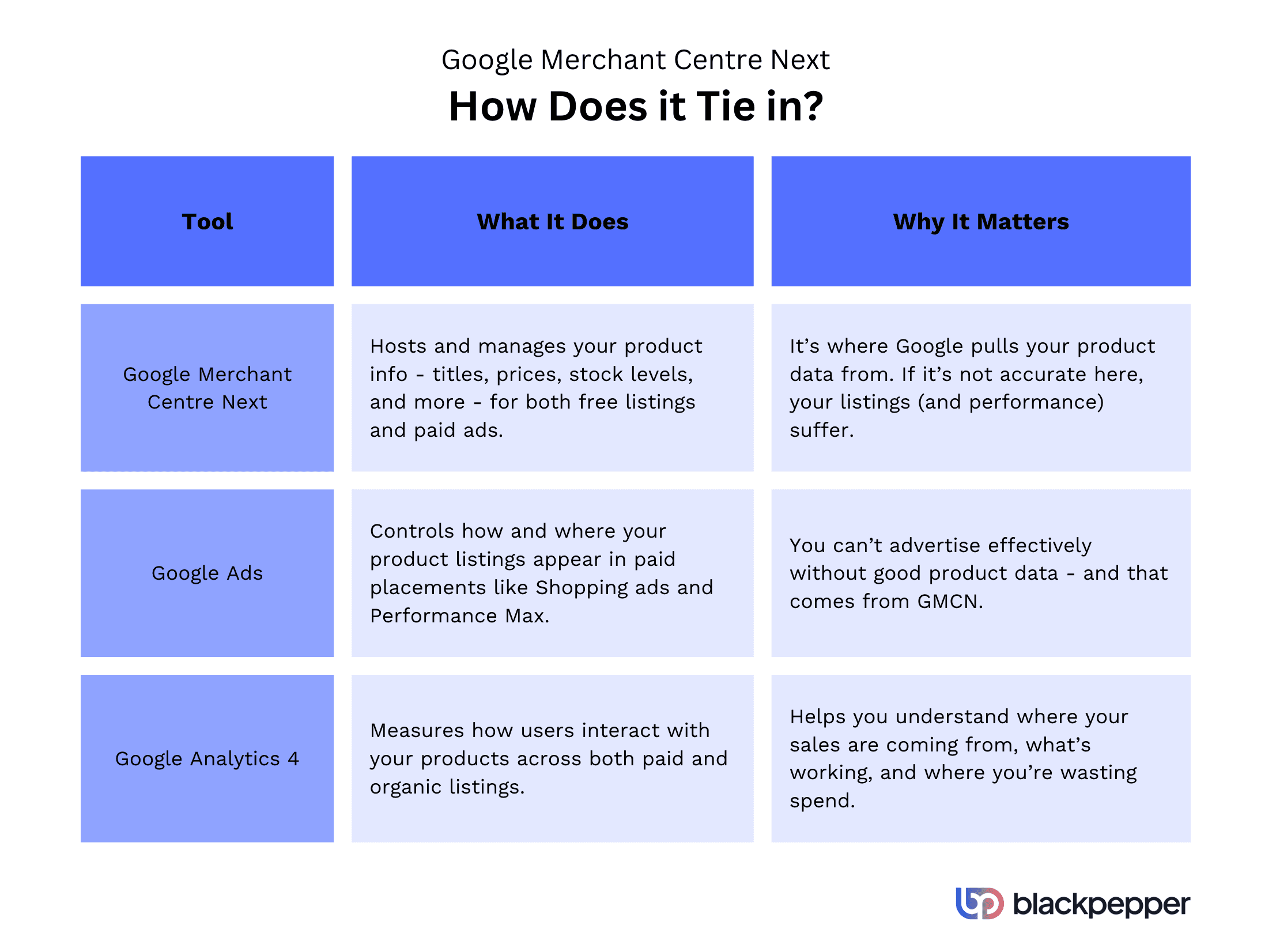
Let’s break down how GMCN fits into the broader marketing ecosystem:
GMCN: The Product Data Hub
Think of GMCN as the single source of truth for your product catalogue.
It holds your titles, pricing, availability, and key details that appear in both paid ads and free listings. If your data isn’t accurate here, it can throw off everything else - from eligibility to visibility.
Even if you’ve built a great Performance Max campaign in Google Ads, it won’t perform if GMCN is feeding it outdated or incorrect product info.

Google Ads: The Promotions Engine
Google Ads is where you promote your products. It determines where and when your listings appear in paid placements like Shopping, Search, and across Google’s Display Network. But Ads doesn’t host product data - it pulls that from GMCN.
That means no feed = no visibility. Or worse, a messy feed = poor ad performance, rejected listings, or wasted spend.

Google Analytics 4: The Performance Tracker
Google Analytics 4 (GA4) connects the dots between product impressions and customer behaviour - across both organic and paid channels. You’ll use it to measure how your listings convert, what channels are driving the most revenue, and where optimisation is needed.
Combined with accurate product data in GMCN and smart campaign setup in Google Ads, GA4 gives you the full picture.
Why This Matters
If these three systems aren’t working together, you’re leaving visibility and revenue on the table.
- GMCN feeds the product data.
- Google Ads delivers the placements.
- GA4 shows you what’s working.
When they’re connected and configured correctly, it means cleaner listings, more efficient ad spend, and better insights to fuel growth.
🧠 Blackpepper Tip:
We often see brands investing heavily in ads but missing the basics - like ensuring product data syncs properly between GMCN and Google Ads. Fixing this alone can unlock better eligibility, higher CTRs, and improved ad quality scores.
For Ecommerce Brands, Feed Quality Is Everything
With GMCN pulling product data directly from your website, your visibility now depends on more than just your ad setup - it’s tied to the strength of your product feed, your technical SEO, and the clarity of your product pages.
Even though GMCN makes it easier to get started, it doesn’t excuse poor data hygiene. If your feed is disorganised, outdated, or not aligned with your site content, your listings may be disapproved, disqualified, or underperform without explanation.
Here’s what matters most.
✅ Your Product Feed Must Be Structured and Current
Whether you’re relying on Google’s automatic data extraction or supplying a supplemental feed, you still need a clean, structured, and accurate product feed.
That means:
- Pricing (including sales or promo pricing) is correct and clearly flagged
- Stock levels and availability are updated frequently
- Product titles and descriptions match what’s on your website
- Variant data (like sizes or colours) is logically grouped and consistent
✅ Structured Data Still Plays a Key Role
Even with feed-free ingestion, GMCN depends heavily on structured data to validate what it’s reading from your site. If schema markup is missing or misconfigured, it can lead to mismatches, lower eligibility, or complete disapproval from free listings or Shopping ads.
Your schema is the translator between your site and Google - without it, you're relying on guesswork.
✅ Your PDPs Need to Be Landing Pages
Because GMCN now links directly to individual product pages - not just category hubs - every product detail page (PDP) should be built to convert.
That means:
- Unique, crawlable URLs
- Clear, accurate and keyword-aligned content
- Optimised metadata and image alt text
- Fast load speeds and mobile-friendly design
If your PDPs aren’t pulling their weight, all the backend feed optimisation in the world won’t make up for it.

GMCN Isn’t Just for Ads – Organic Visibility Still Matters
A lot of ecommerce brands think of Merchant Center as a paid ads tool - but GMCN powers free listings too, and that’s where SEO and organic strategy come into play.
Google surfaces products in Shopping results even when you're not paying for clicks. These free listings live in the Shopping tab and occasionally show in Search results, depending on the query.
But to appear there, your products still need to meet a baseline of quality, structure, and relevance.
Here’s what that looks like in practice:
Free Listings Still Rely on SEO Signals
Your category pages and product pages need to be crawlable, topically relevant, and well-optimised to show up in free listings.
This means:
- Page titles and meta descriptions that match search intent
- Clean internal linking that makes product discovery easier
- Logical URL structure that reinforces site architecture
- Optimised H1s, alt text, and consistent keyword use
If your category page for "men’s waterproof jackets" is vague or buried in your nav, Google’s not going to feature it – paid or free.
Structured Data and Product Feeds Work Together
GMCN will ingest what it can from your site, but the best results come when your structured data and product feeds align. If you’re running supplemental feeds, everything needs to match what’s visible on your live site and in the schema markup.
When your SEO setup and GMCN data are in sync, you maximise your eligibility and visibility, whether you’re running ads or not.
What We Think
Free listings are one of the most under-utilised opportunities in ecommerce right now. If your technical SEO and Merchant Center setup are properly aligned, you can earn placements that drive real revenue - without a dollar spent on ads.
But it doesn’t happen by accident. We’ve helped brands rework their PDP structure and schema to fix eligibility issues, increase exposure in free listings, and support better performance in both Shopping and Search.
Key Watch-Outs for Large Ecommerce Brands
Google Merchant Center Next does a good job of streamlining the basics - but if you're running a large catalogue, managing multiple brands, or selling thousands of SKUs, there are a few things you’ll need to stay on top of.
This isn’t about setting and forgetting. At scale, even small inconsistencies can have a big impact.
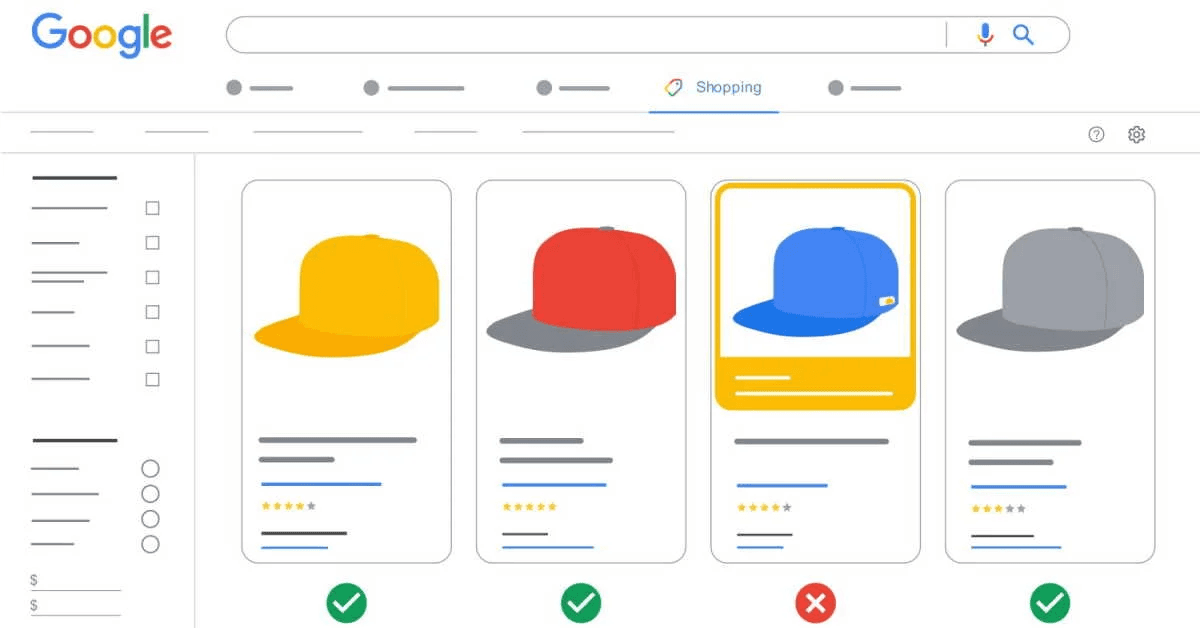
❌ Feed mismatches = Disapprovals
Auto-ingestion sounds great, but it depends entirely on how your PDPs and structured data are set up. If there’s a mismatch - say, the product is listed as "in stock" on your site but "out of stock" in your feed - you’re risking disapprovals or reduced visibility.
Our tip: Ensure your structured data, product feed, and live site content are aligned and updated regularly. For larger sites, this should be automated wherever possible.
⚠️ Google's Automation Isn’t Always Precise
While GMCN does pull product data automatically, it can’t always interpret content correctly - especially if your site uses custom templates, dynamic pricing, or complex promotional logic.
That means manual QA is still essential. Don’t assume everything’s working just because it looks tidy in the UI.
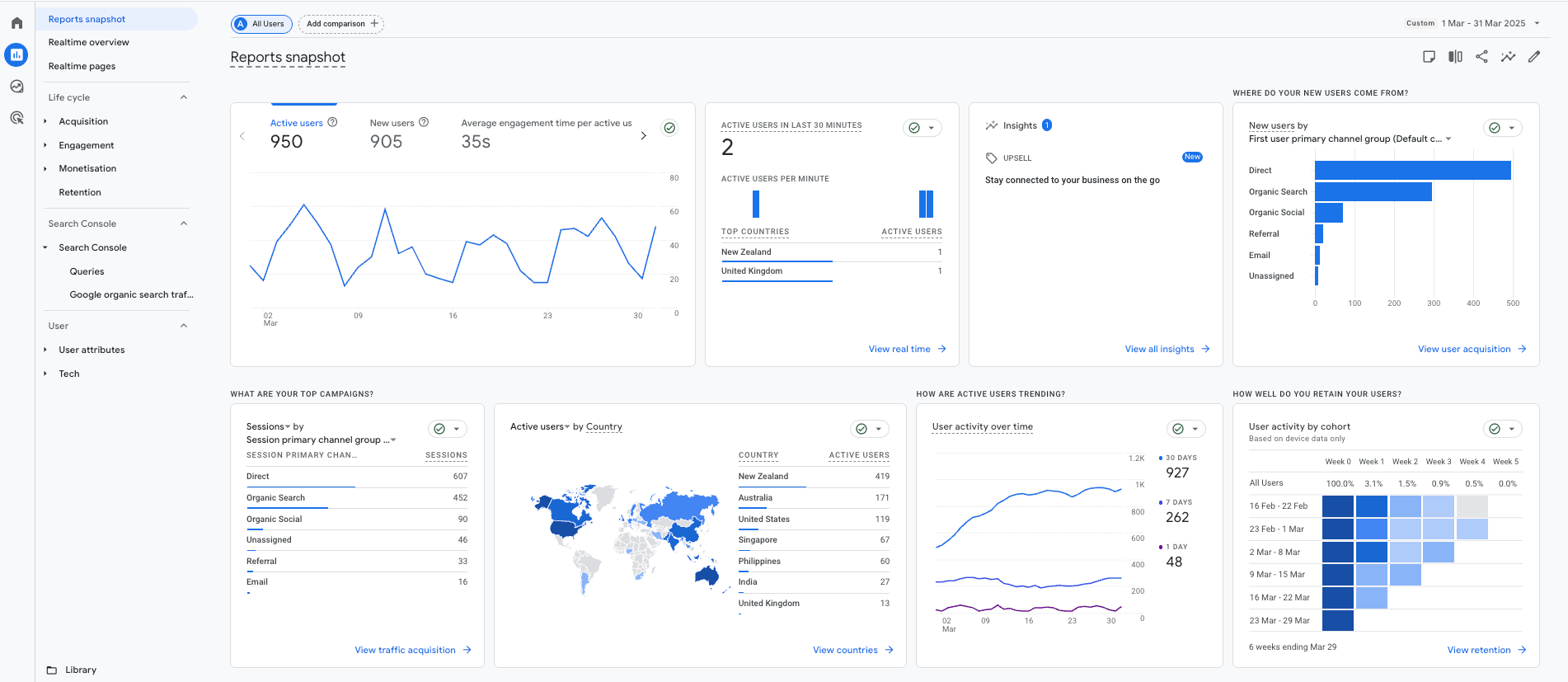
📉 Reporting is Limited without GA4 Integration
GMCN’s built-in insights are clean but high level. If you're serious about performance tracking across organic and paid, you’ll want Google Analytics 4 and Google Ads properly integrated.
With GA4 in place, you can track conversions, compare product performance across free and paid placements, and understand user journeys with much greater clarity.
What You Should Be Doing Now
Whether you’ve been automatically moved to GMCN or you’re still getting familiar with the interface, the fundamentals remain the same: your data is your advantage.
If you haven’t already:
✅ Audit your product and category pages for SEO best practices, structured data accuracy, and search intent alignment.
✅ Connect GA4 and ensure it’s actively tracking both free and paid product listing performance.
✅ Review your product data inputs – make sure what’s on your site, in your feed, and in your schema all align.
✅ Revisit how GMCN feeds into your Google Ads strategy – particularly if you're using Performance Max campaigns.
✅ Work with your developers or agency partners to maintain control over what GMCN pulls, how it’s displayed, and how it performs.
Don’t wait until disapprovals or performance drops prompt an investigation – get ahead of it now.
Maximise Your Google Shopping Reach
We work with ecommerce brands juggling thousands of SKUs, multiple feeds, and ambitious performance goals. Our team helps ensure GMCN doesn’t just function – it becomes a key part of your growth strategy.
Because in today’s digital landscape, Google Merchant Center Next isn’t just about listings – it’s a powerful link between your website, your ads, and your customers.
If you’re ready to turn GMCN into a performance asset, not just a backend tool, let’s talk.