What is Google's AI Mode?
25 August 2025

Roberta Johnston
SEO Lead
I'm an SEO specialist with over 8 years of experience helping brands grow through strategic, data-driven search optimisation. I've worked with large e-commerce websites and niche brands alike, developing a deep understanding of ranking algorithms, generative AI, and LLMs like ChatGPT, Perplexity AI, and Gemini. My expertise spans technical SEO, ensuring sites - whether a few dozen pages or 100,000+ - are crawled and indexed effectively.
Tags
AI Mode is Here
Just when you’d wrapped your head around AI Overviews, along comes another acronym to keep you up at night: AI Mode.
After a limited rollout in the US, AI Mode has now expanded to over 180 countries and territories - including New Zealand.
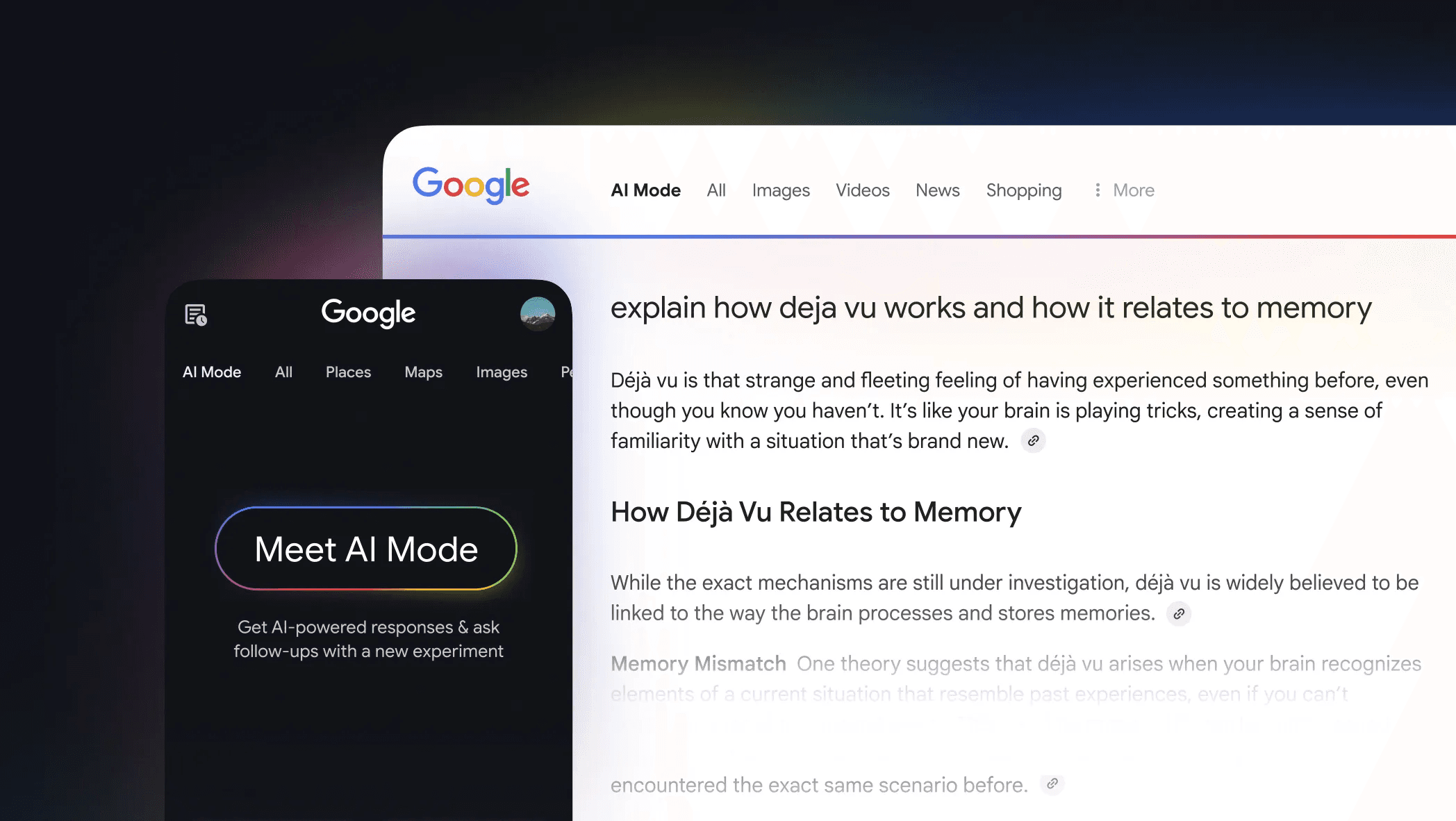
This isn't just a simple update to the search engine you know and love. AI Mode is a new tab within Google Search that provides an AI-like interface, designed to be particularly useful for queries that require deeper exploration, reasoning, or comparisons. It’s a new frontier of search, and it’s no longer a hypothetical.
And if your brand doesn't show up in those conversations, you'll be left behind.
AI Mode Explained
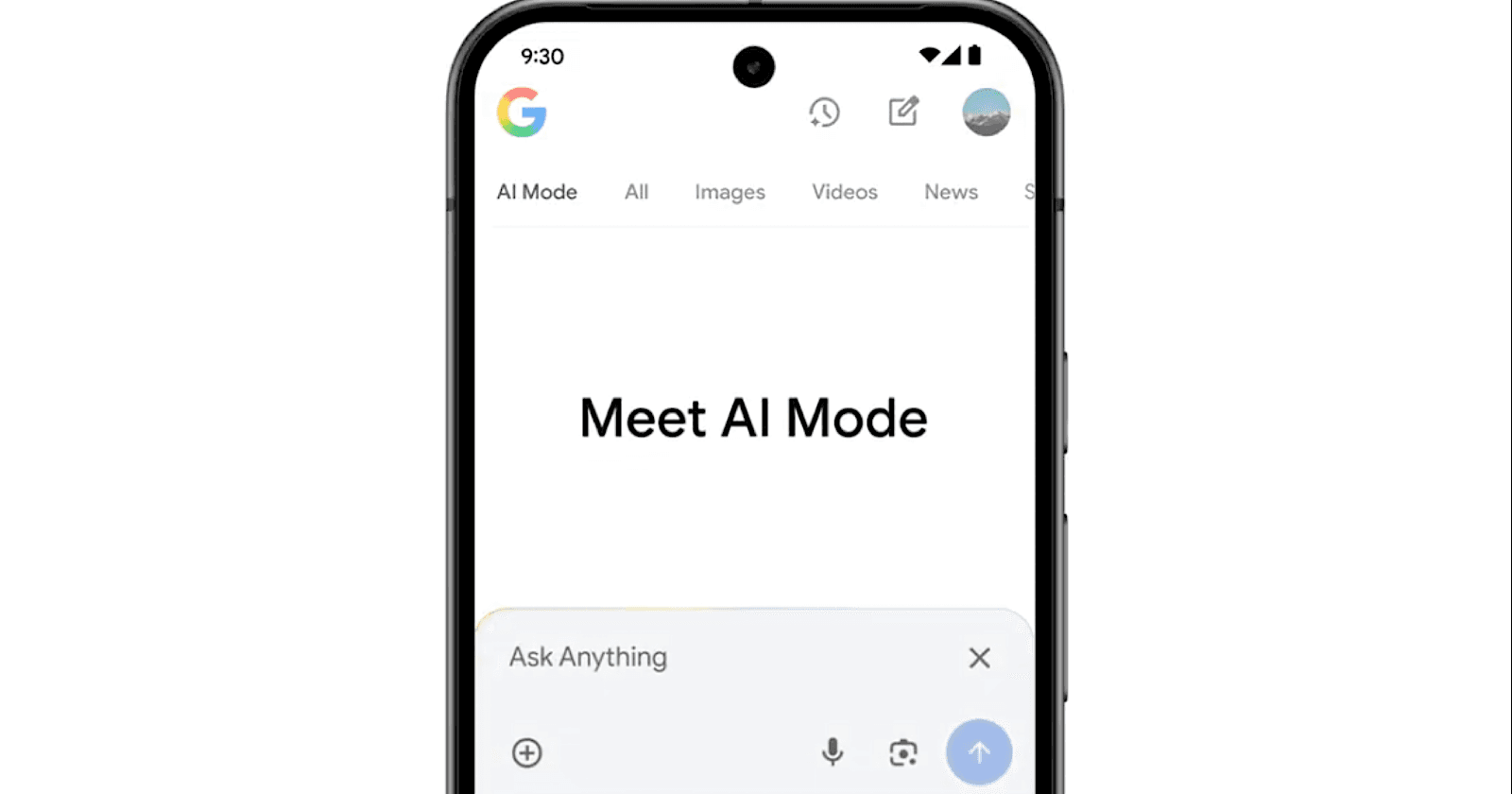
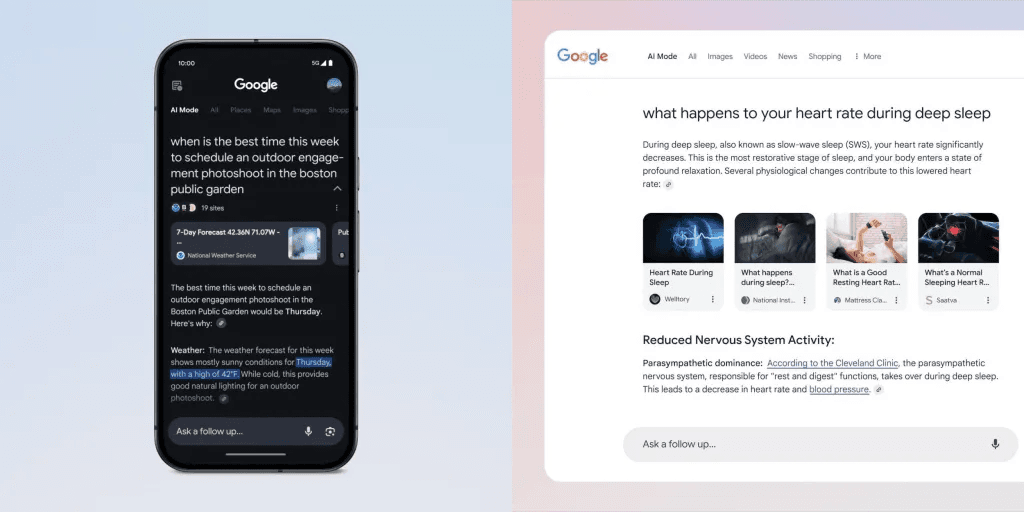
AI Mode is a new generative search experience built into Google Search - separate from traditional blue links and even AI Overviews.
While a traditional search might give you a list of links, AI Mode provides a more conversational, AI-like interface designed to be particularly useful for queries that require further exploration, reasoning, or comparisons.
This new experience is powered by some very smart tech behind the scenes.
Search Engine Journal
Once activated, it shifts the entire experience. You’re not just searching - you’re having a back-and-forth with an AI assistant. Very GPT-esque.
That means:
- It’s conversational: Ask a question, then ask follow-ups. You’re not starting from scratch each time.
- It’s reasoning across topics: AI Mode uses what’s called “query fan-out” behind the scenes. It breaks down your query into multiple sub-questions and pulls together an answer across different angles. That means it's got answers on-hand to any potential questions you might ask relating to your original one.
- It’s generative + real-time: Responses are generated by the model, but also pull in live web data, so you’ll often see sources, links, or product cards baked into the answer.
- It’s multimodal: You can type, speak, or even upload a photo. That means visual queries are fair game (think: “Find shoes like this”).
- It helps you shop: One of the most interesting (and relevant to you) use cases, AI Mode can recommend products, compare features, surface reviews, and guide buying decisions all within the chat. It’s a product discovery engine baked into Google.
So what’s the goal here? To keep users in the experience.
Google doesn’t want you bouncing between sites anymore - it wants to be your end-to-end assistant.
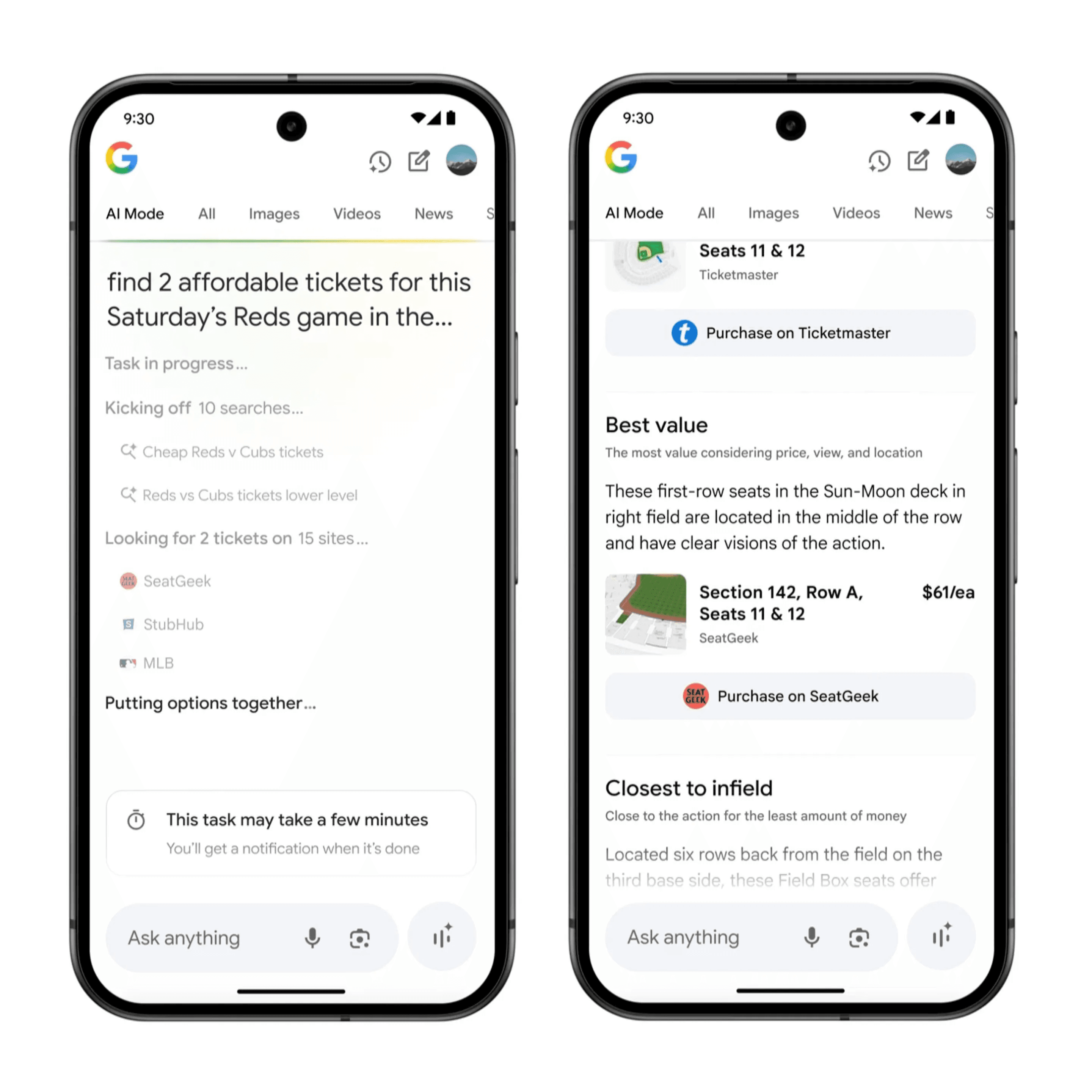
Google has also been rolling out new "agentic" and personalisation features to AI Mode. These agentic experiences will initially help with finding restaurant reservations, with plans to expand to local service appointments and event tickets. And, down the line... purchasing capabilities.
How AI Mode differs from AI Overviews and Traditional Search
We get it - it’s starting to feel like there’s an entire glossary of Google AI terms to keep up with.
But understanding the difference between AI Mode, AI Overviews, and normal search isn’t just helpful, it’s essential if you care about visibility, traffic, and conversions.
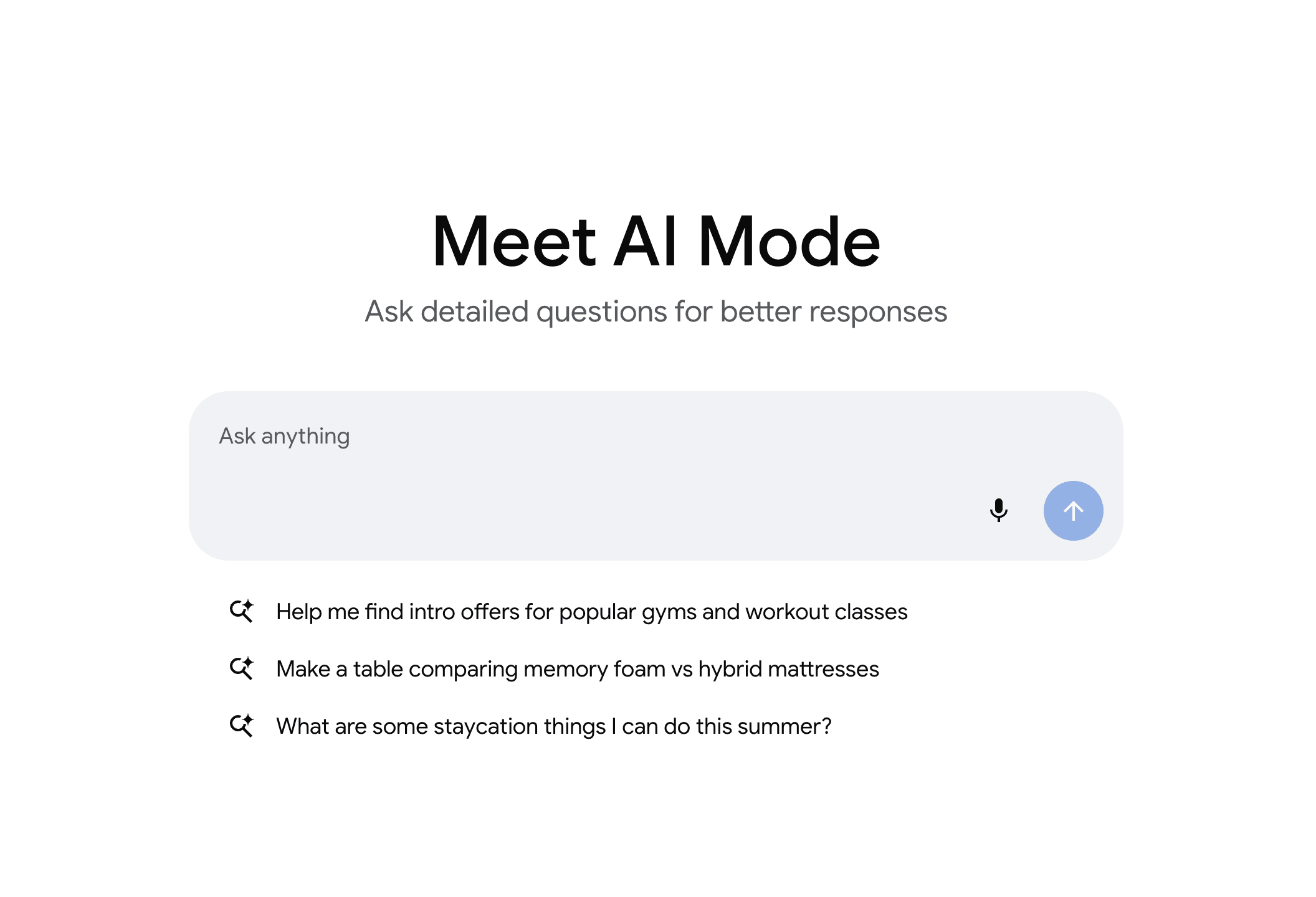
AI Mode: The Full Chat Assistant
OpenAI may have paved the way with ChatGPT, but Google's not out of the running.
- Where: AI Mode is available in English in a wide range of countries and territories, including New Zealand. While all users can access it, certain advanced capabilities like experiencing the Gemini 2.5 Pro model in Deep Search are available to Google AI Pro and AI Ultra subscribers.
- What it does: Generates full, conversational responses using Gemini 2.5. You can ask follow-up questions, share images, and stay in a flowing chat.
- How it works: Uses query fan-out and real-time web data to synthesise detailed, multi-source answers.
- Why it matters: It’s more than just search - it’s product discovery, research, comparison, and purchase guidance all in one. Think of it as SearchGPT… but with Google’s ecosystem behind it.
AI Overviews: Smart Snippets, Reimagined
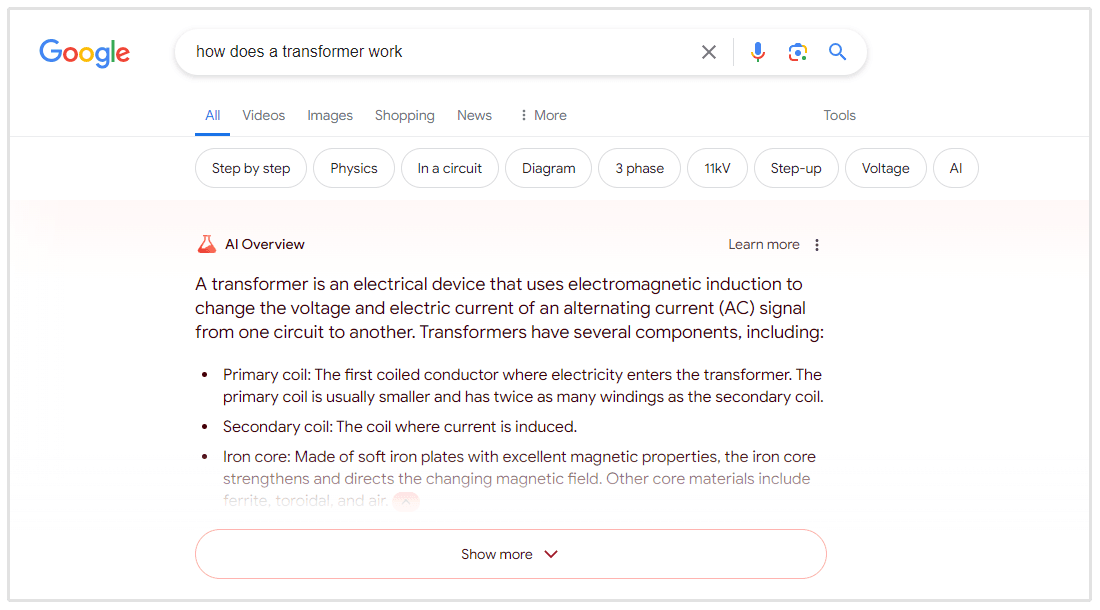
Remember featured snippets? Remember how they disrupted the entire search experience? AI Overviews (formerly Search Generative Experience) pretty much did the same thing.
- Where: Rolling out more broadly in standard Google Search.
- What it does: Summarises search results into a handy AI-generated overview at the top of the SERP.
- How it works: Gemini condenses key information from high-ranking pages into a short summary.
- Why it matters: You might not get clicks if users get what they need from the overview - unless you’re cited. For ecommerce, that means being part of the conversation through strong SEO and clear product information.
Traditional Search: The Classic Blue Links
Sometimes it's ten links, sometimes eight, and sometimes as few as five with other SERP features baked in.
- Where: What we all know and (sometimes) love.
- What it does: Presents links to websites based on ranking factors.
- How it works: Keyword matching, page relevance, and a whole lot of algorithm magic.
- Why it matters: Still the dominant traffic driver, but gradually being disrupted by zero-click experiences, AI summaries, and now full conversational models.
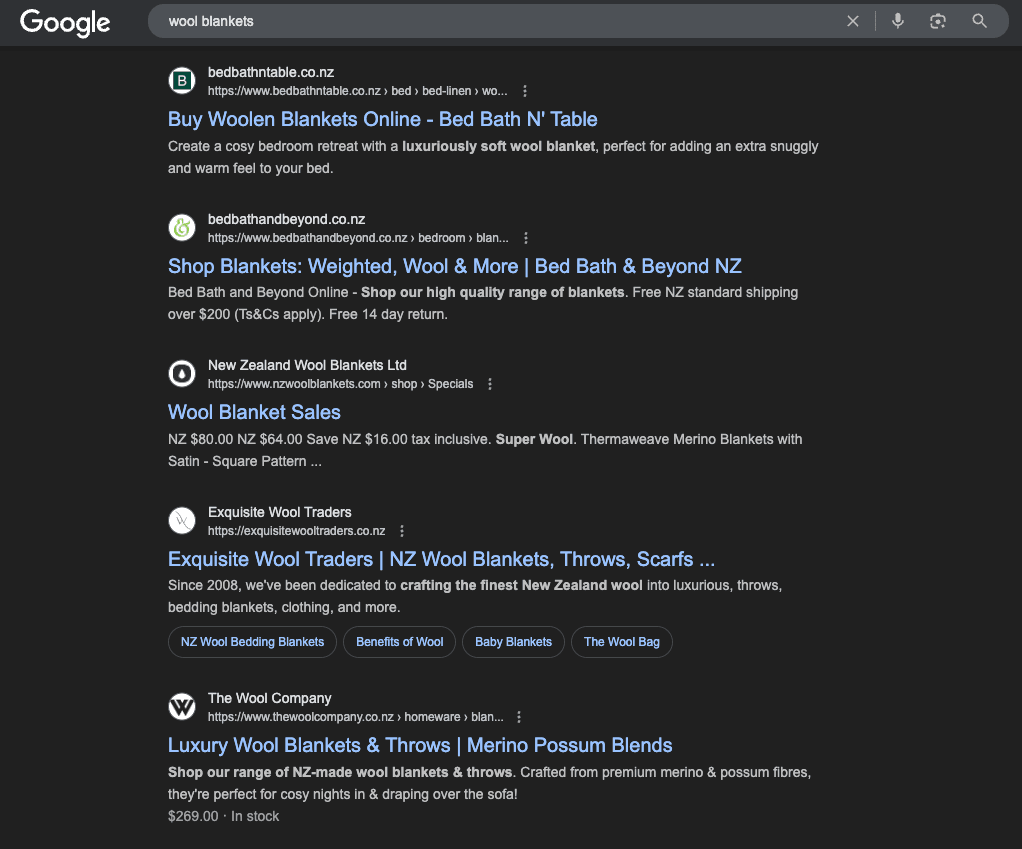
Google isn’t just layering AI over search - it’s rebuilding the experience from the ground up.
As a brand, this means playing by new rules, where the goal isn’t just to rank well, but to be referenced, cited, and surfaced in a completely different way.
Why Google Launched It (And Who They’re Competing With)
Let’s not beat around the bush: Google’s grip on search is slipping.
For the first time in decades, users - especially younger ones - are turning to AI tools, Reddit threads, TikTok videos, and social recommendations instead of plain old Google Search.
And with tools like ChatGPT, Perplexity, and Microsoft Copilot offering faster, more intuitive answers, Google needed to do something big to stay relevant.
AI Mode.
It’s Google’s answer to ChatGPT + Perplexity
AI Mode combines the natural conversation flow of ChatGPT with the real-time web awareness of Perplexity. It’s designed to keep people inside the Google ecosystem by giving them everything they need without jumping between tabs.
If a user wants a comparison between hair straighteners, tips for sensitive skin, or a gift guide for a teenage niece, AI Mode aims to answer it all - in one place, powered by Google’s index.
It’s also a race against time
AI Mode isn’t just a product. It’s a defensive play.
As Microsoft integrates Copilot into Windows and ChatGPT becomes the homepage for millions of users, Google knows it can’t afford to fall behind.
The rise of zero-click journeys and AI-as-a-starting-point search behaviour means traditional SEO real estate (like page 1 rankings) matters a bit less than it used to.
9to5Google
What AI Mode Means for You (Yes, You)
If you run an ecommerce brand and think AI Mode is just a novelty or “something for tech people,” here’s your wake-up call: this is going to change how your customers discover and interact with products online.
Not eventually. Already.
Whether it’s Google’s AI Mode, ChatGPT’s SearchGPT, or Perplexity’s pro assistant, the internet is shifting toward a new kind of discovery journey.
One where:
- Users ask full questions, not just keywords.
- Answers are summarised by AI, not ranked by links.
- Trust is built on relevance and reputation, not just domain strength.
What does that mean, exactly, for you and your brand?
The Risk: Your brand becomes invisible
AI tools can’t cite what they can’t see.
If your site is light on substance, lacking helpful content, or buried beneath a mountain of technical SEO issues, you won’t be mentioned. At all.
Even ranking #1 on Google won’t guarantee visibility in AI Mode.
This shift is a huge threat to:
- Brands that rely too heavily on paid traffic
- Businesses that skimp on content
- Sites that are technically weak or slow
The Opportunity: First-mover advantage is wide open
If you’re investing in high-quality, helpful, structured content - especially content that answers real customer questions - you’re in a prime position to:
- Be cited in AI Mode responses
- Own the comparison moment (e.g. "What's the difference between X and Y?")
- Build trust through repetition as AI tools increasingly refer to your brand
We’ve already seen clients:
- Get picked up in AI Overviews
- Land citations in ChatGPT’s Gemini mode
- Drive their first-ever AI-attributed purchase through conversational search
This is not a drill.
What to focus on now
- Authority building: Strengthen your online footprint - reviews, press, helpful content, organic social, brand mentions.
- Semantic content: Optimise for questions, comparisons, and long-tail queries.
- Technical clarity: Schema, structured data, crawlability - they all still matter. AI crawlers need clean input.
- Reputation matters: If your brand’s digital profile is murky or thin, AI won’t trust it.
What About Ads?
It's tempting to think that AI is only going to impact your organic visibility, but it's a massive part of the paid landscape as well.
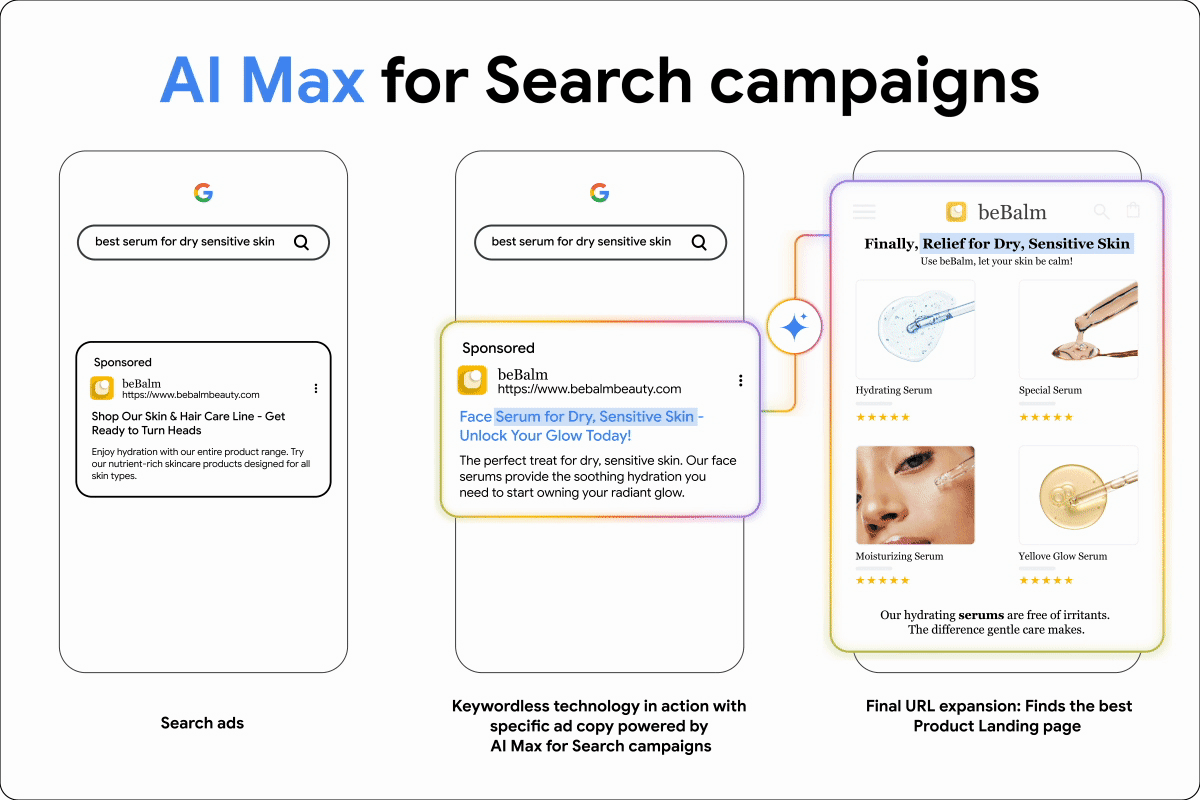
AI Max is an all-new ad campaign type driven by AI and designed to capture high-intent, long-tail searches that AI Mode is primed for. Different from PMax, it’s designed to deliver more value for your business by leveraging features like search term matching and asset optimisation.
This means your ad campaigns can expand upon existing keywords to find more relevant queries that you might otherwise miss and deliver more tailored creative messaging at scale through features like text customisation and final URL expansion.
But AI Max is only as good as the assets you feed it. To work effectively, it needs high-quality headlines, descriptions, images, and videos. This is where your brand’s SEO and content strategy become even more critical.
Your content isn't just for ranking; it’s now a foundational asset that directly fuels your paid campaigns and helps Google’s AI understand your products and brand.
This means that a holistic, future-proof strategy is essential. Your SEO work builds brand authority, and your paid campaigns work to amplify it. The two must work together.
Don’t Let Your Brand Miss the Conversation
AI Mode isn't in testing anymore - it’s live, and it’s a clear signal of where search is headed.
We’re shifting from “find me the answer” to “give me the answer.”
From links to responses. From Google as a search engine to Google as a conversational assistant.
And if your brand isn’t being seen, cited, or suggested by the tools shaping that future? You’re already behind.
We’re helping ecommerce brands prepare for that future today. From Generative Engine Optimisation (GEO) to smart content strategy, primed ads and technical cleanup, we’ll make sure your brand is visible - where it matters most.
Let’s make sure AI knows who you are. Get in touch → https://www.blackpepper.co.nz/contact