What is Zero, First, Second & Third-Party Data?
21 March 2024

Roberta Johnston
SEO Lead
I'm an SEO specialist with over 8 years of experience helping brands grow through strategic, data-driven search optimisation. I've worked with large e-commerce websites and niche brands alike, developing a deep understanding of ranking algorithms, generative AI, and LLMs like ChatGPT, Perplexity AI, and Gemini. My expertise spans technical SEO, ensuring sites - whether a few dozen pages or 100,000+ - are crawled and indexed effectively.
Tags
The past few years have seen significant changes in the way that consumer data is collected and used. From the removal of third-party cookies by tech giant Google, to the regulations under the GDPR, businesses and marketers are undergoing a serious learning curve - and face a significant challenge.
User privacy and data mismanagement is a real issue and with the changes taking place in the market, we all have to pivot to both stay compliant and maintain the efficacy of our marketing campaigns. To do this, it’s crucial that we understand what zero, first, second and third-party data is.
In this blog, we'll dive into the intricacies of zero, first, second, and third-party data, shedding light on what sets them apart and why they matter. Whether you're a seasoned marketer or new to the world of data analytics, this guide will provide valuable insights into the different sources of data and their implications for your business.
Why Data Language Matters
In the evolving landscape of digital marketing, where consumer privacy regulations are tightening and technology is constantly evolving, understanding the nuances of data terminology is more important than ever. The language we use to describe different types of data may seem technical and obscure to the average consumer, but for marketers, it's essential to grasp these distinctions to navigate the complexities of data collection and usage ethically and effectively.
Consider this: as a consumer, you're likely aware that companies collect data about you when you interact with their websites or services. This could include information such as your browsing history, shopping preferences, or demographic details. However, what you might not realise is that this data is categorised into different types, each with its own implications for privacy, consent, and usage.
At its core, data language matters because it shapes how we understand and interact with the information that defines our digital identities. As marketers, it's crucial to communicate transparently with consumers about how their data is collected, stored, and utilised. By using clear and accurate terminology, we can foster trust and accountability in our relationships with customers while ensuring compliance with regulatory requirements.
Now, let's dive into the specifics of zero, first, second, and third-party data to demystify these terms and understand their significance in the realm of digital marketing.

What is Zero-Party Data?
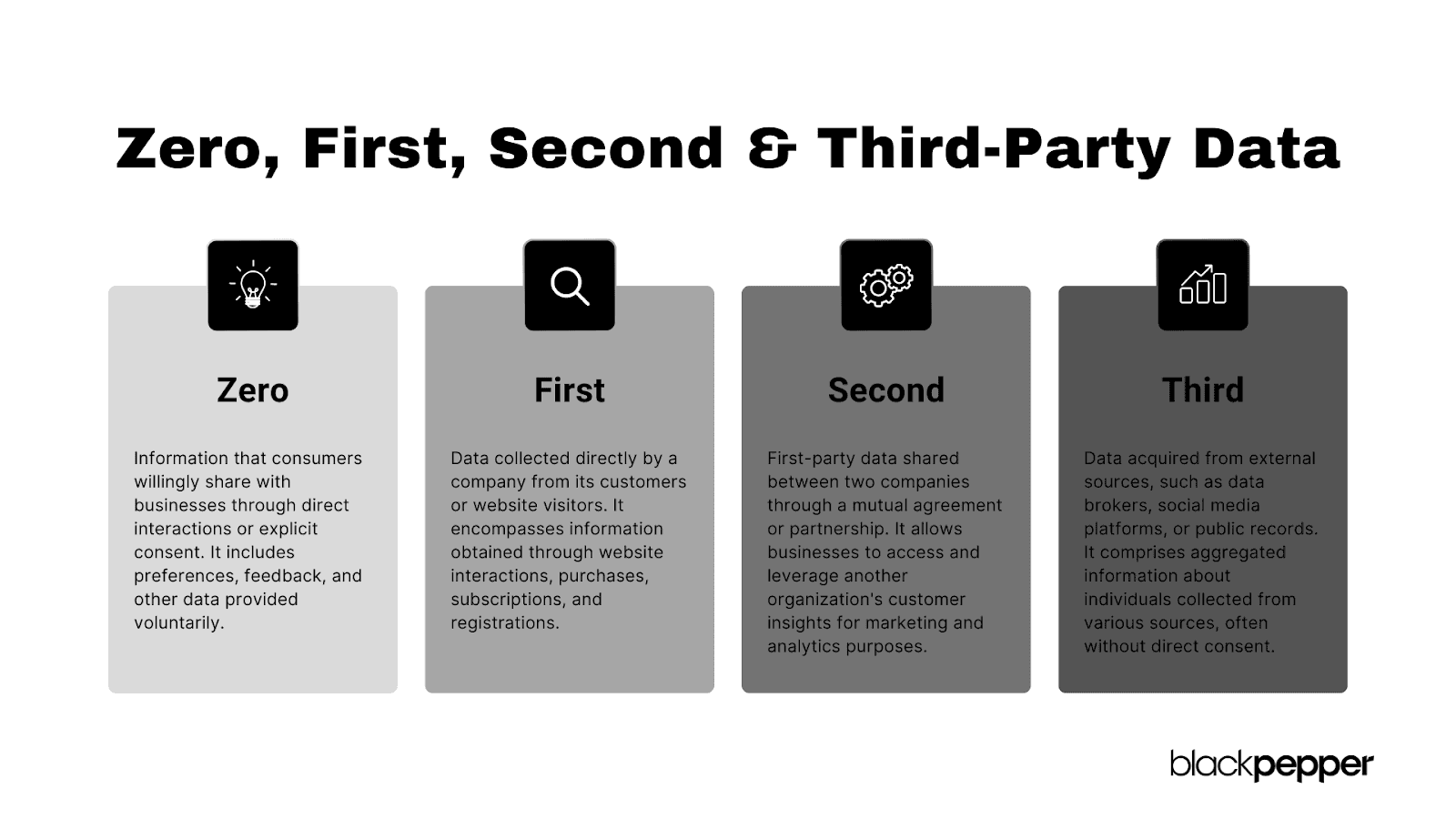
Zero-party data represents a paradigm shift in the way businesses collect and leverage consumer information. Unlike traditional data types that are passively gathered from user interactions, zero-party data is voluntarily provided by the consumer themselves.
Imagine filling out a survey, participating in a quiz, or sharing personal preferences with a brand through a feedback form. In each of these scenarios, you're actively choosing to disclose information to the company, making it zero-party data.
In essence, zero-party data is the most transparent and direct form of consumer information. It reflects explicit preferences, intentions, and consent, empowering individuals to control the data they share with businesses.
From a marketer's perspective, zero-party data offers invaluable insights into customer preferences, allowing for more personalised and targeted marketing strategies. By respecting consumer consent and soliciting information ethically, businesses can build trust and loyalty while delivering tailored experiences that resonate with their audience.
As the digital landscape continues to prioritise privacy and consent, zero-party data is poised to play a pivotal role in shaping the future of consumer engagement and data-driven marketing initiatives.
Read More: Remarketing & Retargeting - Are They the Same Thing?
What is First-Party Data?
First-party data constitutes information that businesses directly collect from their customers through various touchpoints and interactions. This data is gathered with the explicit consent of the consumer and originates from their direct engagement with the brand.
Examples of first-party data include:
Website interactions: Pages visited, time spent on site, clicks, and conversions.
Customer accounts: Personal information provided during registration or account creation.
Purchase history: Details of past transactions, including products bought and frequency of purchases.
Customer feedback: Responses to surveys, reviews, and feedback forms.
Social media interactions: Engagement with brand content on social media platforms.
First-party data is highly valuable to businesses as it offers accurate and reliable insights into customer behaviour, preferences, and interests. By leveraging this data effectively, companies can enhance customer experiences, tailor marketing messages, and drive engagement and conversions.
Moreover, first-party data is considered more trustworthy and compliant with privacy regulations compared to third-party data, as it is collected directly from the source with explicit consent. As consumer privacy concerns continue to grow and regulations tighten, the strategic use of first-party data becomes increasingly essential for businesses seeking to build meaningful relationships with their audience while maintaining compliance with data protection laws.

What is Second-Party Data?
Second-party data refers to the information that one company shares or exchanges with another company, typically through formal agreements or partnerships. Unlike first-party data, which is collected directly from the source, second-party data originates from another organisation's interactions with its own customers.
Key points about second-party data:
Mutual Agreement
The sharing of second-party data involves a mutual understanding or contractual arrangement between two parties. This agreement allows one company to access and utilise the data collected by another company for specific purposes, such as marketing or analytics.
Trust and Transparency
Second-party data sharing relies on trust and transparency between the participating organisations. Both parties must establish clear terms and conditions regarding data usage, privacy, and security to ensure compliance and maintain trust.
Enhanced Insights
By leveraging second-party data, businesses can gain additional insights into their target audience or customer segments beyond their own first-party data. This expanded dataset can enrich customer profiles, improve targeting accuracy, and inform strategic decision-making.
Examples of Second-Party Data:
- An e-commerce platform sharing customer purchase history with a retail partner for collaborative marketing campaigns.
- A travel website sharing user search and booking behaviour with an airline for personalised promotions.
- A media publisher sharing audience demographics and engagement metrics with an advertising agency for targeted ad placements.
Second-party data sharing offers benefits such as access to complementary datasets, expanded reach, and enhanced targeting capabilities. However, organisations must ensure compliance with data privacy regulations and establish trustful relationships with data partners to mitigate risks associated with data sharing and protect consumer privacy.
What is Third-Party Data?
Third-party data refers to information collected from various sources by entities that do not have a direct relationship with the individuals whose data they aggregate. Unlike first-party data collected by organisations directly from their own customers, third-party data is sourced from external providers or data brokers.
Key points about third-party data:
Aggregated from Multiple Sources
Third-party data is typically gathered from a wide range of sources, including public records, online activities, social media interactions, surveys, and other data collection methods. Data brokers compile and aggregate this information to create extensive datasets.
Broad Audience Insights
Third-party data provides insights into broader audience segments rather than individual customers. It allows businesses to access demographic, behavioural, and interest-based data about consumers who may not be directly connected to their own platforms or services.
Common Use Cases of Third-Party Data
Targeted advertising: Advertisers use third-party data to reach specific audience segments across various digital channels based on their interests, demographics, and online behaviour.
Market research: Companies leverage third-party data to analyse market trends, consumer preferences, and competitive landscapes to inform strategic decision-making.
Personalisation: Brands use third-party data to personalise content, recommendations, and offers for website visitors, email subscribers, and app users.

Challenges and Considerations
- Accuracy and reliability: The quality of third-party data can vary, and inaccuracies or outdated information may impact the effectiveness of marketing campaigns.
- Privacy and compliance: Acquiring and using third-party data raises concerns about data privacy and compliance with regulations such as the GDPR and CCPA. Businesses must ensure proper consent and transparency when utilising third-party data.
- Dependency on external sources: Relying solely on third-party data may limit a company's ability to build direct relationships with customers and capture first-party data, which offers greater control and accuracy.
Despite its widespread use in marketing and analytics, third-party data has faced scrutiny due to privacy concerns, regulatory changes, and advancements in data privacy technologies. As a result, businesses are exploring alternative data strategies and focusing on building direct connections with customers to collect high-quality first-party data while respecting privacy preferences.
Related: How to Prepare for the End of Third-Party Cookies
Privacy Protocols and the Future of Data
As the landscape of data collection and privacy regulations evolves, there is a growing emphasis on privacy protocols and the future of data management. Consumers are increasingly concerned about how their personal information is collected, used, and shared by businesses and third-party entities.
In response to these concerns, regulatory frameworks such as the General Data Protection Regulation (GDPR) in Europe and the California Consumer Privacy Act (CCPA) in the United States have been implemented to protect individual privacy rights and regulate the handling of personal data.
Key points about privacy protocols and the future of data:
Shift Toward Data Privacy
There is a noticeable shift in the industry towards prioritising data privacy and empowering consumers with more control over their personal information. Businesses are adopting transparent data practices, obtaining explicit consent for data collection, and implementing robust data protection measures to comply with regulatory requirements and build trust with customers.
Emergence of Zero-Party Data
Zero-party data, also known as explicit or declared data, is information that consumers willingly and proactively share with businesses. Unlike third-party data collected without direct consumer consent, zero-party data is provided voluntarily by individuals in exchange for personalised experiences, recommendations, or rewards. This type of data includes preferences, interests, purchase intentions, and other insights shared through surveys, preference centres, feedback forms, and interactive experiences.
Benefits of Zero-Party Data
Zero-party data offers several advantages for businesses:
- Enhanced personalisation: By directly soliciting information from customers, businesses can tailor their products, services, and marketing messages to align with individual preferences and needs.
- Improved customer trust and engagement: Transparent data collection practices and value exchanges foster trust and goodwill among customers, leading to higher engagement levels and stronger brand loyalty.
- Compliance with privacy regulations: Since zero-party data is obtained with explicit consent, businesses can ensure compliance with privacy regulations such as the GDPR and CCPA, mitigating the risk of non-compliance penalties and reputational damage.
Implementation Challenges
While zero-party data presents opportunities for deeper customer insights and personalised experiences, businesses may encounter challenges in its implementation:
- Data collection strategies: Designing effective mechanisms for soliciting zero-party data requires careful planning and consideration of customer preferences, motivations, and incentives.
- Data integration and analysis: Integrating zero-party data with existing customer datasets and analysing it to extract actionable insights may require investment in data management platforms, analytics tools, and expertise.
- Privacy and security considerations: Safeguarding zero-party data against unauthorised access, breaches, and misuse is essential to maintain customer trust and comply with privacy regulations. Businesses must implement robust security measures, encryption protocols, and data governance frameworks to protect sensitive information.

How are You Dealing with User Data?
Privacy protocols and the future of data management are shaping the way businesses collect, use, and protect customer information. By embracing transparent data practices, prioritising consumer privacy rights, and leveraging emerging data sources such as zero-party data, businesses can build stronger customer relationships, drive personalised experiences, and achieve sustainable growth in an increasingly privacy-conscious world.
While that seems straightforward enough, the intricacies of handling user data properly and with explicit consent, as well as leveraging that data in effective marketing campaigns, can be tricky. Let Blackpepper help you navigate the waters of user privacy and data handling - our experts are equipped with the right knowledge and tools to help your business achieve success in line with new privacy regulations. Get in touch with our team today to find out more.