Why Product Descriptions Matter
31 October 2024

Roberta Johnston
SEO Lead
I'm an SEO specialist with over 8 years of experience helping brands grow through strategic, data-driven search optimisation. I've worked with large e-commerce websites and niche brands alike, developing a deep understanding of ranking algorithms, generative AI, and LLMs like ChatGPT, Perplexity AI, and Gemini. My expertise spans technical SEO, ensuring sites - whether a few dozen pages or 100,000+ - are crawled and indexed effectively.
Tags
Originally published in August 2023, this blog post has been updated by our team to convey the latest industry standards.
In the world of ecommerce, writing product descriptions isn't just about providing information - it's about making a sale. Product descriptions are what bridge the gap between a potential customer’s curiosity and their final decision to purchase. They need to do more than just inform; they need to persuade.
Gone are the days when a few bullet points and specs could get you by. Today, high-quality, tailored product descriptions are essential for getting noticed and converting clicks to sales. When written well, a product description has the power to enhance your visibility in Google’s search results - and with Google’s new AI-driven Shopping experience that's transformed its search engine into an immersive digital marketplace, a good product description is absolutely vital.
This means more than just being thorough; it’s about delivering the right information, the right way, so both Google and your potential customers are impressed.
Today, we’ll show you how to write product descriptions that don’t just sit on your website - they sell.

What Makes a Product Description "Purchase-Worthy"?
Before we discuss the how of it, let's look at the what of it.
Product descriptions are the details, specifications or attributes you provide about your product. In some cases, this might be a combination of all three. Think of a tech company that sells laptops: they'll not only provide the hardware specs for each device, but likely their physical measurements as well as a descriptive write-up about the product itself, who each laptop is best suited for and what kind of applications you can run on the one you're looking at.
Conversely, a fashion brand selling women's clothing will likely provide insights on their clothings' materials, sizing and fit, brand label, and the product's colour and style, to name a few. The key is to provide relevant information about your product that helps a user see its value, as well as how it can meet their needs.
So, what transforms a simple description into one that makes your product worthy of a purchase?
Well, a product description is more than just a list of features - it's your best chance to tell a story that convinces a potential customer that they need this item in their life. Here's how:
User-Centric Descriptions
First, the language should be user-centric. This means directly addressing the wants and needs of your customers. For a laptop, it’s not just about the processor speed or battery life - it’s about making someone feel confident that it’s the ideal solution for their remote work setup or creative projects.
For clothing, it’s about painting a picture of how effortlessly stylish and comfortable they'll feel wearing it. For hobby sites and even those in the FMCG niches, it's about helping potential customers envision that product enhancing their lifestyles.
Ultimately, a purchase-worthy product description speaks directly to what makes the product valuable to that specific person. We've talked about this quite a lot in our blogs but personalisation is key to converting a browser into a buyer.
Product Clarity
Clarity is another crucial factor. Customers are making purchasing decisions without physically interacting with the product, so descriptions need to be clear, precise, and easy to understand.
High-quality descriptions outline what the product is, its key features, and most importantly, why those features matter. For example, mentioning that a dress is made of breathable cotton tells the customer that it will keep them comfortable on a warm day. It’s about conveying benefits, not just specs.
Creating Scannable Content for Busy Online Shoppers
A caveat to this is that you need both clear product descriptions and scannable content, because not everyone will have time (or the patience) to read the full description. And yes, we know what we said earlier about bullet points not cutting it anymore, which is why you need both*.*
Busy online shoppers often scan through product descriptions to quickly find relevant information. Make your content scannable by using bold or italicised text for important points. Emphasise essential details to capture the attention of users browsing through organic search results or scrolling through paid ads.
Search Engine-Friendly
Lastly, an effective product description is well-optimised for search engines while still prioritising readability - nowadays, writing for people first is a good way to ensure you've got this down. This is because Google's ability to understand real-world language, context and topics (also known as entities) has vastly improved over the last ten or so years.
By using natural language and incorporating relevant keywords in a way that makes sense contextually, you help both search engines and shoppers discover your product. And in an age where Google is transforming how products are displayed in its search results - essentially making search more like an online marketplace - having content that’s optimised yet informative and human-centric is key to standing out.
A purchase-worthy product description doesn’t just inform; it entices, it builds trust, and it makes the buyer feel that the product is worth the investment. It turns a casual browser into a buyer by connecting features to benefits in a way that resonates on both a practical and emotional level.

Components of a High-Converting Product Description
Those three points should be your core focus, but let's break it down a little more and look at some key components of a great product description.
Understanding the Audience and Their Needs
One of the biggest differences between a plain product description and a purchase-worthy one lies in understanding the specific needs, challenges, and desires of your target audience. What problems are they facing? How does your product make their life easier, more enjoyable, or more efficient?
A truly great product description goes beyond just listing features - it speaks directly to these needs, empathising with the customer and positioning your product as the perfect solution. By addressing these aspects, you create a connection that drives the purchasing decision.
Headline & First Impression: Catching Attention in the First Few Words
Your headline - or the first line in your description - is often the first thing a potential buyer will see, so make it count. A well-crafted headline should immediately convey the product's unique value or appeal, helping users understand why they should care about your offering in a glance.
Think about it as a conversation starter - it's what draws people in and keeps them reading. For instance, instead of a generic "Comfortable Running Shoes," something like "Run Farther, Stay Comfortable with Our Lightweight Running Shoes" can make all the difference in engagement.
Key Features vs. Benefits: How to Appeal to Emotions & Solve Problems
While listing the features is important, customers often want to know why those features matter. Product descriptions that convert do more than just list features - they make sure the customer knows exactly how those features will benefit them.
Features are factual details, like the type of fabric your shirts are made from or the battery capacity of your laptop. Benefits, on the other hand, address why those features matter to the customer. For instance, a feature might be "waterproof material," but the benefit could be framed as "stay dry even on the rainiest of days." This approach shifts the focus from simply describing the product to explaining how it solves a problem, creating a tangible sense of value for the buyer.
Instead of just stating what a product has, describe what it will do for the buyer. Think of each feature and answer: "So, what?" As in, "so, what does this feature mean for the customer?" For example, if a handbag has multiple compartments, highlight how it keeps belongings organised for a busy, on-the-go lifestyle.
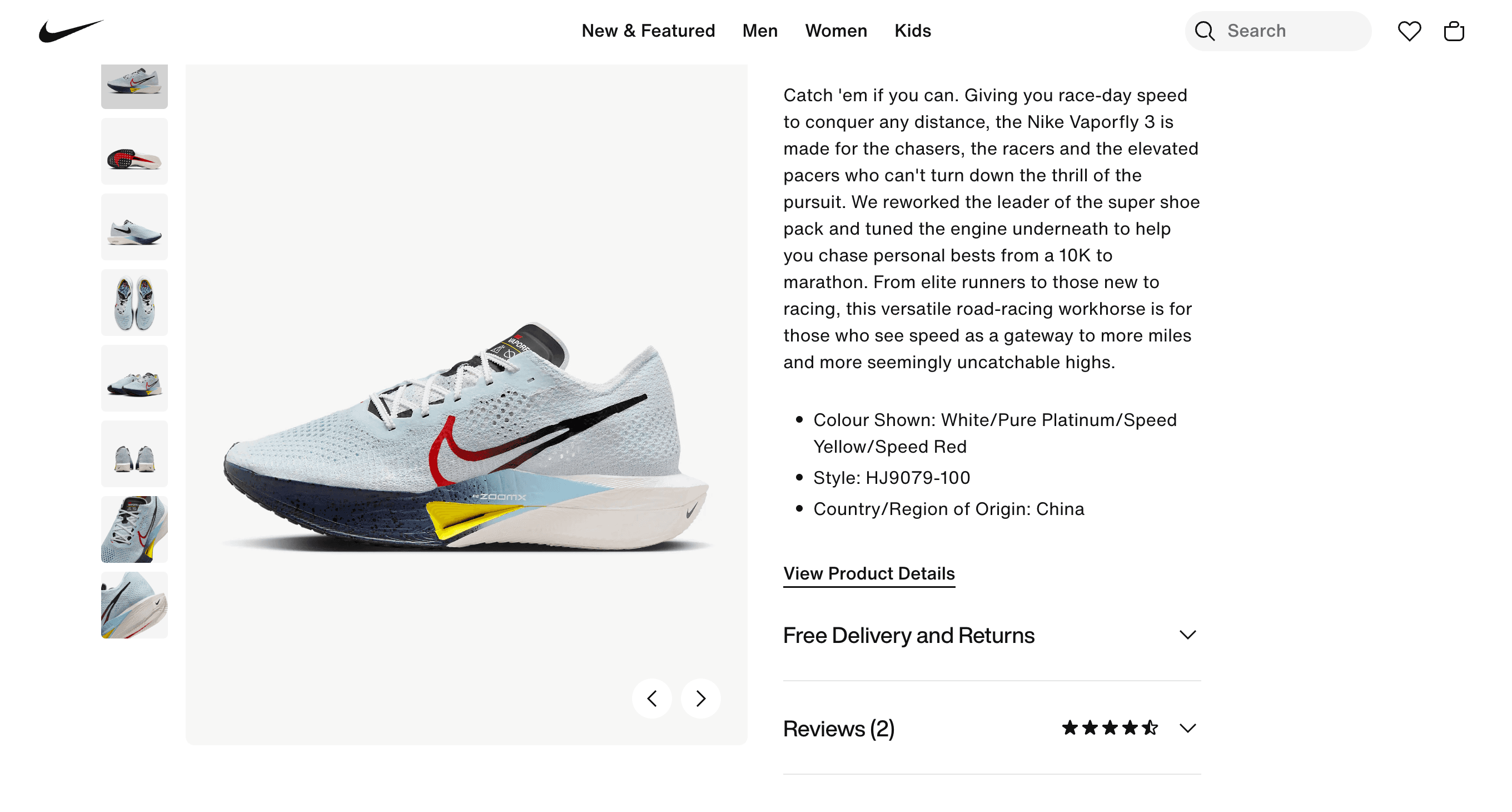
Take a look at this Nike running shoe on their Australian site - punchy, relevant, and relatable!
Storytelling: Building Connection Beyond Features
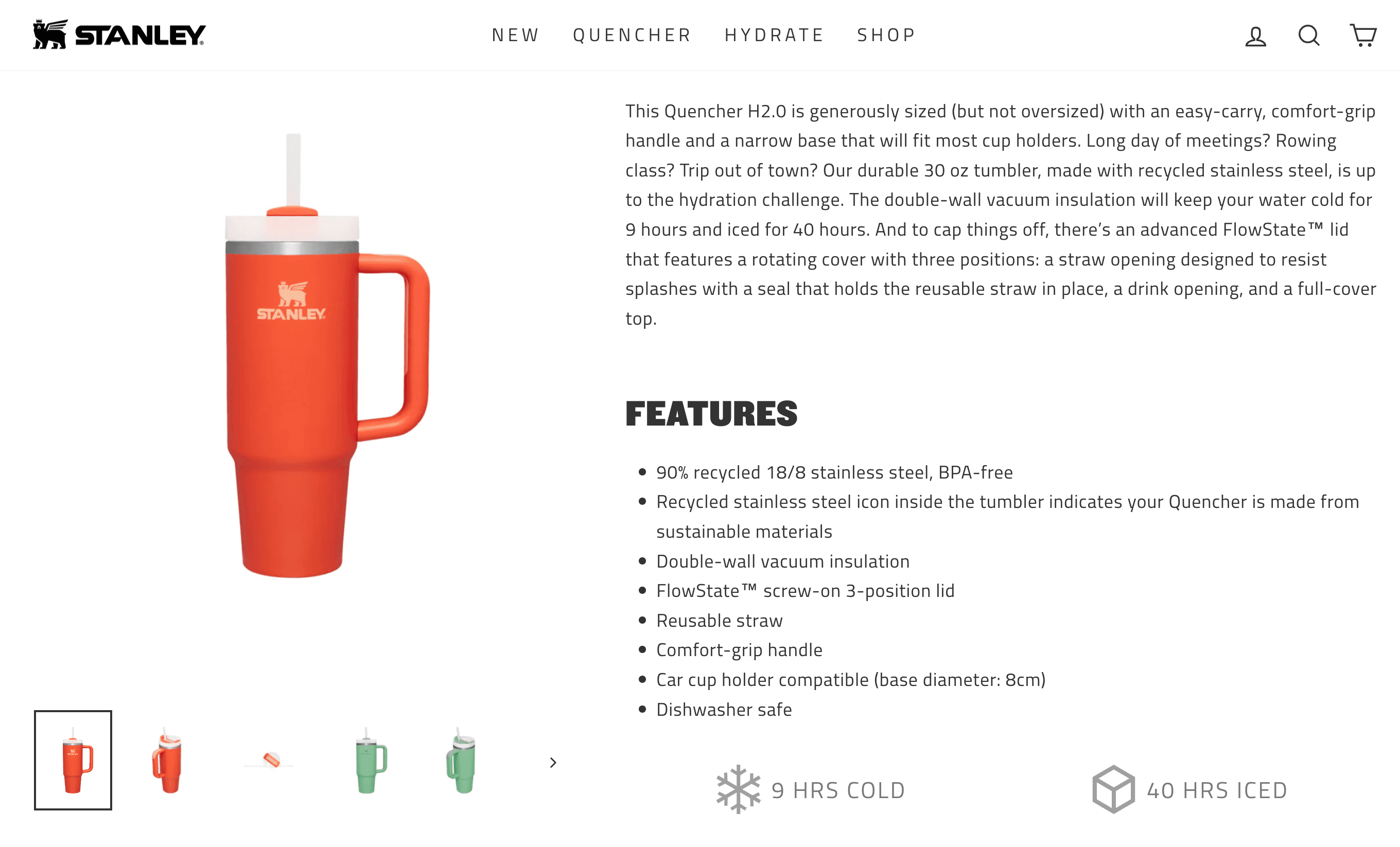
Beyond features and benefits, storytelling is one of the most powerful tools to create a connection with your customers. Stories evoke emotions and help shoppers imagine themselves using the product, making it feel more personal and desirable. Whether it's the inspiration behind the product or a scenario where it shines, storytelling adds a layer of relatability that goes beyond mere specifications.
For example, describing a backpack as "your trusted companion for every adventure, from bustling city streets to peaceful mountain trails" allows customers to picture themselves using it, making the product part of their life story rather than just an item to buy.
Take a look at this Quencher's description from Stanley - pretty spot on!
Building Trust and Credibility
Including elements that build trust is key to turning potential customers into buyers. This can mean using sensory words that help customers visualise and feel confident about the product, like describing the texture of fabric or the scent of a skincare product.
It also involves providing verified product reviews, testimonials from real users, or showcasing certifications and seals of approval where applicable. Online shoppers are often cautious when making purchases, and establishing credibility can significantly reduce hesitation and build the confidence needed to complete a purchase.
Creating an Emotional Connection
The most purchase-worthy product descriptions create an emotional connection with the buyer. They tell a compelling story that resonates with the potential buyer's needs, desires, and lifestyle. If you can help potential buyers visualise themselves using the product and genuinely enjoying it, you’re already halfway to securing that sale.
By painting vivid scenarios and including storytelling elements like customer testimonials or relatable situations, you can foster that emotional link and build trust, making the product feel indispensable to their lives.
Optimising for Google's Shopping Experience
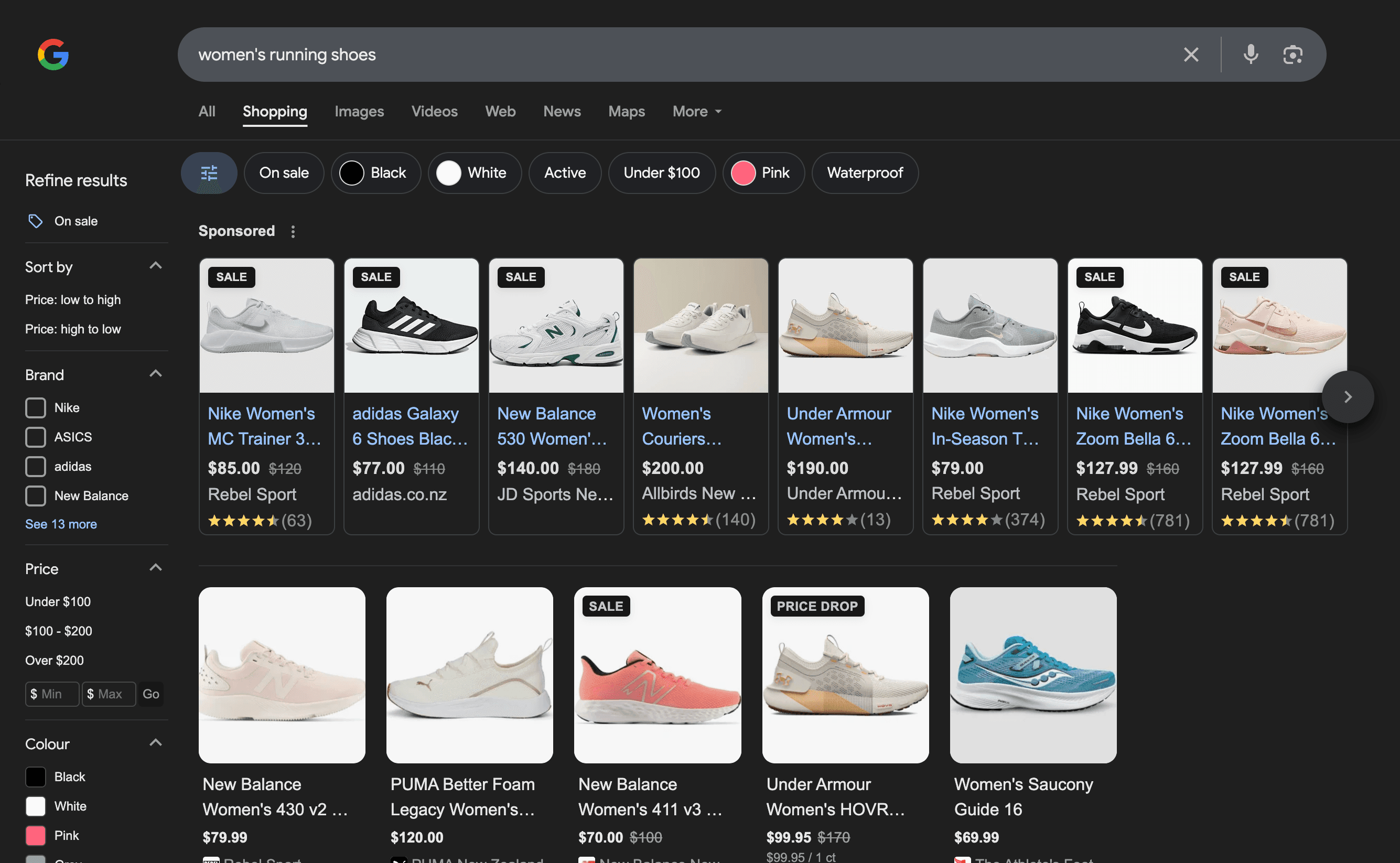
On top of all their other recent changes (AI Overviews, anyone?) Google has recently updated its shopping experience with a new AI-powered layout that resembles a curated marketplace. Instead of simply providing a list of links, Google now surfaces detailed product cards directly on the search engine results page (SERP).
These cards feature rich information such as images, pricing, availability, and product descriptions. This means that a well-optimised product description can significantly boost your product’s visibility by appearing prominently in these search results. Understanding this shift is key for any ecommerce brand aiming to capitalise on organic search traffic.
How Detailed Product Information Boosts Visibility
The more comprehensive your product information, the better your chances of appearing in Google’s new shopping SERP layout. Google prioritises products with detailed, accurate descriptions, as well as supporting data like user reviews, availability, and structured data markup.
When your product description includes all the essential details - such as dimensions, materials, and specific use cases - it provides Google with the information needed to confidently serve your product to relevant users. This not only helps your visibility but also establishes your credibility and expertise, which can lead to higher click-through rates. Win win!
Keywords in Context: Avoiding Keyword Stuffing while Boosting Relevance
To make the most of Google’s new shopping experience, it’s important to use keywords strategically. Keywords are crucial for signalling to Google what your product is and who it’s for, but stuffing your description with keywords can actually hurt your ranking and diminish the user experience.
Instead, focus on naturally incorporating keywords or search phrases into sentences that provide real value. For example, instead of writing "leather wallet men” multiple times, try something like "Our genuine leather wallet for men combines style and practicality, perfect for those seeking a timeless accessory." This approach ensures your product is relevant to search terms while maintaining readability and quality. Remember, write for people, not bots!
Product Titles Matter More Than Ever
Your product titles are one of the most crucial factors for visibility in Google's new shopping SERPs. A well-crafted product title not only communicates essential information to the customer but also helps Google understand the content of your page. Here, again, writing for people first is key.
Include relevant keywords but avoid stuffing, and ensure the primary product information - like brand, model, and style or colour variant - comes through clearly. An optimised title can be a powerful tool for both user attraction and SEO, not to mention a critical factor in obtaining clicks from the SERPs.

Compelling CTAs to Drive Action
Calls to Action (CTAs) are more than just instructions - they’re opportunities to nudge customers toward completing a purchase. Phrases like "Add to Cart Today" or "Get Yours Before It’s Gone" create urgency and appeal to user emotions.
In Google's shopping-centric interface, effective CTAs within your description can make your product stand out and motivate shoppers to take the next step.
Multimedia: More Than Just a Pretty Picture
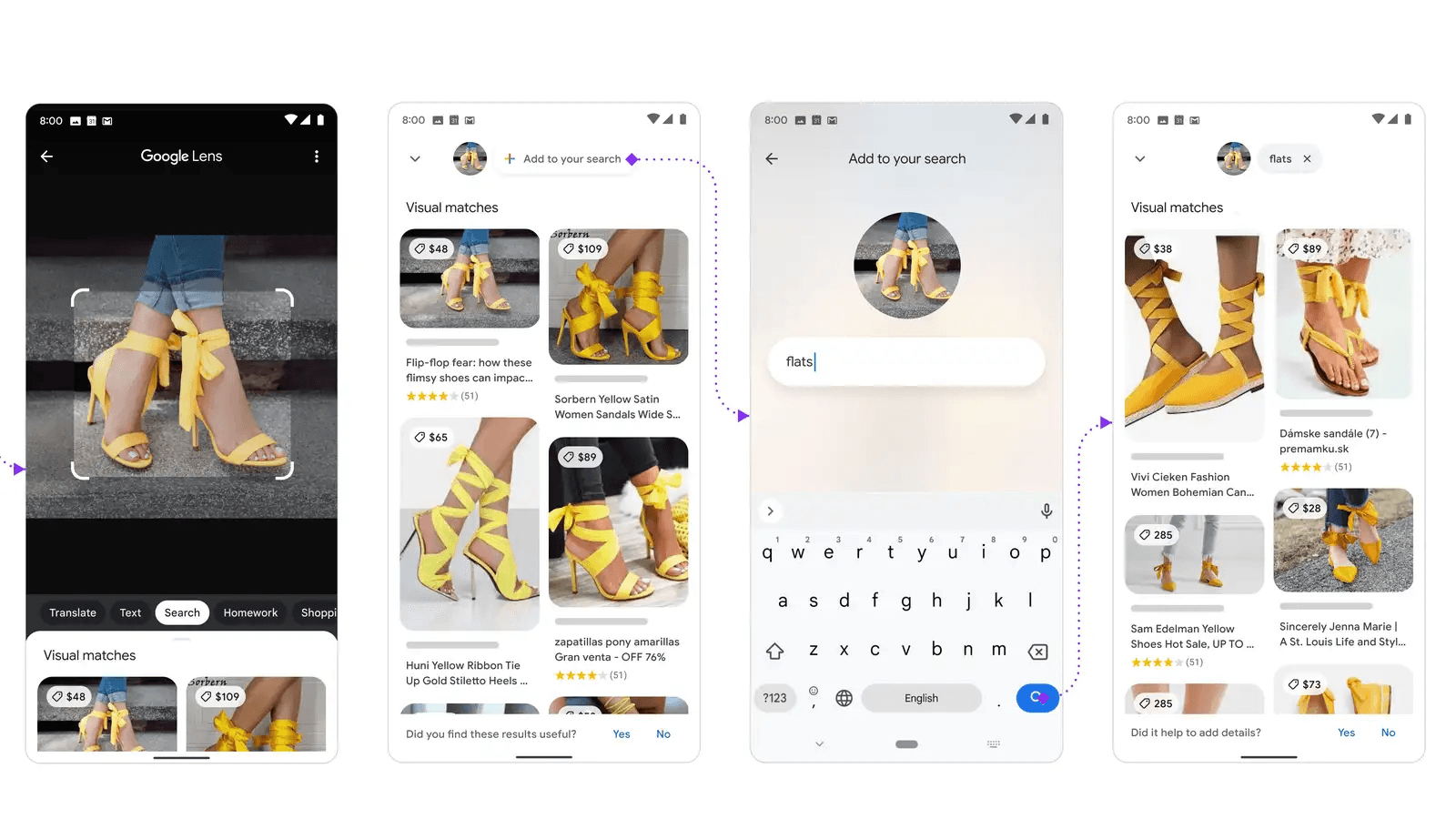
The importance of high-quality images and videos cannot be overstated, particularly when users are evaluating multiple products simultaneously in the SERP's new AI-enhanced layout. In fact, product media is equally as important as a good description. We've covered more on this topic here, but AI is completely changing the way people search and visual searches (e.g., Google Image Search) is now becoming part of the way users research and find products.
Providing clear, high-resolution images from multiple angles, as well as videos showcasing the product in use, not only boosts user engagement but can also enhance Google’s perception of your product's value. Visual content that aligns with well-written descriptions helps convey authenticity, a key driver for conversions.
Our Product Description Checklist
To help you maximise the visibility your products could have in the search results, here's a too long; didn't read version - a checklist you can keep on hand when listing new products or improving the descriptions of existing ones.
1. Title Optimisation**:** Include core product information such as brand, model, and product variant with relevant keywords.
2. First Impression Focus**:** Hook users in the first few sentences with concise but impactful information.
3. Key Features & Benefits**:** Clearly state the main features and translate them into real customer benefits.
4. Storytelling**:** Add a relatable element or emotional appeal to connect with your target audience. Touch on their pain points - this is the reason for their search, the intent behind the keyword.
5. SEO Keywords in Context**:** Use relevant keywords naturally - avoid stuffing or adding search terms haphazardly to "gain rankings". Sorry, but this doesn't work!
6. CTAs**:** Include action-driven language that encourages the customer to take the next step (e.g., “Add to Cart,” “Shop Now”).
7. Visual Support**:** Provide high-quality images from multiple angles and videos where possible.
8. Rich, Descriptive Language**:** Use engaging and descriptive language that helps paint a vivid picture.
9. Technical Details**:** Ensure all key product specifications are included (e.g., size, weight, materials).
10. Creating Scannable Content**:** Make descriptions scannable using bullet points or bold or italicised text for essential points to grab the attention of busy online shoppers.
11. Avoid Duplicate Content**:** Each product should have a unique description to avoid SEO penalties.
12. Compliance with Google’s Shopping Standards**:** Ensure that your description meets Google’s guidelines for better ranking in AI-enhanced shopping experiences.
Crafting effective product descriptions is about so much more than just providing a list of features. It’s about capturing the customer’s imagination, building trust, and making your product irresistible. As the ecommerce landscape evolves with Google’s AI-powered search features, keeping your descriptions detailed, engaging, and optimised is critical for your success.
At Blackpepper, we understand that crafting compelling product descriptions requires a balance of creativity, SEO know-how, and a deep understanding of your audience. Our team is here to help you create descriptions that not only rank well but also convert. Don’t underestimate the power of the perfect product description - optimise it, and let it work for you.