Why Regular Technical Audits are Crucial for Ecommerce Websites
31 July 2025

Roberta Johnston
SEO Lead
I'm an SEO specialist with over 8 years of experience helping brands grow through strategic, data-driven search optimisation. I've worked with large e-commerce websites and niche brands alike, developing a deep understanding of ranking algorithms, generative AI, and LLMs like ChatGPT, Perplexity AI, and Gemini. My expertise spans technical SEO, ensuring sites - whether a few dozen pages or 100,000+ - are crawled and indexed effectively.
Tags
Your online store looks amazing, your products are exactly what your target market wants, and your marketing budget is tight - you're doing everything right. So why aren't your conversions soaring?
Sometimes, the biggest roadblocks to your online success aren't obvious. They're hidden deep within your website's code and structure, silently sabotaging your efforts.
In today's hyper-competitive online marketplace, a technically unhealthy website isn't just a minor annoyance; it's a silent sales killer, a conversion crusher, and a visibility vampire.
These invisible issues can stop search engines from finding you, frustrate potential customers, and ultimately, eat into your profits.
That's where a regular technical audit comes in - it's your ecommerce website's essential health check-up. It's about uncovering those lurking, unseen problems before they cost you big, and transforming them into powerful opportunities.
If that's not enough to persuade you, let's take a close look at what technical SEO is and how audits can change the game for your brand.
What is Technical SEO?
First things first.
When we talk about technical SEO, we're not just throwing around industry jargon. Think of it as optimising the engine of your website. It’s the practice of making sure your site meets all the picky technical requirements of search engines like Google, which then helps them crawl, index, and ultimately rank your content more effectively.
So, while keywords, killer content, and beautiful product photos are absolutely crucial (you've probably got those dialled!), SEO isn't just about those visible elements.
Technical SEO is all the behind-the-scenes magic that ensures search engines (and, increasingly, AI!) can properly understand, access, and love your online store.
Okay, But... Why Does it Matter?
For ecommerce, a powerful technical foundation is your superpower. Ultimately, mastering technical SEO for your site means better visibility, a smoother experience for your customers, and a healthier bottom line.
It directly impacts:
- How Search Engines "Read" Your Site: Ever wonder how Google sifts through millions of products? Technical SEO ensures your site's blueprint is clear and easy for their bots to follow.
- Site Speed: Every millisecond counts for online shoppers. If your pages crawl, so do your conversions. Technical fixes can make your store lightning-fast.
- Mobile-Friendliness: Most people shop on their phones these days. Your site must be seamless on any device, or you're alienating a massive chunk of your market.
- Site Structure: A logical and intuitive site structure not only guides shoppers effortlessly but also helps search engines understand what your store is all about and the relationships between your products.
- Security: Trust is paramount in online shopping. Secure sites (HTTPS) protect customer data and signal reliability to both users and search engines.
- Structured Data (Schema Markup): This is literally how you "speak" directly to search engines, telling them exactly what your product is, its price, reviews, availability, and more. It helps you grab those tempting rich snippets in search results.
Isn't That Just Web Development?
This is a question we hear a lot, and it's a fair one! After all, web developers build websites, so surely they're covering all this "behind-the-scenes" stuff, right?
Well, yes and no.
Think of it this way: a brilliant architect and builder can construct an incredible house (that's your web developer, designing and building your amazing ecommerce store). But a technical SEO specialist is like the expert interior designer and the smart home integrator and the local town planner, all rolled into one.
While web developers focus on making your site function beautifully and look great, a technical SEO audit dives into how that perfectly built site is perceived and understood by search engines and AI.
It's about optimising the framework for ultimate discoverability, speed, and ranking potential. Your developer ensures the doors open; we ensure Google (and Gemini!) knows which doors lead to your hottest selling products, and that they open in milliseconds for every single customer.
We bridge the gap between brilliant development and exceptional search performance, ensuring your investment in building your store translates directly into visibility and sales.

Why Technical Health is Now Non-Negotiable for AI Visibility
Just when you thought SEO was complex enough, along came AI! But this isn't just another shiny new toy; it's fundamentally changing how search engines and users interact with information.
Tools like ChatGPT, Perplexity, and Google's very own Gemini, AI Mode and AI Overviews aren't just traditional search engines ranking web pages. They're sophisticated AI models that synthesise answers, pulling information from various sources to give users direct, concise responses.
This introduces a new, incredibly important audience for your ecommerce website: AI crawlers and large language models.
For AI to confidently understand, extract, and actually cite your valuable product information, your site's technical foundation needs to be nothing short of pristine. If your website is a messy room, AI struggles to find what it needs. But a technically tidy site is like a perfectly organised library that AI can effortlessly navigate.
AI relies heavily on key technical elements:
- Crawlability: If AI bots can't efficiently crawl your site, they simply won't know your products exist. It doesn't matter how great your content is if AI can't even get to it.
- Structured Data (Schema Markup): This is how you literally "speak" AI's language. By implementing schema correctly, you're spoon-feeding AI exactly what your product is, its price, reviews, availability, and more. This makes your data highly machine-readable and easily citable in AI-generated answers.
- Clear Site Structure: A logical and intuitive site hierarchy (like your categories and sub-categories) doesn't just help human shoppers; it helps AI understand product relationships and how your store is organised, making your answers more relevant for users.
If your technical SEO has weak spots, you're facing a significant "citation gap."
AI might struggle to understand your content, leading to missed opportunities for valuable brand mentions and citations in generative AI responses - even if your content is absolutely fantastic.
In the age of AI, technical health is no longer just about search rankings; it's about being seen, understood, and trusted by the next generation of search.

So, What is a Technical SEO Audit?
Think of a technical audit not just as a checklist, but as a forensic investigation into your website's health.
We go beyond the visible façade to uncover those lurking, hidden problems that are silently sabotaging your sales and visibility. It’s about getting under the hood to diagnose issues before they turn into costly breakdowns.
Here are the key areas a comprehensive technical SEO audit will meticulously examine, and why each matters directly to your bottom line:
1. Crawlability: Are Search Engines (and AI) Even Seeing You?
This is absolutely fundamental.
If search engines (and the new breed of AI crawlers) can't efficiently "read" and crawl your product pages, those products might as well not exist online. Hidden issues like broken internal links, blocked pages, or confusing navigation can act as invisible roadblocks for these crucial bots.
Why it matters for sales: Your brilliant product descriptions, competitive pricing, and targeted keywords are all wasted if the pages never make it into search results. If Google or AI can't crawl it, they can't show it.
Indexation: Are All Your Products Actually in the Catalogue?
Beyond just being crawlable, your pages need to be indexed - essentially, added to Google's massive library of websites.
It's not just about if you're being indexed, but what percentage of your valuable pages (especially your product and category pages from your sitemap) are actually making it into search results. Sometimes, only a fraction of your content is truly discoverable.
Why it matters for sales: Every unindexed product page is a missed sales opportunity. If it's not in Google's index, it can't rank, and it can't be found by customers searching for your products.
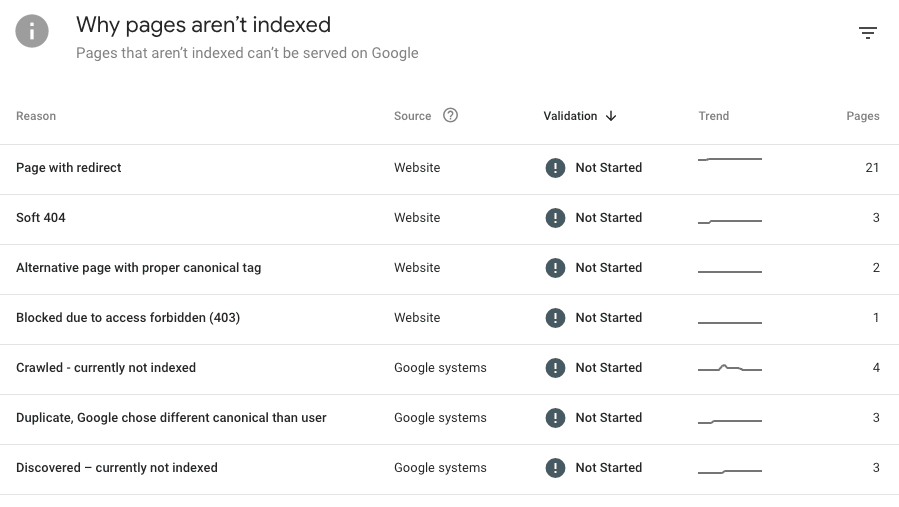
Google Search Console snapshot
2. Site Speed & Core Web Vitals: Don't Lose Sales to Slow Loading!
In ecommerce, every millisecond truly counts.
Shoppers are incredibly impatient, and Google & Co knows it. Core Web Vitals (CWV) are Google's benchmarks for page experience, directly impacting rankings and, critically, user satisfaction.
Why it matters for sales: Slow loading times kill conversions, send bounce rates through the roof, and signal to search engines that your site provides a poor user experience. It directly frustrates your potential customers.
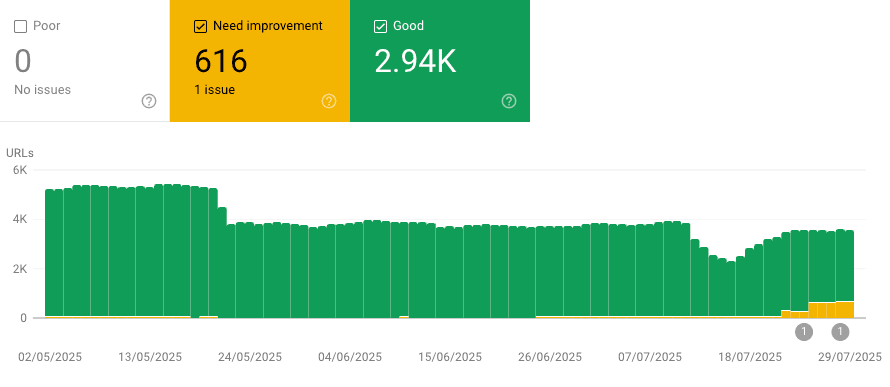
Core Web Vitals snapshot
3. Structured Data & Schema Markup: Speaking Google & AI's Language
This is your direct line of communication to both search engines and AI.
Structured data (Schema Markup) uses a specific code format to tell search engines precisely what information is on your page – like a product's price, rating, reviews, availability, and brand.
Why it matters for sales: Correct schema helps you earn tempting "rich snippets" in search results (like star ratings or prices directly in Google), making your listing stand out and boosting click-through rates.
Crucially, it's how AI models confidently extract and cite your product details in their generative answers.
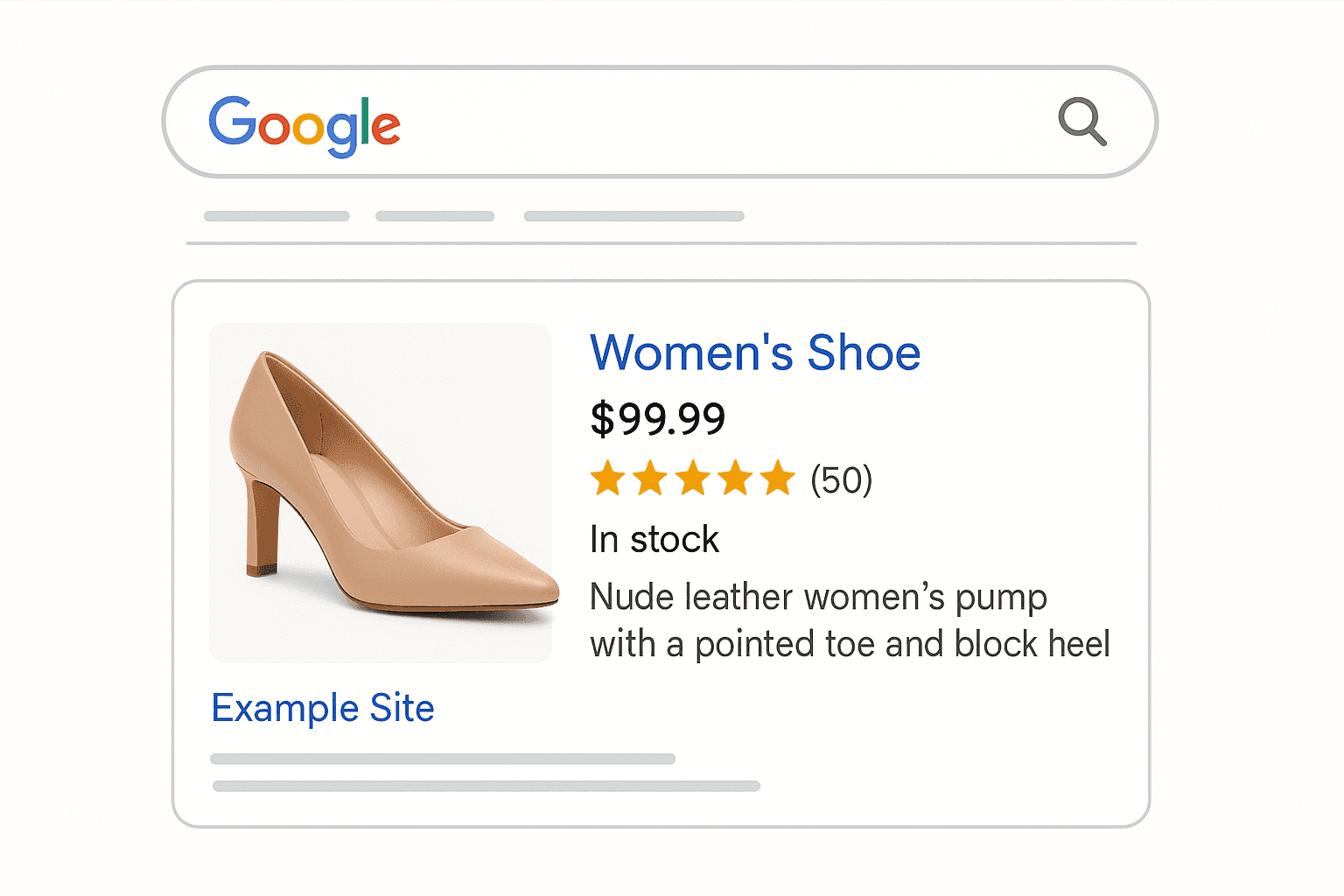
Want your products shown in this fancy way? You'll need structured data!
4. Site Architecture & User Experience: Guiding Shoppers (and Bots) to Conversion
A well-organised website isn't just intuitive for human shoppers; it's a clear map for search engines and AI.
A logical site architecture with clear navigation and smart internal linking ensures that both users and bots can effortlessly find your most important products and content.
Why it matters for sales: Confusing navigation or buried products mean lost shoppers and missed conversions. It also impacts how search engines distribute "link equity" (their measure of authority) across your site.
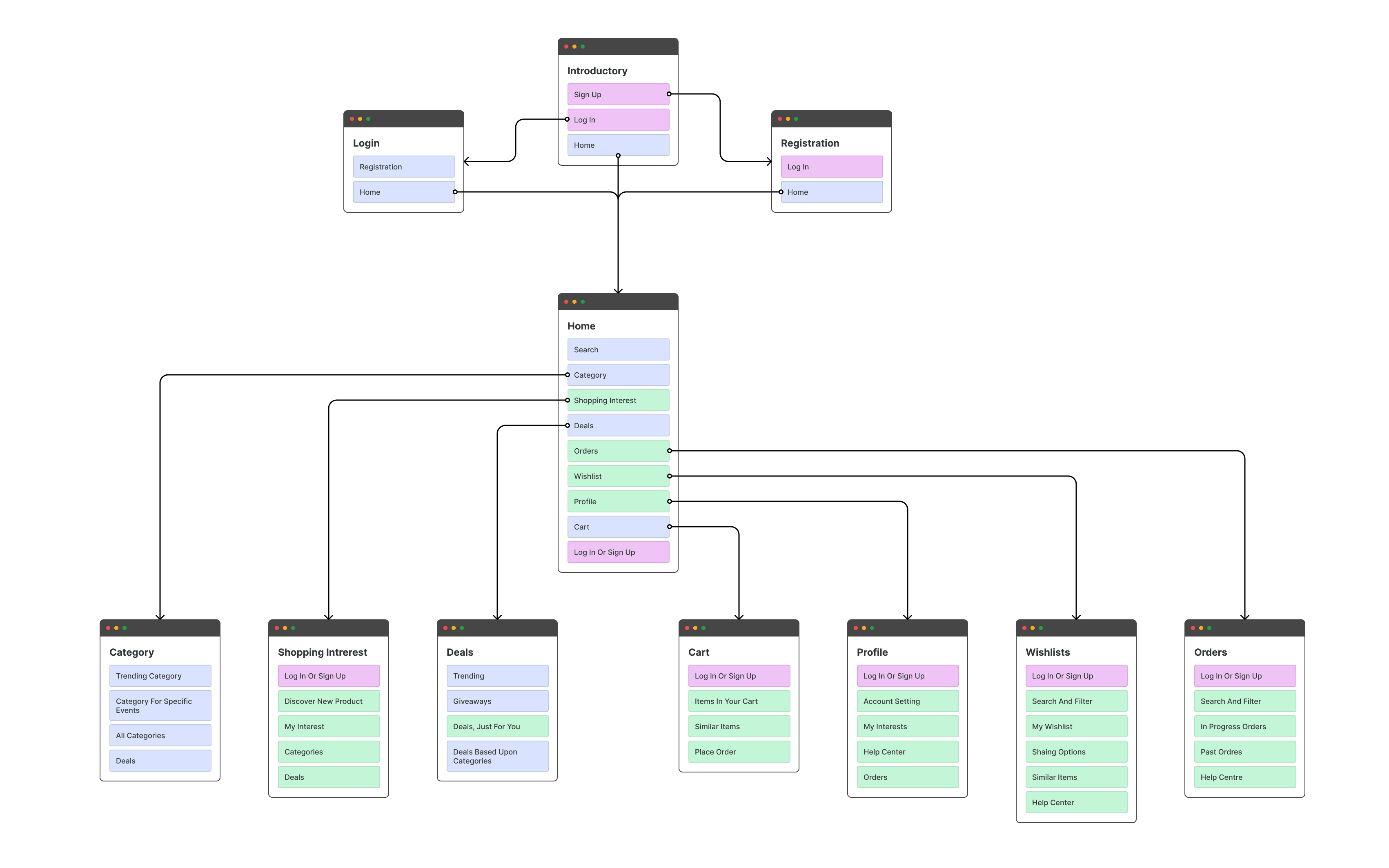
We use Figma, which is great for visually showing how your site is structured!
5. Mobile Responsiveness & Site Security: Trust & Accessibility are Non-Negotiable
With the majority of online browsing and shopping happening on mobile devices, a non-mobile-friendly site is a non-starter. Likewise, in an age of increasing cyber threats, robust site security is paramount.
Why it matters for sales: A clunky mobile experience frustrates users and sends them running to competitors. Security vulnerabilities erode customer trust, can lead to costly data breaches, and result in penalties from search engines. Protecting customer data is non-negotiable for any ecommerce business.
6. Site Content: Is Your Message Clear for Bots and Humans?
While often considered "on-page SEO," a technical audit (read: our technical audits) also assesses how your content's structure helps or hinders search engines and AI.
This includes evaluating heading tags, internal linking, and content duplication - crucial elements for proper understanding and contextual relevance.
Why it matters for sales: Clear, well-structured content helps search engines understand what you offer, connecting relevant search queries to your products. Duplication can confuse bots and dilute your authority.

Example of how your site could be cited in an AI Overview on Google
Backlinks: Quality, Not Just Quantity, for Authority
While also not strictly a "technical" fix, an audit reviews your backlink profile from a technical health perspective.
Google is incredibly sophisticated at largely ignoring spammy or low-quality links that you didn't create yourself, an audit still reviews your backlink profile.
We're looking for any unnatural patterns, highly irrelevant links, or remnants of past, less-than-ideal SEO tactics that might confuse search engines or dilute the power of your genuinely earned, high-quality links.
Why it matters for sales: A clean, high-quality backlink profile clearly signals trust and authority to search engines. It ensures your best "votes of confidence" are heard loud and clear.
Share of Voice, Visibility & Rankings: Knowing Where You Stand
Finally, a technical audit provides a clear snapshot of your current performance in the search landscape.
If your site is technically sound but you're still not seeing good metrics across these areas, it tells you exactly where to focus your next efforts - perhaps in content, competitive strategy, or broader brand building.
Why it matters for sales: You can't improve what you don't measure. Understanding your current visibility and rankings helps you set realistic goals and track the real-world impact of your technical efforts on gaining market share.
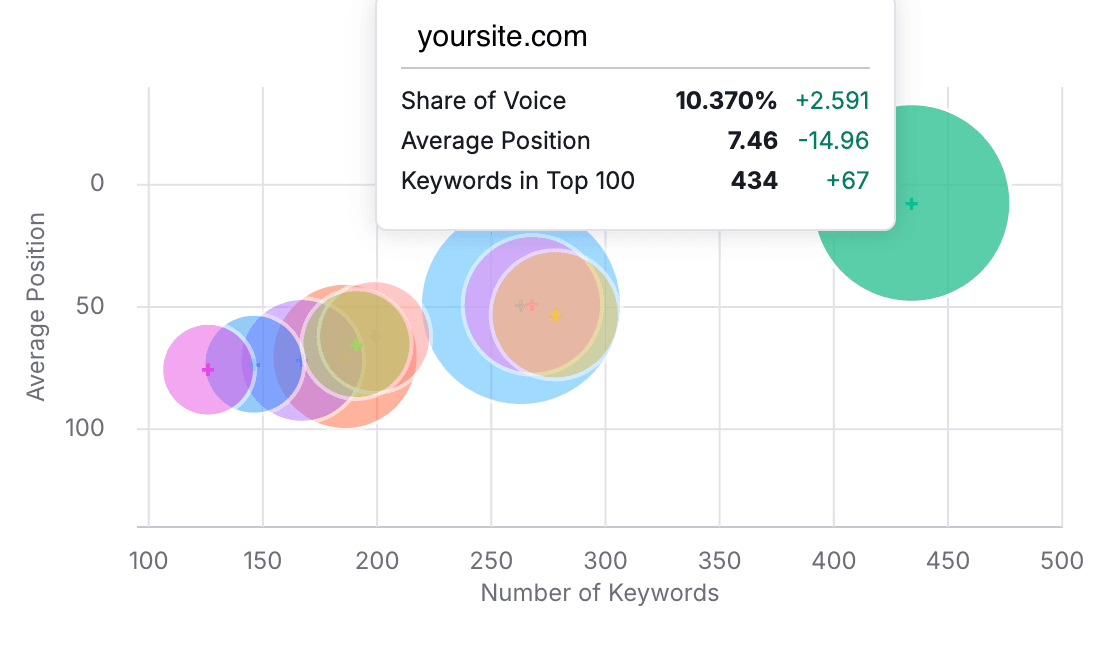
The ROI of a Proactive Audit
So, we've talked about what a technical audit is, why it's crucial for both traditional search and AI visibility, and the specific hidden issues it uncovers. Sounds all good in theory, right?
But what if we told you a technical audit could help you improve your revenue figures, too?
Beyond just "fixing what's broken," a comprehensive technical audit is truly about unlocking untapped potential and directly boosting your bottom line.
Think of it as a strategic investment that pays dividends across your entire ecommerce operation:
- Increased Organic Visibility & Rankings: When your site is technically sound, search engines (and AI models) can crawl, understand, and trust your content far more effectively. This directly translates into higher rankings for your products and category pages, boosting organic traffic from both human searches and AI-generated answers.
- Improved User Experience & Conversion Rates: A fast, bug-free, mobile-responsive website is a joy for shoppers. Fewer frustrated customers mean lower bounce rates, longer dwell times, and ultimately, more completed purchases.
- Enhanced Crawl Efficiency & Budget: For larger ecommerce sites, fixing technical roadblocks means search engine bots can crawl your most important pages more efficiently, ensuring your freshest products and content are discovered faster, without wasting crawl budget on broken or irrelevant pages.
- Future-Proofing Against Algorithm Changes (and AI Evolution): Technical excellence is a constant, foundational signal that Google (and all future AI search systems) consistently reward. Regular audits ensure you're always adapting and staying ahead of the curve, rather than playing catch-up after a drop in performance.
- Maximised ROI from Other Marketing Efforts: Your paid ads, content marketing, or social media campaigns work better when they drive traffic to a high-performing, technically sound website. A great site amplifies every other marketing dollar you spend.
- Staying Ahead of Competitors: In a crowded landscape, every advantage counts. A superior technical foundation provides a competitive edge, allowing you to outrank rivals who might be unknowingly battling silent technical issues.
How Technically Sound is Your Site?
We've seen firsthand how hidden technical flaws can silently drain sales, frustrate customers, and make valuable products invisible to both traditional search engines and the new generation of AI crawlers.
But here's the good news: identifying and fixing these issues isn't just about playing defence. It's about unlocking massive untapped potential. It's about giving your online store the rock-solid foundation it needs to truly thrive, ensuring your hard-earned traffic actually converts, and that your brand is perfectly positioned to be seen and cited by the AI systems shaping the future of search.
At Blackpepper, we pride ourselves on our deep expertise in ecommerce technicalities. We don't just run reports; we dive deep into your site's unique ecosystem, diagnose the real problems, and translate complex technical jargon into clear, actionable roadmaps that deliver tangible business results.
Don't let hidden technical issues cost you customers. Talk to our ecommerce SEO specialists today for a comprehensive technical audit and a custom roadmap.